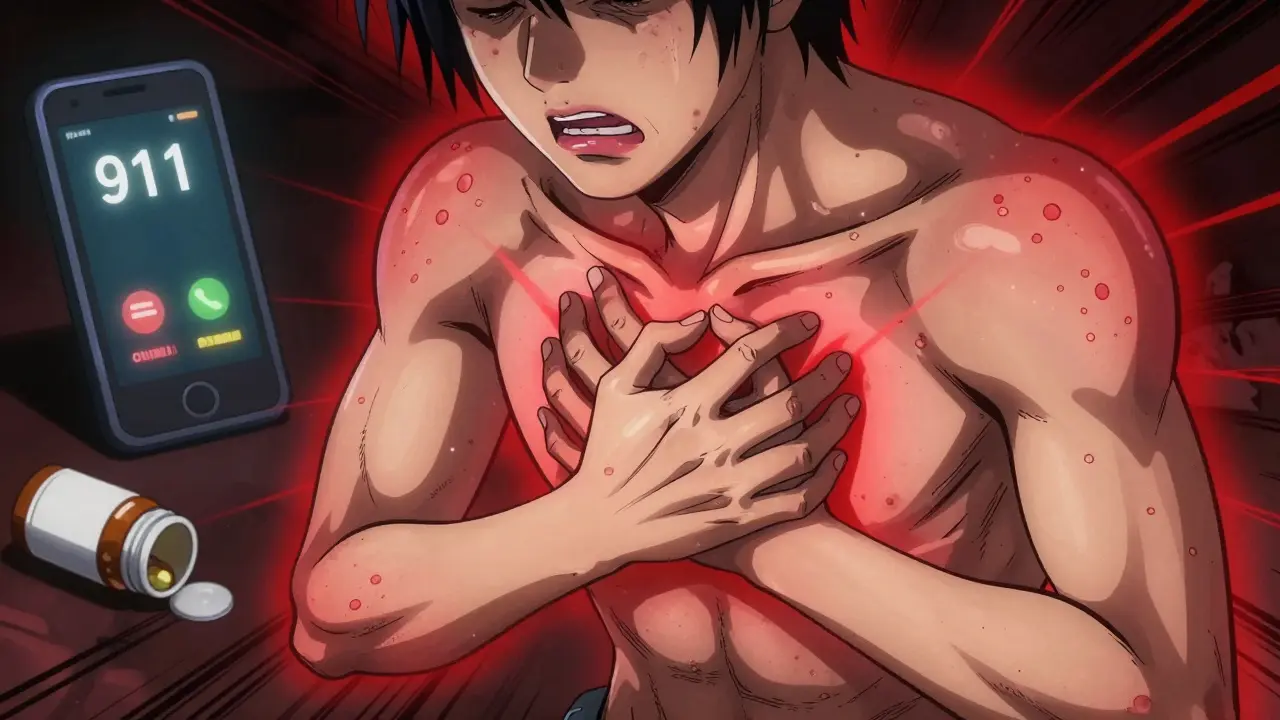
Medication Reaction Decision Guide
When to Call 911 vs. Contact Your Doctor
Answer these questions to determine the appropriate response to medication reactions based on the article content.
Question 1
Did you take a new medication within the last 24 hours?
Question 2
Are you experiencing more than one symptom (e.g., rash + vomiting, swelling + dizziness)?
Question 3
Is your breathing affected? (wheezing, tight chest, trouble speaking)
Question 4
Do you feel faint, dizzy, or like your heart is racing?
Emergency Response Required
Call 911 immediately. These symptoms indicate a potentially life-threatening reaction that requires emergency medical attention.
Your symptoms suggest possible anaphylaxis or a severe allergic reaction. Do not wait or delay.
Contact Your Doctor
This appears to be a mild reaction. Contact your doctor or pharmacist within 24 hours for guidance.
Your symptoms likely indicate a non-life-threatening side effect. However, it's important to inform your healthcare provider.
You took your pill like always. Five minutes later, your skin starts to itch. Then your lips feel swollen. Your chest tightens. Now you’re wondering: is this an emergency? Or can you just call your doctor tomorrow?
Medication reactions aren’t all the same. Some are annoying. Others kill. And the difference between calling 911 and calling your doctor isn’t just about how bad you feel-it’s about which parts of your body are shutting down.
What Counts as a Serious Reaction?
Not every rash, stomach upset, or headache means you’re in danger. Most medications come with side effects. Nausea from antibiotics? Common. Drowsiness from painkillers? Normal. But when your body starts reacting like it’s under attack, that’s something else entirely.
True drug allergies happen when your immune system mistakes the medicine for a threat. That’s when symptoms go beyond inconvenience and turn into survival mode. The most dangerous reactions happen fast-often within minutes to an hour after taking the drug. But some, like DRESS syndrome or serum sickness, can take days to show up. Either way, if your symptoms involve more than one system at once, you’re in the danger zone.
Here’s the rule: if you have skin symptoms (like hives or swelling) AND breathing trouble, vomiting, dizziness, or a racing heart-you need 911. One symptom alone? Maybe not. Two or more? That’s a red flag.
When to Call 911 Immediately
Don’t wait. Don’t text your doctor. Don’t Google it. If you’re experiencing any of these, dial 911 right now:
- Swelling of your tongue, lips, or throat
- Wheezing, stridor (that high-pitched squeaky breathing), or trouble catching your breath
- Feeling lightheaded, faint, or like you’re going to pass out
- Weak, fast pulse or sudden drop in blood pressure
- Vomiting or diarrhea along with hives or swelling
- Loss of consciousness
These are signs of anaphylaxis-a full-body allergic reaction that can kill in minutes. It doesn’t always look like a textbook case. Sometimes it starts with just a little itching and a tight chest. Then, within 10 minutes, you can’t speak. That’s why experts say: if you’re unsure, call 911.
Dr. Mathai at Regional Hospital says it plainly: “If you have hives, wheezing, and difficulty breathing after taking a medication-call 911 immediately.” There’s no gray area here. Waiting even 15 minutes can make the difference between life and death.
What About Epinephrine?
If you’ve been prescribed an epinephrine auto-injector (like an EpiPen), use it at the first sign of a serious reaction. Don’t wait to see if it gets worse. Don’t worry about side effects-epinephrine is safe, even for older adults or people with heart conditions. The risk of not using it is far greater.
But here’s what no one tells you: calling 911 is still required after using epinephrine. One shot might not be enough. Symptoms can come back hours later, even if they seem to disappear. Emergency responders carry more epinephrine, IV fluids, and equipment to stabilize you. They also monitor you for delayed reactions.
Food Allergy Research & Education says: “Go to the emergency room even if you feel better after using your epinephrine.” That’s not a suggestion. It’s a medical requirement.

When It’s Safe to Call Your Doctor
Not every reaction needs an ambulance. If you only have one of these, it’s likely a mild side effect or a non-life-threatening reaction:
- A simple rash without swelling or breathing issues
- Itching with no other symptoms
- Mild nausea or upset stomach
- Headache or dizziness without fainting
- Minor skin redness or dryness
In these cases, contact your doctor or pharmacist within 24 hours. They can help you decide whether to stop the medication, switch to another, or monitor the reaction. Urgent care is fine for these situations-but not the ER.
Dr. Payel Gupta from the American College of Allergy, Asthma, and Immunology puts it this way: “Nausea and vomiting on their own? That’s a side effect. Nausea and vomiting with hives? That’s an allergy.” The combination matters more than the intensity.
Common Mistakes People Make
Most people don’t realize how quickly things can go wrong. Here are the top three errors:
- Waiting to see if it gets worse. Allergic reactions don’t wait. They escalate. By the time you’re sure it’s serious, it might be too late.
- Thinking epinephrine is a cure. It’s a lifeline, not a fix. You still need emergency care.
- Ignoring delayed reactions. Some reactions show up 24-72 hours later. If you took a new medication recently and suddenly feel unwell-even if you felt fine yesterday-call your doctor.
Also, don’t assume you’re safe just because you’ve taken the drug before. Allergies can develop at any time. You could have used ibuprofen for years and suddenly react to it tomorrow.
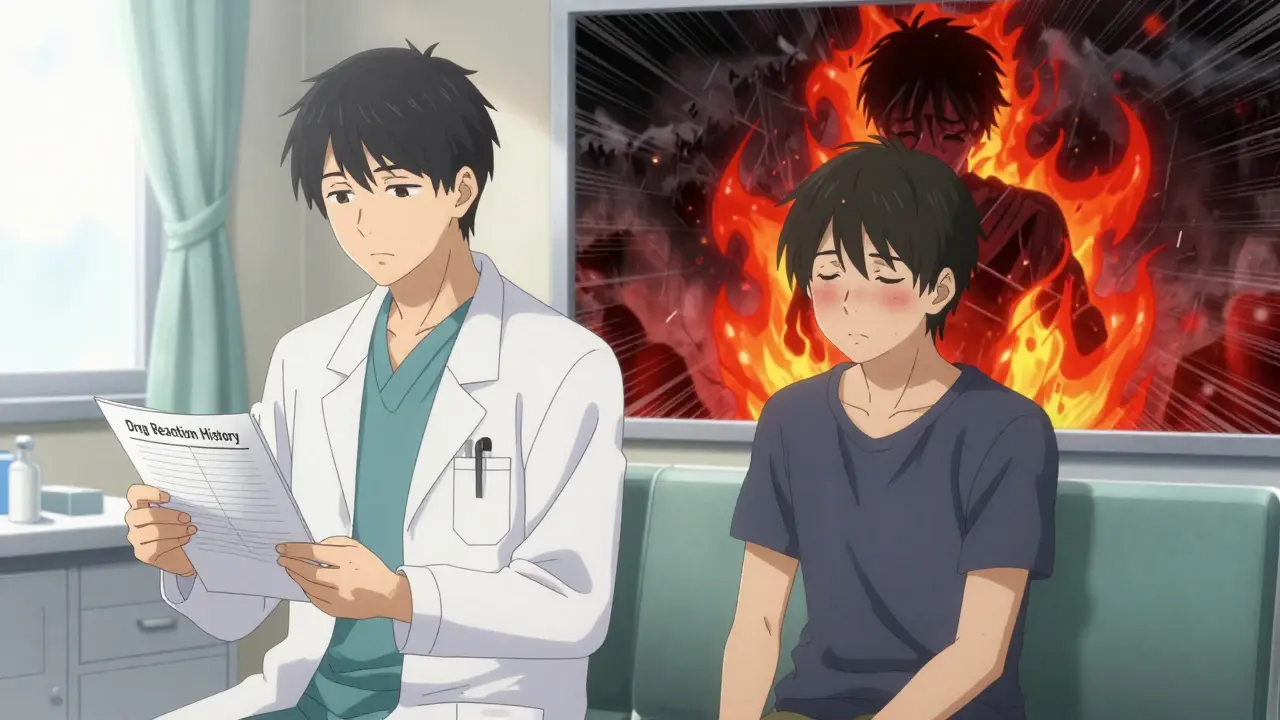
What to Do After a Reaction
Once you’ve survived a serious reaction, you need to take action to prevent the next one:
- Write down exactly what medication you took, when, and what symptoms you had.
- Ask your doctor for an allergy test. They can confirm if it was a true allergy or just a side effect.
- Get a medical alert bracelet. It could save your life if you’re unconscious in an emergency.
- Keep your epinephrine auto-injector with you at all times, even if you think you’re “over it.”
- Inform every doctor, dentist, and pharmacist about your reaction. Don’t assume they’ll check your file.
Medication reactions are more common than you think. The FDA logged over 1.8 million reports in 2022-and experts believe most go unreported. Antibiotics alone account for 15% of all drug allergies. One in 13 adults has a food allergy, and many react similarly to medications.
The bottom line? Your body is trying to tell you something. Don’t second-guess it. If your symptoms involve breathing, swelling, or your heart, call 911. No hesitation. No excuses. If it’s just a rash or mild nausea, call your doctor. But never assume it’s “just a side effect” when your body is screaming for help.
Quick Decision Guide
Still unsure? Use this simple flow:
- Did you take a new medication in the last 24 hours?
- Are you having more than one symptom? (e.g., rash + vomiting, swelling + dizziness)
- Is your breathing affected? (wheezing, tight chest, trouble speaking)
- Do you feel faint, dizzy, or like your heart is racing?
If you answered YES to any of the last three-call 911 now. If only the first one applies, and you have one mild symptom-call your doctor tomorrow.
Can I just drive myself to the hospital if I think I’m having a reaction?
No. If you’re having symptoms like swelling, trouble breathing, or dizziness, you could lose consciousness while driving. Emergency responders are trained to handle these reactions on the spot and can give you epinephrine or oxygen before you even get to the hospital. Always call 911.
What if I don’t have an epinephrine auto-injector?
Call 911 immediately. Do not wait. Epinephrine is the only treatment that can reverse a life-threatening allergic reaction. If you’ve had a serious reaction before, ask your doctor for a prescription. Keep it with you always.
Can a mild reaction turn into a severe one later?
Yes. Even if your rash or itching fades after a few hours, you could develop breathing trouble or low blood pressure hours or even a day later. That’s why you must go to the ER after using epinephrine-even if you feel fine. Monitoring is critical.
How do I know if it’s a drug allergy or just a side effect?
Side effects are predictable and don’t involve your immune system. They’re usually isolated-like nausea from antibiotics or drowsiness from painkillers. Allergies involve your immune system and often affect multiple body systems at once-like hives plus vomiting or swelling plus wheezing. If in doubt, treat it as an allergy.
Is it safe to take the same medication again if I had a mild reaction?
Never. Even a mild reaction means your immune system has flagged the drug as dangerous. Taking it again could trigger a deadly reaction next time. Always report the reaction to your doctor and get tested. Never self-prescribe after a reaction.