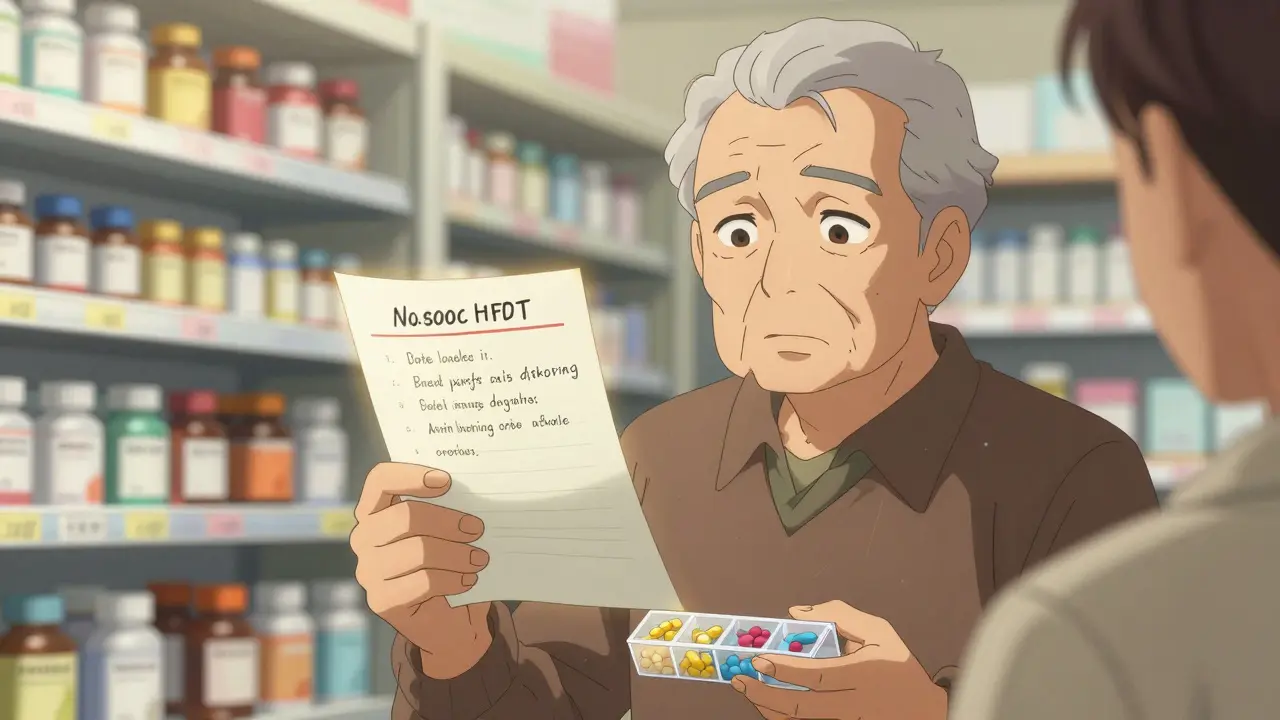
Every year, more than 1.5 million people in the U.S. end up in the emergency room because of problems with their medications. Many of these cases aren’t accidents-they’re preventable. Medication safety isn’t just a hospital policy or a checklist for nurses. It’s the system that keeps you from taking the wrong pill, the wrong dose, or a drug that could seriously harm you when mixed with another. And it matters just as much for someone picking up a prescription at the local pharmacy as it does for someone in intensive care.
What Exactly Is Medication Safety?
Medication safety means making sure you get the right drug, in the right amount, at the right time, and for the right reason-without harm. It covers everything from when a doctor writes a prescription to when you swallow the pill at home. The process isn’t simple. It involves nine steps: ordering, storing, preparing, dispensing, giving, documenting, and monitoring. At every step, something can go wrong.
The Institute of Medicine defines a medication error as any preventable mistake that leads to inappropriate use of a drug. That includes giving a patient insulin when they’re supposed to get blood pressure medicine, or a nurse giving 10 milligrams instead of 1 milligram because the handwriting was unclear. These aren’t rare. In fact, prescribing errors make up 38% of all medication mistakes, and administration errors-like giving the drug at the wrong time or through the wrong route-account for another 26%.
It’s not just about hospitals. A 2023 CDC report found that nearly half of all preventable medication injuries happen in hospitals, but a huge portion also occur at home. Elderly patients juggling five or more medications are especially at risk. So are children. One in five adverse drug events involves a child under 18. And pregnant women? Their safety depends on knowing which drugs are safe during pregnancy-something not all prescribers check carefully enough.
Why Medication Safety Isn’t Just a Hospital Issue
Most people think medication safety is handled by doctors and pharmacists. But here’s the truth: you’re the last line of defense. If you don’t know what you’re taking, why you’re taking it, or what side effects to watch for, no system can fully protect you.
Think about this: 42% of adults over 65 admit they’ve skipped doses or changed their medication without telling their doctor-often because of cost or fear of side effects. That’s not noncompliance. That’s a system failure. Patients aren’t being given clear, simple information. They’re being left to guess.
And it’s not just about forgetting a pill. Similar-looking pill bottles, confusing labels, and unclear instructions lead to real harm. One Reddit user shared how their mother was given 10mg of Xanax instead of 1mg because the handwriting was messy. She ended up in the hospital for three days. That’s not a fluke. It’s a pattern.
Even when you follow instructions perfectly, errors can still happen. Drug interactions are a silent killer. A patient on blood thinners might be prescribed a new antibiotic without anyone checking if it increases bleeding risk. That’s a medication safety breakdown-and it’s preventable.
The High-Risk Medications You Need to Know
Not all drugs are created equal when it comes to danger. Some are labeled “high-alert” because even a small mistake can cause serious injury or death. These include:
- Insulin-involved in 17% of serious medication errors
- Opioids-14% of severe errors, often due to overdose
- Anticoagulants (like warfarin or apixaban)-12% of errors, leading to dangerous bleeding
- Intravenous oxytocin-used in labor, but a tiny dosing error can cause uterine rupture
These aren’t rare drugs. They’re common. If you’re on one of these, you need extra care. That means double-checking the label, asking your pharmacist to explain the dose, and keeping a written list of every medication you take-including over-the-counter pills and supplements.
Technology Is Helping-But It’s Not Perfect
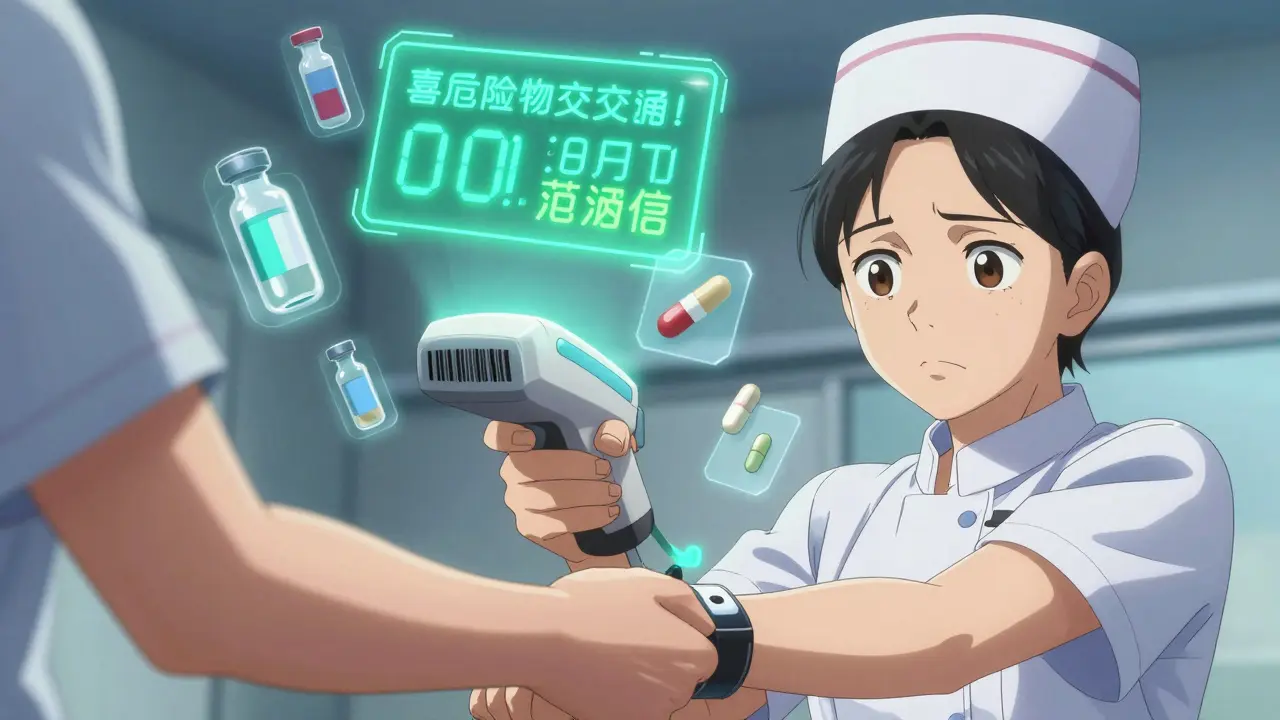
Hospitals are using electronic health records with built-in safety checks. Barcode systems that scan your wristband and the drug before giving it have cut administration errors by 65%. Clinical decision support tools warn doctors if a drug interacts with another. These systems have reduced serious errors by nearly half.
But technology isn’t foolproof. Too many alerts can cause “alert fatigue.” If a nurse gets 30 pop-up warnings in one shift, they start ignoring them. And not every hospital has these tools. Only 55% of U.S. hospitals have fully integrated clinical decision support. Many still rely on handwritten orders and verbal instructions.
Even worse, telehealth has exploded since 2020-and with it, medication errors. A 2023 report showed a 300% jump in errors from virtual visits. No physical exam. No chance to see if a patient looks confused. No way to check if they’re actually taking the right pill. That’s a growing risk no one’s fully solved yet.
What You Can Do to Protect Yourself
You don’t need to be a doctor to keep yourself safe. Here’s what works:
- Keep a current list of every medication you take-name, dose, reason, and frequency. Include vitamins, supplements, and herbal products. Update it every time your doctor changes something.
- Ask three questions every time you get a new prescription: What is this for? How do I take it? What side effects should I watch for?
- Use a pill organizer or blister pack. Studies show patients using these have 60% better adherence and fewer mistakes.
- Bring your list to every appointment-even if it’s just a checkup. Many errors happen during care transitions, like when you’re discharged from the hospital.
- Don’t be afraid to speak up. If something doesn’t look right, ask. If the pill looks different than last time, ask. If the dose seems too high, ask.
The CDC’s “Keep a List” campaign found that patients who used a simple written list reduced medication reconciliation errors by 45% during hospital stays. That’s not magic. That’s just being prepared.
The Bigger Picture: Why This Matters for Everyone
Medication safety isn’t a luxury. It’s a basic right. Every year, 400,000 preventable injuries happen in U.S. hospitals because of medication errors. That’s more than car accidents. And the cost? Around $42 billion annually. That’s money spent on extra hospital stays, emergency visits, and long-term care that shouldn’t have happened.
But here’s the good news: when hospitals and clinics use comprehensive safety programs-like the “Five Rights” (right patient, drug, dose, route, time) plus three more (right documentation, reason, and response)-they cut medication errors by 50% to 80%. That’s not theory. That’s real data from real hospitals.
And it’s not just about saving money. It’s about saving lives. Dr. Lucian Leape from Harvard says it best: “Medication safety is no longer just about catching errors; it’s about designing systems that make errors impossible to commit.”
That’s the goal. And it’s possible. But only if patients, providers, and systems all work together.
What’s Changing in 2026?
Things are improving. In 2023, the FDA required all prescription labels to use standardized numeric dosing-no more “.5 mg” that could be mistaken for “5 mg.” Pilot programs saw a 32% drop in decimal point errors. The WHO’s “Medication Without Harm” campaign is now active in over 100 countries. Participating hospitals saw a 15-25% drop in severe harm within two years.
AI is starting to help too. New tools analyze your EHR and flag potential interactions before the doctor even writes the script. Blockchain is being tested to track drug supply chains and stop fake pills from reaching pharmacies.
But progress isn’t automatic. The biggest barrier? Culture. Only 35% of healthcare organizations have truly non-punitive error reporting. If nurses or pharmacists fear blame, they won’t speak up. And when mistakes go unreported, systems don’t improve.
Medication safety isn’t about finding someone to blame. It’s about fixing the system so no one has to get hurt again.
Final Thought: Your Health Is in Your Hands
Medication safety isn’t something that happens to you. It’s something you help make happen. Whether you’re managing one drug or ten, whether you’re 25 or 85, whether you’re in a hospital or at home-you have power. You can ask questions. You can keep a list. You can double-check. You can say, “This doesn’t seem right.”
That’s the real secret. The best technology in the world won’t help if you don’t speak up. And the most careful doctor won’t catch everything if you’re silent.
Medication safety matters because your life depends on it. Don’t wait for someone else to protect you. Be part of the solution.
Sona Chandra
January 12, 2026 AT 05:41This is why I hate the American healthcare system. My aunt took the wrong pill because the pharmacist couldn’t read the doctor’s handwriting - and now she’s on kidney dialysis. No one apologized. No one got fired. Just another statistic. This isn’t safety - it’s negligence dressed up as a checklist.
Jennifer Phelps
January 13, 2026 AT 16:15I used to think meds were simple until my mom started on 7 different ones and I had to become her pharmacy manager. The labels don’t match the scripts. The pharmacist says ‘take one’ but the bottle says ‘take two’. I’ve had to call the doctor 3 times just to confirm a dose. Why is this still a thing in 2026
beth cordell
January 14, 2026 AT 11:39Just had to help my grandma sort her pillbox today 🥲. 12 pills. 4 times a day. Some look identical. I cried. We need better systems. Also - why are we still using paper scripts in 2026 😭
Lauren Warner
January 14, 2026 AT 18:58Let’s be real - the real problem isn’t the handwriting or the labels. It’s the fact that doctors are overworked, pharmacists are underpaid, and patients are treated like disposable data points. The system is designed to fail. Technology won’t fix that. Only systemic change will - and no one in power wants that.
Craig Wright
January 16, 2026 AT 04:34As a British citizen who has witnessed both NHS and private care, I must say the American approach to medication safety is fundamentally flawed. In the UK, pharmacists are legally required to counsel patients on new prescriptions. Here, you’re handed a bottle and told to ‘have a nice day’. This is not healthcare - it is commercialized risk management.
Daniel Pate
January 17, 2026 AT 07:54It’s interesting how we treat medication safety as a technical problem when it’s really a philosophical one. We assume that if we just add more checks, more alerts, more tech, we’ll eliminate error. But humans aren’t machines. We forget. We assume. We trust. Maybe the real solution isn’t more systems - it’s humility. Designing for fallibility, not perfection. What if we stopped trying to prevent every mistake and started building systems where mistakes can’t kill
Jose Mecanico
January 17, 2026 AT 23:13I work in a small clinic and we started using a simple color-coded pill organizer for our elderly patients. Adherence went up. ER visits dropped. No fancy tech. Just clear labels and a little time. It’s not sexy, but it works.
Alex Fortwengler
January 19, 2026 AT 03:39Anyone else think this whole thing is a Big Pharma scam to keep us dependent on pills they overprescribe? They don’t want you to be safe - they want you to keep buying. The ‘high-alert’ drugs are the most profitable. The system is rigged. And the CDC? They’re just the PR arm for the drug companies. Wake up.
jordan shiyangeni
January 19, 2026 AT 17:51While I appreciate the general sentiment of this post, I must point out a critical grammatical and factual inconsistency: the phrase ‘1.5 million people’ is numerically imprecise when used in a statistical context without a confidence interval or source citation. Furthermore, the assertion that ‘42% of adults over 65 admit they’ve skipped doses’ is misleading - it conflates self-reported behavior with documented clinical outcomes. Additionally, the term ‘noncompliance’ is outdated and stigmatizing; the preferred terminology is ‘non-adherence’ - a distinction this article ignores entirely. The WHO’s ‘Medication Without Harm’ campaign, while well-intentioned, lacks longitudinal data beyond two-year windows, making any claim of ‘15-25% drop in severe harm’ statistically premature. And let’s not forget: the FDA’s standardized numeric dosing requirement only applies to new prescriptions - not legacy formulations - meaning millions of existing bottles remain dangerously ambiguous. This article reads like a PR brochure, not a rigorous public health analysis.