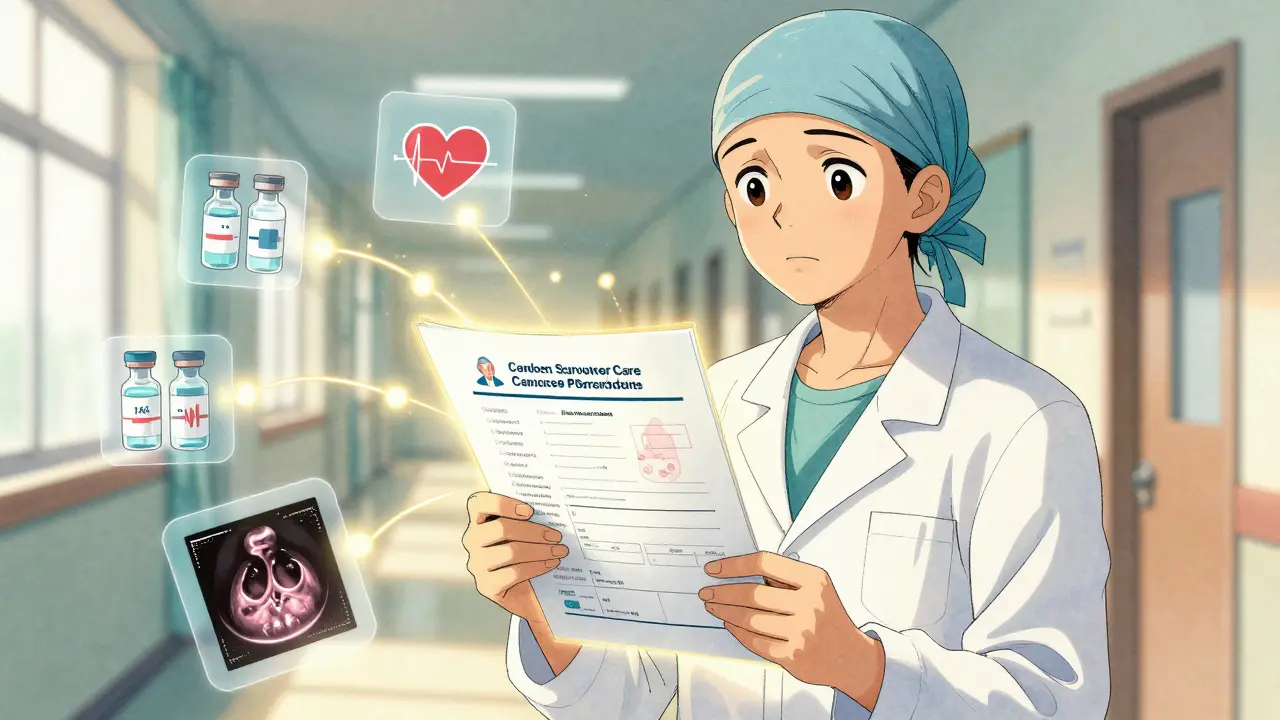
When cancer treatment ends, many survivors feel a mix of relief and confusion. You might think the hardest part is over-but for many, a new chapter begins. This is where survivorship plans come in. They’re not just paperwork. They’re your roadmap for staying healthy after treatment. Without one, you risk missing critical screenings, ignoring long-term side effects, or getting lost in a healthcare system that wasn’t built for you anymore.
What Exactly Is a Survivorship Care Plan?
A survivorship care plan is a personalized document that combines two key parts: your treatment summary and your follow-up care plan. It’s not a one-size-fits-all form. It’s built around your specific cancer, treatments, and risks.The treatment summary includes:
- Your cancer type, stage, and where it started
- Exact dates of treatment
- Chemotherapy drugs, doses, and number of cycles
- Radiation details: area treated, total dose
- Surgery types performed
- Any clinical trials you joined
- Contact info for your oncology team
The follow-up plan tells you what happens next:
- When to see your oncologist again
- Which tests you need and how often-like mammograms, colonoscopies, or blood work
- What late effects to watch for based on your treatment
- Recommendations for lifestyle changes: exercise, diet, quitting smoking
- Who to call if something new comes up
This isn’t just for oncologists. It’s meant for your primary care doctor too. Most family doctors haven’t been trained to manage cancer survivors. A clear plan bridges that gap.
Why Late Effects Can’t Be Ignored
Cancer treatments save lives-but they don’t just stop working when treatment ends. Some side effects show up months or even years later. These are called late effects.For example:
- If you got anthracycline chemotherapy (like doxorubicin) at a dose over 250 mg/m², your risk of heart problems increases. You need an echocardiogram every 5 years.
- If you had chest radiation for Hodgkin lymphoma, your risk of breast cancer rises sharply. Women should start annual mammograms 8 years after treatment-or at age 40, whichever comes first.
- Survivors of childhood cancers treated with radiation to the head may develop thyroid issues or learning difficulties later in life.
- Some immunotherapy drugs can trigger autoimmune problems years after stopping treatment.
The Children’s Oncology Group (COG) has published over 110 evidence-based screening guidelines just for late effects. These aren’t guesses-they’re based on decades of tracking survivors. Ignoring them means you’re flying blind.
Screening Isn’t Optional-It’s Life-Saving
Regular screenings after cancer aren’t about being paranoid. They’re about catching problems early when they’re easiest to treat.Here’s what real data shows:
- Survivors who follow their recommended screening schedule are 2.3 times more likely to get timely tests for recurrence.
- Those who get a full survivorship plan have 23% fewer emergency room visits in the first two years after treatment.
- Studies show survivors with a written plan are 37% more likely to receive care that matches national guidelines.
But here’s the problem: only 42% of survivors report having a complete plan with both treatment details and follow-up instructions. Many get a summary but miss the critical screening schedule.
For instance:
- Colorectal cancer survivors need a colonoscopy every 1-3 years depending on their risk.
- Prostate cancer survivors on hormone therapy should get bone density scans every 2 years.
- Women treated for breast cancer with tamoxifen need yearly gynecologic exams due to increased uterine cancer risk.
If you don’t know what to ask for, you won’t get it. Your plan tells you exactly what tests to request and when.
Who Creates the Plan-and When?
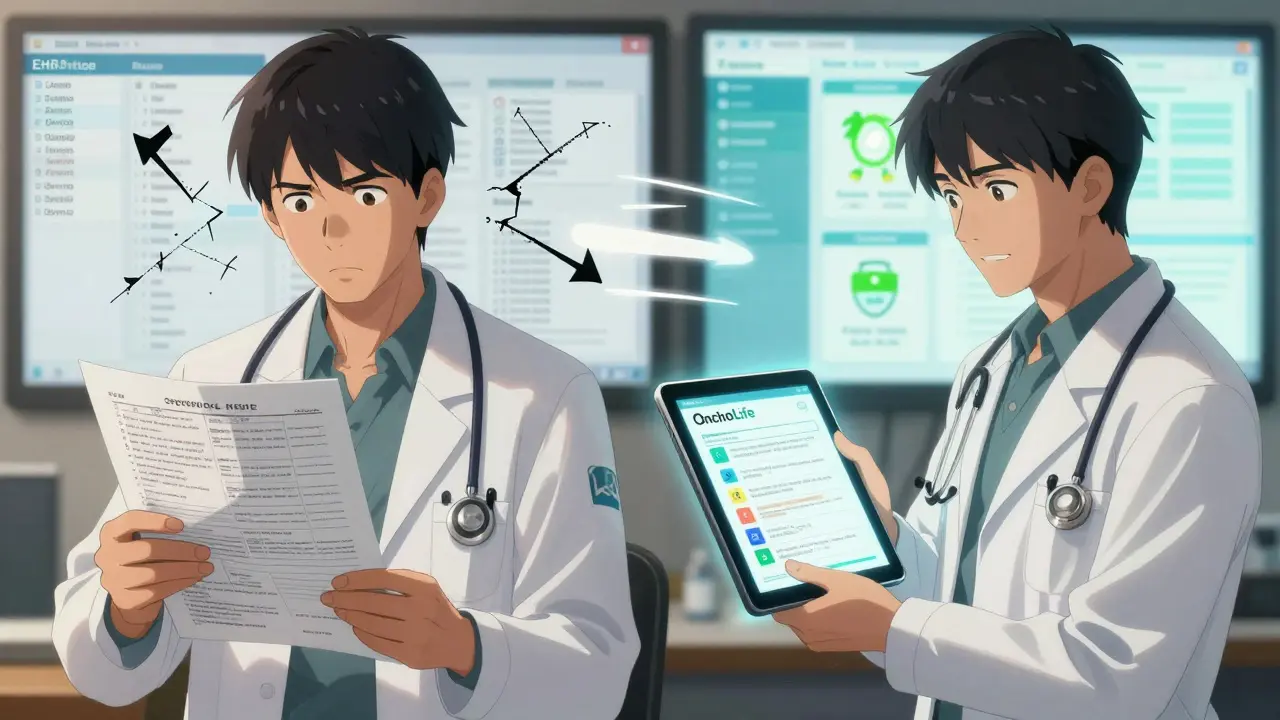
Ideally, your oncology team creates the plan before treatment ends. But in practice, it’s messy.Only 61% of cancer centers have staff dedicated to making these plans. On average, it takes 45 minutes per plan. That’s why many hospitals now use digital tools like the OncoLife Survivorship Care Plan or ASCO’s digital builder. These tools pull data from your records and generate a personalized plan in under 10 minutes.
Timing matters too. Most centers give the plan at the end of treatment. But some experts argue it should be handed out earlier-right after diagnosis-so patients know what to expect down the road.
For kids? Pediatric centers are ahead of the curve. 89% start planning survivorship care from day one. Adult centers? Only 42% do.
The Real-World Gap: Plans Exist, But People Don’t Use Them
Here’s the heartbreaking truth: even when you get a plan, it often sits in a drawer.Studies show only 41% of survivors bring their plan to their primary care visits. Why?
- It’s too long or too technical
- They don’t understand it
- They forget to bring it
- Their doctor doesn’t know what to do with it
And then there’s the system issue. Only 28% of Medicare contractors pay for creating these plans. Hospitals lose money making them. Insurance doesn’t cover follow-up coordination. So even if you have a great plan, your care team might not have the time or resources to use it.
Electronic health records (EHRs) are supposed to help-but 67% of hospitals can’t share survivorship data between oncology and primary care systems. Your plan might live in one system. Your family doctor uses another.

What You Can Do Right Now
You don’t have to wait for your hospital to act. Here’s what you can do today:- Ask for your plan. Say: “Can I get a written survivorship care plan that includes my treatment summary and follow-up recommendations?”
- Get it in writing. Don’t settle for verbal instructions. Ask for a PDF or printed copy.
- Share it with your primary care doctor. Bring it to your next visit. Highlight the screening schedule.
- Keep it updated. If you see a new specialist, give them a copy. Update it if your health changes.
- Use digital tools. Try OncoLife (oncolife.org) or ASCO’s Survivorship Care Plan Builder. They’re free and easy to use.
And if you’re a caregiver? Help organize the paperwork. Track appointments. Set calendar reminders for screenings. You’re not just helping-you’re saving lives.
The Future: Personalized, Predictive, and Digital
The field is changing fast. In 2023, ASCO launched a new digital tool that builds personalized plans using 42 treatment variables. AI models are now predicting which survivors are most at risk for heart damage, bone loss, or secondary cancers-with 84% accuracy.Some centers are starting to use polygenic risk scores to tailor screening. If you have a genetic mutation that raises your risk for another cancer, your plan adjusts. No more generic checklists.
Mobile apps are coming too. Imagine your smartwatch alerting you to an abnormal heart rhythm-then automatically sending a report to your doctor. That’s not science fiction. Five major platforms are in development.
But progress isn’t equal. Academic centers lead the way. Safety-net hospitals? Only 31% offer full survivorship plans. That’s a gap in care that’s costing lives.
Final Thought: Your Plan Is Your Power
Survivorship isn’t about surviving cancer. It’s about living well after it. A care plan isn’t bureaucracy. It’s your right. It’s your safety net. It’s the difference between wondering if a new symptom is normal-and knowing exactly what to do about it.Don’t wait for your doctor to bring it up. Ask. Demand. Keep a copy. Share it. Update it. Your future self will thank you.
What should be included in a cancer survivorship care plan?
A survivorship care plan should include two main parts: a Treatment Summary and a Follow-Up Plan. The Treatment Summary details your cancer diagnosis (type, stage, location), all treatments received (chemotherapy drugs and doses, radiation type and area, surgery details, clinical trial info), and contact information for your oncology team. The Follow-Up Plan outlines when to schedule future visits, which screening tests you need and how often (like mammograms or colonoscopies), possible late effects based on your treatment, lifestyle recommendations (exercise, diet, quitting smoking), and who to contact if new symptoms appear.
How often should cancer survivors get screened for recurrence?
Screening frequency depends on your cancer type and treatment. For example, colorectal cancer survivors typically get a colonoscopy every 1-3 years. Breast cancer survivors may need annual mammograms and clinical exams. Hodgkin lymphoma survivors who had chest radiation need annual breast cancer screening starting 8 years after treatment or at age 40. Your plan should specify exact timing based on national guidelines like those from ASCO or the Children’s Oncology Group. Never assume all survivors follow the same schedule.
What are common late effects of cancer treatment?
Late effects vary by treatment. Anthracycline chemotherapy can damage the heart, requiring echocardiograms every 5 years. Chest radiation increases breast cancer risk, especially in women. Radiation to the head or neck can cause thyroid problems. Chemotherapy and radiation may lead to early menopause, infertility, or nerve damage. Some immunotherapies trigger autoimmune conditions years later. Childhood cancer survivors face risks like growth delays, learning issues, or secondary cancers. Your plan should list the specific late effects tied to your treatment.
Why don’t more survivors have a survivorship care plan?
Several reasons exist. Many hospitals lack staff or time to create detailed plans-on average, it takes 45 minutes per plan. Only 61% of cancer centers have dedicated personnel for this. Insurance reimbursement is poor: Medicare pays $127.50 per plan, which covers only 38% of actual costs. Electronic health records often can’t share data between oncology and primary care systems. And even when plans exist, 59% of survivors don’t bring them to their primary care visits, meaning the information doesn’t reach the doctor who needs it.
Can I create my own survivorship care plan?
Yes. Free, reliable tools like the OncoLife Survivorship Care Plan (oncolife.org) and ASCO’s Survivorship Care Plan Builder let you generate a personalized plan using your treatment details. These tools are based on national guidelines and match expert recommendations over 95% of the time. You can print or save the plan and share it with your doctors. While your oncology team should provide one, you have the right to request it-and if they don’t, you can build your own.
Jimmy V
March 15, 2026 AT 04:03Period.
Richard Harris
March 15, 2026 AT 21:11Kandace Bennett
March 16, 2026 AT 05:11PS: I use OncoLife. It’s free. You’re welcome.
Tim Schulz
March 16, 2026 AT 08:29Only in America do we treat cancer like a sprint and survival like an afterthought. My chemo nurse had to print the damn thing herself because the EHR system crashed. And don’t get me started on the $127.50 Medicare reimbursement. 😂
Meanwhile, my dog gets a yearly wellness exam with bloodwork. I get a sticky note.
Sabrina Sanches
March 17, 2026 AT 17:55Shruti Chaturvedi
March 19, 2026 AT 13:22Devin Ersoy
March 20, 2026 AT 04:24And yes, I've tried OncoLife. It's great. But it's not a substitute for systemic change. You're not 'empowered' if the system is rigged.
Scott Smith
March 22, 2026 AT 00:50