Bioequivalence Calculator
Calculate Bioequivalence
Determine if two drug formulations are bioequivalent according to ICH M13A guidelines. Enter the AUC and Cmax values for both the test and reference products.
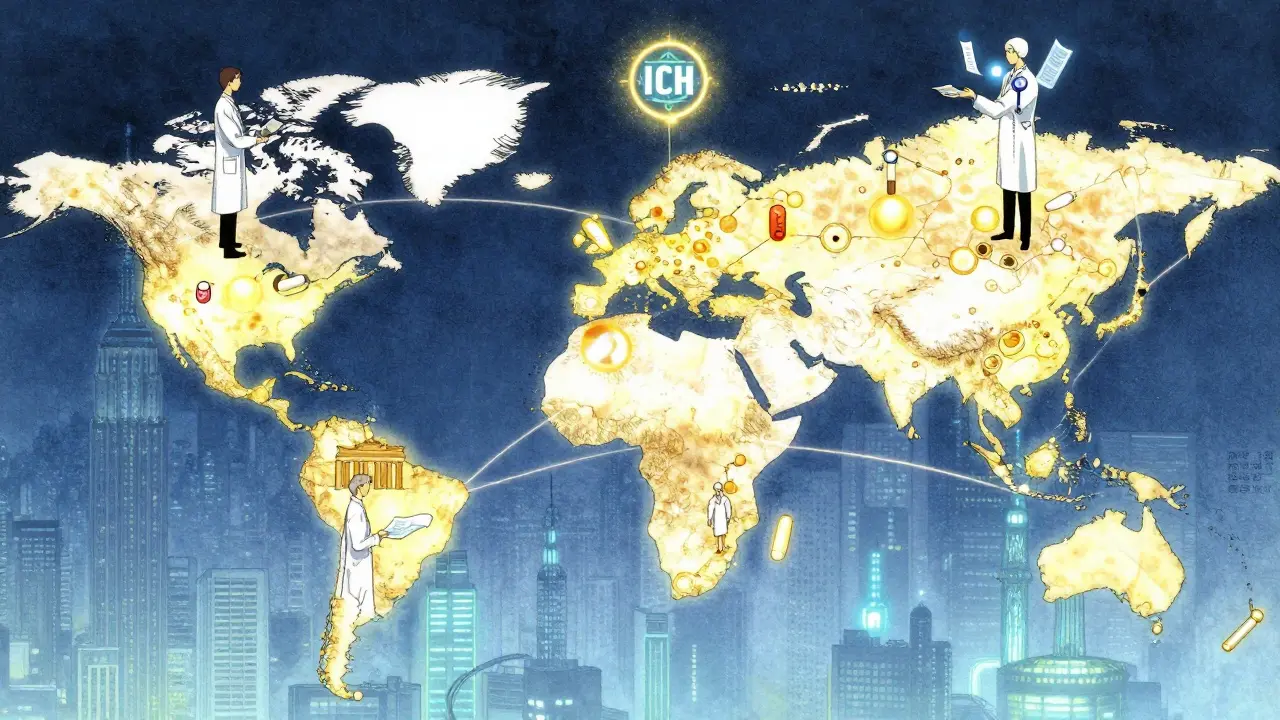
Every pill you take, every vaccine you receive, every new cancer drug that reaches the market - it didn’t just get approved in one country. It passed through a global system designed to make sure it’s safe, effective, and consistent no matter where you live. That system? The ICH guidelines.
What Are the ICH Guidelines and Why Do They Matter?
The International Council for Harmonisation of Technical Requirements for Pharmaceuticals for Human Use (ICH) isn’t a government agency. It’s not a lobbying group. It’s a quiet but powerful collaboration between regulators and drug makers from around the world. Founded in 1990 by the U.S. FDA, the European Union, and Japan, it now includes over 30 member organizations, including the UK’s MHRA and Health Canada. Its job? Cut through the mess of conflicting rules so that a drug tested in Germany can be approved in Australia without starting from scratch. Before ICH, a company might run three separate clinical trials - one for Europe, one for the U.S., one for Japan - just because each region wanted different data formats, animal testing protocols, or safety thresholds. That meant longer wait times, higher costs, and more animals used in testing. Patients waited longer for life-saving drugs. The ICH changed that. Today, over 60 harmonized guidelines cover every phase of drug development: how to test for cancer-causing risks (ICH S1), how to design clinical trials (ICH E6), how to prove a generic pill works the same as the brand-name version (ICH M13A). These aren’t suggestions. They’re the baseline for approval in major markets. If you’re a pharmaceutical company and you don’t follow ICH, your drug won’t get sold in the U.S., EU, Japan, Canada, or the UK.The Four Pillars of ICH: Quality, Safety, Efficacy, and More
ICH organizes its guidelines into four main groups, each tackling a different piece of the drug puzzle.- Quality (Q): How is the drug made? What’s in it? Is it stable? These guidelines cover everything from manufacturing processes to how long a medicine lasts on the shelf. Think of this as the blueprint for consistency - every batch, everywhere, must be identical.
- Safety (S): This is where medication safety comes into focus. ICH S1 tells companies how to test for carcinogenicity. ICH S2 covers genotoxicity - whether a drug can damage DNA. ICH S9 deals with cancer drugs, which have different safety rules because they’re meant to be toxic to tumors. These aren’t theoretical. They prevent dangerous drugs from ever reaching shelves.
- Efficacy (E): Does the drug actually work? ICH E3 sets the standard for how clinical trial reports must be written. ICH E5 explains how ethnic differences in drug response are handled - a critical insight when a drug tested mostly in white populations might behave differently in Asian or African populations. ICH E6, perhaps the most famous, is the gold standard for Good Clinical Practice. It governs how trials are run, how patients are protected, and how data is recorded. Violate ICH E6, and your entire trial can be thrown out.
- Multidisciplinary (M): These are the newer, cross-cutting guidelines. ICH M13A, implemented in June 2024, standardizes how bioequivalence is proven for common pills like aspirin or metformin. Before this, countries had different blood test thresholds and study designs. Now, one study can satisfy regulators from London to Tokyo.
How ICH Makes Drugs Safer - And Faster
The biggest win from ICH isn’t just efficiency. It’s safety. Take ICH S1. Before harmonization, countries used different animal models, dosing schedules, and durations for cancer risk testing. Some required two-year rodent studies. Others didn’t. That meant inconsistent data, and sometimes, dangerous drugs slipped through. ICH S1 unified the protocol. Now, every company knows exactly what’s needed - and regulators know exactly what to look for. The result? Fewer surprises after a drug hits the market. ICH E6 changed clinical trials forever. Before 1996, when ICH E6 was finalized, there were no global standards for informed consent, data integrity, or monitoring. Sites in developing countries sometimes skipped critical steps. ICH E6 made it illegal to cut corners. Today, every major trial worldwide follows its rules. That’s why you can trust that the results from a trial in Brazil or India are as reliable as one in Boston or Berlin. And then there’s ICH M13A. In 2024, the UK’s MHRA adopted it. Now, generic drug makers don’t need to run separate bioequivalence studies for each market. One study, one set of data, one approval path. That means cheaper generics reach patients faster - and regulators spend less time reviewing the same data over and over.
Real-World Evidence: The Next Frontier
ICH isn’t stuck in the past. In June 2024, the organization released a reflection paper on real-world evidence (RWE). This isn’t about lab tests or controlled trials. It’s about using data from everyday life - electronic health records, insurance claims, patient-reported outcomes - to understand how drugs perform in the real world. Why does this matter? Because clinical trials often involve carefully selected patients. Real people have other illnesses, take other drugs, live different lifestyles. RWE helps answer questions trials can’t: Does this diabetes drug work for elderly patients with kidney disease? Does this heart medication cause more side effects in people who are overweight? The ICH reflection paper doesn’t create new rules. It creates common language. Before, one country called a “real-world study” what another called a “retrospective analysis.” Now, everyone uses the same terms. That means regulators can trust data from different sources - and companies can design studies that meet global expectations from day one.Who Follows ICH - And Who Doesn’t
The U.S., EU, Japan, Canada, and the UK all fully implement ICH guidelines. That’s 80% of the global pharmaceutical market. If you’re making a drug for those regions, you follow ICH - no choice. But it’s not just those countries. Australia, Singapore, South Korea, Brazil, and others have adopted ICH standards as their own. Even countries without advanced regulatory systems use ICH as a benchmark. Why? Because it’s the only globally accepted language for drug safety. There’s no enforcement body. ICH doesn’t fine companies. It doesn’t shut down factories. But if you don’t follow ICH, you’re locked out of the biggest markets. That’s enforcement enough. The UK’s move to full ICH membership in 2022, after Brexit, was a major signal. Even when political ties change, scientific standards stay. ICH is bigger than any one country.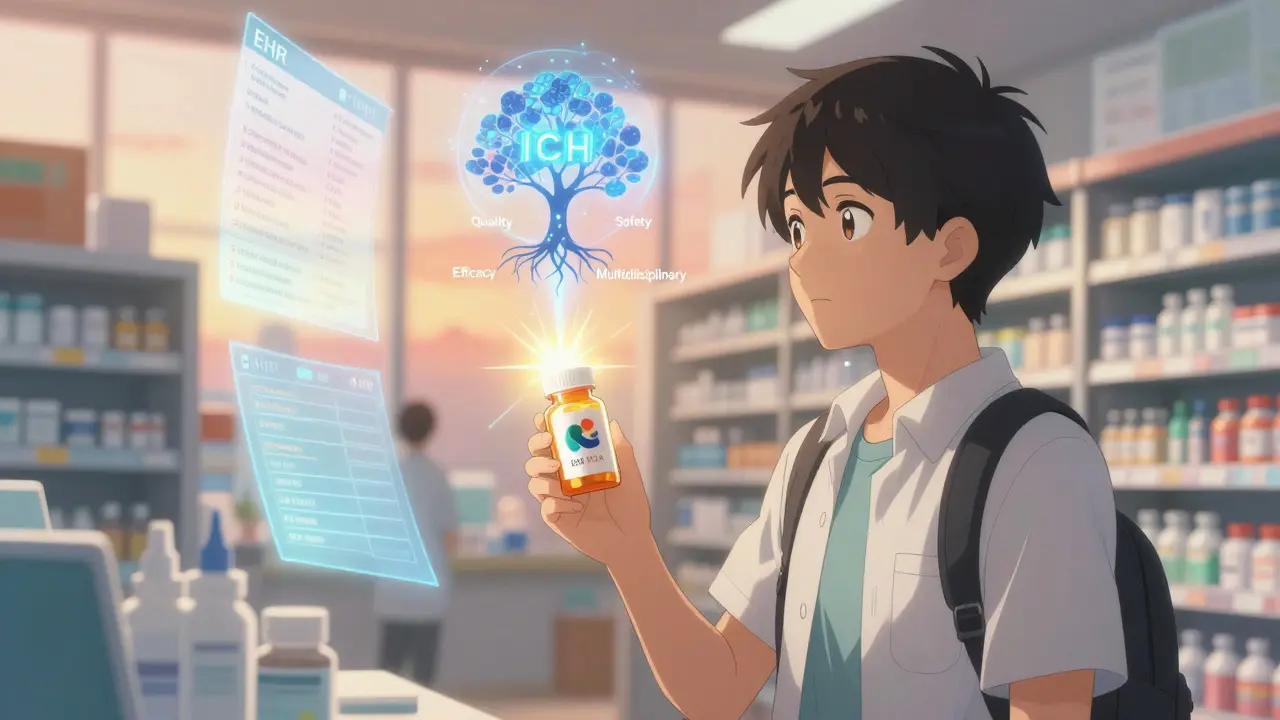
Challenges and the Road Ahead
ICH isn’t perfect. The process is slow. A new guideline can take five to seven years to go from idea to implementation. That’s fine for traditional pills, but what about gene therapies or AI-driven drug discovery? Those move faster than regulatory systems can keep up. There’s also the issue of resources. Smaller companies, especially in low-income countries, struggle to meet ICH standards. The cost of compliance can be prohibitive. That’s why ICH now offers training materials, webinars, and Q&A documents - to help bridge the gap. The future? ICH is expanding. More countries are joining. More therapeutic areas are being covered. The next big focus will be digital health tools, AI in clinical trials, and personalized medicine. The framework is flexible enough to adapt - as long as regulators and industry keep talking.What This Means for You
You might never hear the name ICH. But every time you pick up a prescription, you’re benefiting from it. The safety checks. The consistent dosing. The faster approval of generic drugs. The reduced need for duplicate animal testing. All of it comes from this quiet, technical collaboration. It’s not flashy. There are no headlines about ICH. But without it, medicine would be slower, more expensive, and less safe. In a world where drug shortages and counterfeit medicines are real threats, ICH is one of the most reliable systems we have. The next time you see a new drug on the market - ask yourself: How did it get here so fast? The answer isn’t luck. It’s harmonization.Are ICH guidelines legally binding?
No, ICH guidelines themselves are not laws. But once adopted by a regulatory authority - like the FDA or EMA - they become mandatory. In the U.S., ICH guidelines are published as official FDA guidance documents. In the EU, they’re integrated into national regulations. So while ICH doesn’t enforce rules, the agencies that follow them do.
What’s the difference between ICH and WHO guidelines?
The World Health Organization (WHO) focuses on public health, access, and basic standards for low- and middle-income countries. ICH focuses on the technical requirements for drug approval in high-income markets. WHO sets minimum safety bars. ICH sets the gold standard for advanced markets. Many countries use both: WHO for basic access, ICH for premium products.
How often are ICH guidelines updated?
ICH has four update procedures: Formal for new guidelines, Revision for major changes, Q&A for clarifications, and Maintenance for minor edits. Major revisions happen every 5-10 years. For example, ICH E6 was updated in 2016 after 20 years. But minor clarifications, like those for ICH M13A, can be released annually. The process is ongoing.
Do ICH guidelines apply to vaccines too?
Yes. While ICH was originally built for small-molecule drugs, its safety and quality guidelines (like S1, S2, Q5A) are now routinely applied to vaccines. The ICH M4 structure for regulatory submissions also covers biologics and vaccines. During the pandemic, ICH guidelines helped standardize global vaccine approval, even for newer mRNA products.
Can patients access ICH guidelines?
Yes. All ICH guidelines are publicly available on ich.org. They’re written in technical language for regulators and industry, but summaries and training materials are often available through agencies like the FDA and EMA. Patients don’t need to read them - but they benefit from them every time they take a medicine.
Vikrant Sura
December 22, 2025 AT 21:43ICH? More like ICH-Not-My-Problem. I’ve seen generic meds from India that look like they were made in a garage. Harmonization my ass. If it works, it works, right?
Jim Brown
December 23, 2025 AT 04:41One cannot help but marvel at the quiet, almost poetic elegance of ICH’s architecture - a symphony of regulatory pragmatism, where national sovereignty yields, not to force, but to the undeniable logic of shared epistemic standards. It is not merely efficiency; it is the emergence of a global pharmacopeia, written not in blood or banners, but in chromatograms and clinical trial protocols. A civilization’s conscience, encoded in data.
Sai Keerthan Reddy Proddatoori
December 24, 2025 AT 12:33They say ICH is global but it’s really just Big Pharma and the West writing rules for the rest of us. India makes 40% of the world’s generics - but we still have to jump through their hoops. Who gave them the right? We could make our own standards. We don’t need their approval to save lives.
Johnnie R. Bailey
December 25, 2025 AT 03:13For anyone who thinks ICH is just paperwork - think again. I’ve worked in trials across Africa, Southeast Asia, and the U.S. The moment you align with ICH E6, everything changes. Sites stop cutting corners. Informed consent becomes real, not a formality. Patients aren’t just subjects - they’re partners. That’s not bureaucracy. That’s dignity.
And M13A? Game-changer. I watched a small Nigerian pharma company cut six months off their timeline just because they could use one study for Ghana, Kenya, and the EU. That’s equity in action.
Yes, it’s slow. Yes, it’s expensive. But it’s the only system that doesn’t treat a child in Lagos the same as a statistic in a lab report.
Jeremy Hendriks
December 25, 2025 AT 07:28So let me get this straight - the same people who gave us the opioid crisis are now the ones deciding what’s safe? ICH is just a velvet glove over the iron fist of corporate capture. They harmonize so they can monopolize. You think that generic metformin is cheaper? Nah. It’s because the same 3 companies own the patents and the guidelines. Wake up.
jenny guachamboza
December 25, 2025 AT 11:42ICH??? 😒 like i literally just got a rx from my doc and it was made in china and the pill looked like a tiny rainbow 😭 and now u tell me it’s ‘harmonized’??? 🤡 who even are these people?? why do they get to decide what’s safe?? 🤨 i’m not trusting my life to some pdf from 2024
Tarun Sharma
December 27, 2025 AT 10:24ICH guidelines are not optional for global market access. Compliance is non-negotiable. The system works because it is consistent.
Aliyu Sani
December 27, 2025 AT 16:53Man, ICH is the real MVP. I been in the lab here in Lagos, tryna get a biosimilar approved - every time we tried to do it local, we got stuck in bureaucratic quicksand. But when we aligned with ICH S1 and Q5A? Boom. FDA took our data in 3 months. No cap. It ain’t perfect, but it’s the only thing keeping us from being left behind in the global race.
Also, ICH M13A? Bro, that’s the reason our small firm didn’t go under last year. One study, one submission. Saved us $200K. Respect.
Gabriella da Silva Mendes
December 29, 2025 AT 07:18Okay but let’s be real - ICH is just a tool for rich countries to keep the rest of the world dependent. They make the rules, we follow, and then they charge us 10x for the drugs we helped make. I’ve seen Indian factories producing 90% of the world’s antibiotics - and then the U.S. says ‘oh but your stability data doesn’t meet ICH Q1A’ - like seriously? We’ve been doing this for decades. Now you want us to spend millions to ‘harmonize’ so you can keep your patents? 🤡
And don’t even get me started on how they use ‘real-world evidence’ to push drugs that failed trials. It’s all smoke and mirrors. I’m not buying it. 🙄
Kiranjit Kaur
December 30, 2025 AT 11:54Y’all need to stop acting like ICH is some cold corporate machine - it’s actually one of the few things in pharma that’s working for patients. 🌟 I work with rural clinics in Punjab, and the reason our patients get safe, affordable generics? Because ICH made it possible for Indian manufacturers to sell globally without 10 different tests. 🙌 No more guessing if a pill is legit. No more wasted lives. This isn’t perfect - but it’s the best damn system we’ve got. Let’s not tear it down just because it’s not flashy. 💪❤️