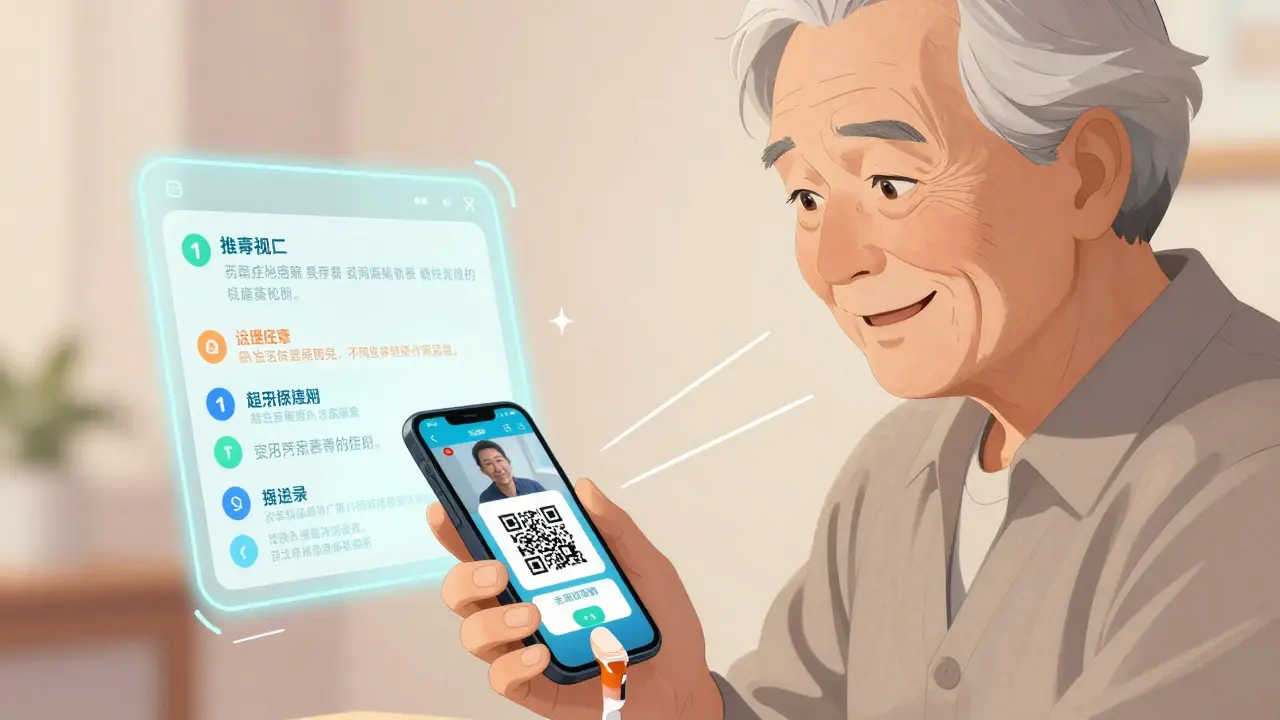
Every year, millions of people take medications they don’t fully understand. Side effects get missed. Doses get confused. Interactions go unnoticed. It’s not because patients aren’t trying - it’s because the tiny print on a pill bottle simply can’t carry enough information. That’s where QR codes and digital prescription label tools come in. They’re not science fiction. They’re here, and they’re changing how we take medicine - especially in places like Australia, where digital health adoption is growing fast.
What QR Codes Do for Prescription Labels
A QR code on a prescription label isn’t just a fancy sticker. It’s a direct link to your medication’s full safety info, dosing instructions, warnings, and even video tutorials. Scan it with your phone, and you get what used to take 10 minutes of digging through a paper insert - in under 3 seconds.
Since 2020, the use of QR codes on medication packaging has jumped 327% globally. Why? Because they work. A 2023 study by Freyr Solutions found that hospitals using QR codes saw a 43% drop in medication errors. That’s not a small number. That’s lives saved.
Unlike static labels that never change, modern pharmacy QR codes are dynamic. That means if a drug’s warning gets updated - say, a new interaction is discovered - the link behind the code updates automatically. No need to reprint millions of bottles. No confusion. Just real-time safety.
How Dynamic QR Codes Work in Practice
Static QR codes are like a printed flyer stuck to a wall. Once it’s out there, it’s stuck. If the info changes, you’re stuck with outdated info. Dynamic QR codes? They’re like a live website. You can change the destination, track who scans it, set expiration dates, and even require login access.
In pharmacies today, 88% of QR codes used are dynamic. Here’s why:
- You can track where scans happen - at home, in a clinic, or at a pharmacy counter.
- You can see which devices are used - iPhone, Android, older models - and optimize the landing page accordingly.
- If a patient scans it at 2 a.m. and doesn’t understand the dosage, the system can flag it for follow-up.
For example, DosePacker, a digital pill dispenser company, used dynamic QR codes on their dose cups for heart failure patients. Within months, medication adherence jumped from 62% to 89%. Why? Because patients didn’t just get a label - they got personalized reminders, video instructions in their language, and alerts if they skipped a dose.
What Information Should Be on the Landing Page
It’s not enough to just link to a PDF. The page behind the QR code must be clear, fast, and easy to use. Here’s what’s required by global standards like Singapore’s Health Sciences Authority (HSA) and the European Medicines Agency:
- Drug name and strength
- Exact dosing instructions (e.g., “Take 1 tablet by mouth every morning with food”)
- Indication - what the drug is for
- Contraindications - who shouldn’t take it
- Warnings and precautions - alcohol, driving, pregnancy
- Drug interactions - common ones like grapefruit or ibuprofen
- Overdose instructions - what to do if too much is taken
And here’s what makes it better: multilingual support. If your phone’s language is set to Spanish, the landing page switches automatically. No need to hunt for a translated sheet. This is already live in pilot programs in Singapore and parts of Canada.
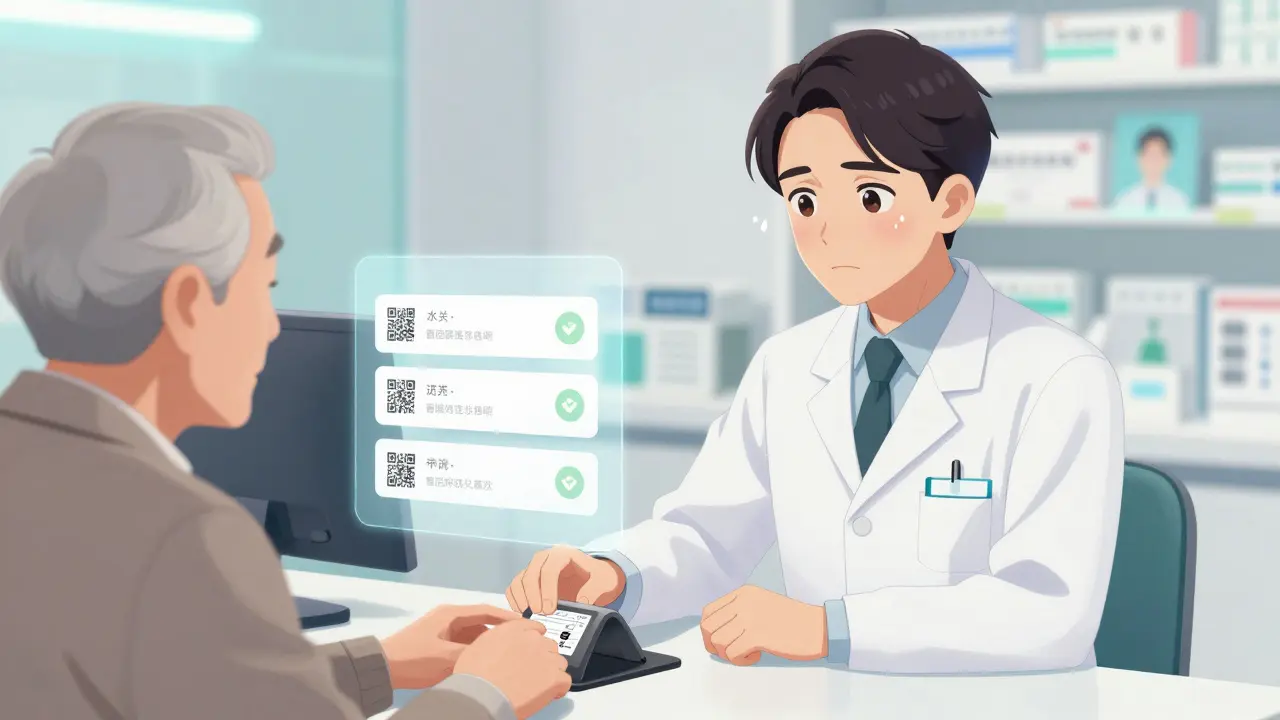
Design Rules for Scannable QR Codes
A QR code that won’t scan is worse than no code at all. It frustrates people. It erodes trust. There are hard rules for how these codes must be printed:
- Minimum 4-module quiet zone - that’s a clear border around the code, no text or color bleeding into it.
- Contrast ratio of at least 70% - black on white works. Light gray on cream? Won’t scan.
- Placement matters - avoid seams, folds, or curved surfaces. If the bottle is round, the code needs to be 30% larger to scan reliably.
- Size - at least 1.5 inches square for reliable scanning at normal distances.
Testing isn’t optional. Companies like Freyr Solutions test QR codes under 12 real-world conditions: glossy packaging under fluorescent lights, labels at 45-degree angles, even on vials held in shaky hands. If it doesn’t scan in those conditions, it fails.
Integration with Pharmacy Systems
QR codes don’t exist in a vacuum. They need to talk to the systems that manage your prescriptions.
Modern digital prescription tools connect to:
- EHR systems via HL7 FHIR APIs - so your doctor sees if you scanned the code, and can follow up.
- Pharmacy management software using NCPDP SCRIPT standards - so when you refill, the QR code updates with the new batch info.
- Patient portals with OAuth 2.0 - so you can log in and see your full medication history, not just one bottle.
At Saint Francis Hospital, they linked QR codes on diabetes education postcards to their patient portal. Result? 83% of patients engaged with the content - compared to 18% with printed brochures.
Cost and Efficiency Compared to Other Tech
Some ask: Why not use NFC chips or RFID tags? They’re more high-tech, right?
Wrong. RFID tags cost between $0.08 and $0.50 per unit. QR codes? $0.0003. That’s 1,000 times cheaper. And they work on every smartphone made after 2018 - no special hardware needed.
Scan success rates? Over 95% across iPhone, Android, and budget phones. That’s better than most barcode scanners in pharmacies.
And here’s the kicker: QR codes don’t require batteries. They don’t need charging. They’re printed on the label, just like the drug name.
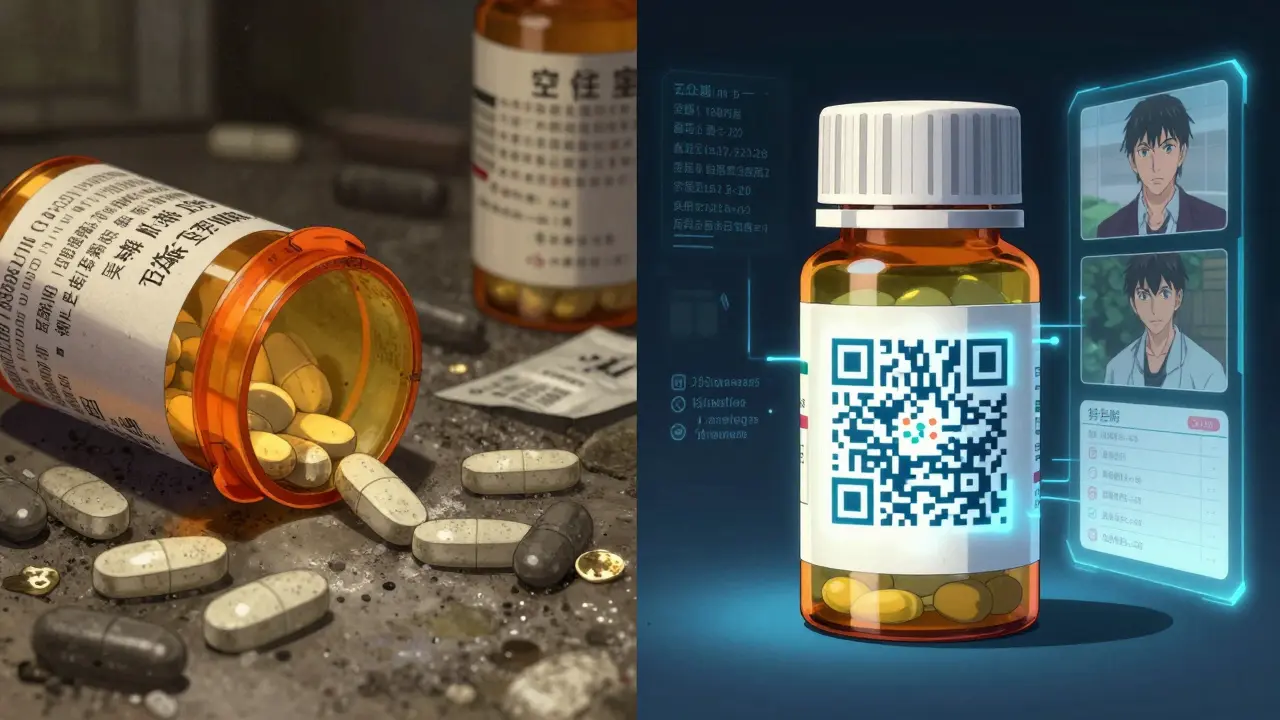
Challenges and How to Solve Them
It’s not perfect. There are real problems.
Older patients struggle. A 2023 study found 38% of people over 65 need help scanning QR codes. That’s not a tech issue - it’s a design flaw. Solution? Staff training. Pharmacies like Clappia now have QR code assistants - trained techs who help patients scan on-site. No extra cost. Just better service.
Internet access is spotty. In rural areas, 23% of patients can’t load the page. Solution? Offline caching. The QR code can store a basic version of the info on the phone after first scan. Or, offer a toll-free number that reads the info aloud.
Staff training takes time. One pharmacy reported 17 hours per technician to get comfortable. That sounds like a lot - until you realize it cut patient callback questions by 63%. That’s 17 hours to save 100+ hours of phone calls a year.
What’s Next? The Future of Digital Prescriptions
By 2026, the EU plans to make QR codes mandatory on all prescription labels. Singapore’s pilot program is expanding. The FDA is pushing for electronic labeling across medical devices.
Next-gen tools are already here:
- AI-powered interaction checkers - scan the code, and the page warns you if your coffee interacts with your blood pressure med.
- Real-time inventory tracking - the QR code tells the pharmacy if your bottle is the latest batch, or if it’s been recalled.
- Language detection - your phone’s language setting triggers the right version automatically.
And the numbers don’t lie. McKinsey’s 2024 survey found 87% of pharmaceutical executives believe QR codes will be essential within five years. The only question is: will your pharmacy be ready?
How to Get Started
If you’re a pharmacist, clinic, or even a patient curious about this tech, here’s how to begin:
- Check your current labels. Are they just text? If so, you’re behind.
- Choose a dynamic QR code provider - Clappia, sQR.me, or Sona QR are all used by major pharmacies.
- Map out what info needs to be on the landing page. Stick to the HSA checklist.
- Test the QR code on 10 different phones - including older models.
- Train your staff. Don’t skip this. Make it part of shift handovers.
- Explain it to patients. Use a simple sign: “Scan here for video instructions and safety info.”
It’s not about replacing paper. It’s about making paper smarter. And for patients who forget doses, miss warnings, or live alone - it’s not just convenient. It’s life-saving.
Can QR codes on prescription labels replace printed information?
No. Regulatory bodies like Singapore’s HSA and the FDA require key safety information - such as drug name, dosage, and contraindications - to remain printed on the packaging. QR codes supplement this, not replace it. They provide expanded details, videos, and updates that can’t fit on a small label.
Do I need a special app to scan a prescription QR code?
No. All modern smartphones - iPhones from 2017 onward and Android devices from 2018 - have built-in QR code scanners in the camera app. Just open the camera, point it at the code, and it will automatically detect and open the link. No download needed.
What if I don’t have a smartphone or internet access?
Pharmacies are required to offer alternatives. If you can’t scan the code, ask for a printed copy, an audio recording, or staff assistance. Many pharmacies now have tablets or kiosks set up specifically to help patients without smartphones access their medication info.
Are QR codes safe? Can they track me?
The QR code itself only links to a website - it doesn’t track you. But the landing page behind it may collect anonymous data like scan time, device type, and location (if you allow it). This helps pharmacies improve service. No personal data like name, address, or medical history is collected unless you log in to a secure patient portal.
Can QR codes be used for controlled substances like opioids?
Yes - and they’re especially important here. Many controlled substances now use QR codes to link to strict usage guidelines, addiction resources, and overdose prevention tools. Some systems even require a one-time login to access the info, ensuring only the patient or caregiver can view sensitive details.
How do I know if the QR code is legitimate and not a scam?
Legitimate prescription QR codes always link to a secure website with a .gov, .edu, or verified .pharmacy domain. Never scan a code that asks you to download an app, enter credit card details, or provide personal medical info. If in doubt, call your pharmacy - they can confirm the correct URL.
Will QR codes make prescriptions cheaper?
Not directly - but they can reduce costs long-term. Fewer medication errors mean fewer hospital visits. Better adherence means fewer complications. One study showed a 28% improvement in adherence, which cuts down on emergency care and refill costs. Pharmacies also save on printing, mailing, and staff time answering questions.
Stephen Rudd
March 8, 2026 AT 22:35Let me be clear - this whole QR code thing is a corporate distraction. We don’t need digital labels. We need better pharmacist training and more time spent with patients. Every time I’ve seen one of these codes, it’s either broken, links to a bloated webpage, or requires logging into a portal that doesn’t even recognize my insurance. It’s not innovation - it’s cost-cutting disguised as convenience. And don’t get me started on the ‘multilingual’ claims. Half the time it switches to Spanish when I’m on English, and then dumps me on a page with broken grammar. This isn’t progress. It’s a glitch waiting to happen.
Erica Santos
March 9, 2026 AT 10:05Oh wow, a QR code that ‘updates automatically.’ How revolutionary. Next you’ll tell me the pill bottle has a self-driving drone that delivers your meds. Let’s be real - if your medication info can’t fit on the label, maybe the drug shouldn’t be sold without a prescription review. This isn’t helping patients. It’s shifting responsibility from the system to the user. ‘Scan this’ is just a fancy way of saying ‘figure it out yourself.’ And yes, I’m aware that ‘lives saved’ is a statistic, not a guarantee. I’ve seen too many grandmas staring at their phones like they’re holding a live grenade.
George Vou
March 10, 2026 AT 15:56bro did you know that qr codes are used by the gov to track what meds people are taking?? like, imagine scanning a code and suddenly your name is in some database with all your prescriptions. i mean, they already know we take xanax and adderall, but now they can see if we scanned it at 3am? what’s next, facial recognition on the pill bottle? also, why do they always make the code so tiny? i tried scanning mine and my phone just froze. no app needed? yeah right. my cousin’s android said ‘unsafe link’ and i had to call 911 to get help. not joking.
Scott Easterling
March 11, 2026 AT 18:48Let’s not pretend this is about safety. It’s about liability. Pharmacies don’t want to be sued for misprinted labels - so now they hide behind a digital link. If you can’t read the dosage, you’re not supposed to take it. Period. And don’t tell me about ‘dynamic updates’ - what if the server goes down? What if the link expires? What if your phone dies? People are dying because they can’t scan a code in the dark. This isn’t innovation. It’s negligence dressed up in tech jargon. And the 95% scan rate? That’s just marketing. I’ve seen codes on curved vials that look like they were printed by a toddler with a broken printer.
Mantooth Lehto
March 12, 2026 AT 01:28This is literally life or death. My mom almost went to the ER last month because she scanned the code and it said 'take with food' - but the video showed a guy eating a burger. She took hers with coffee and got dizzy for 6 hours. I cried. Why is no one talking about how these videos are made by interns? Why is there no quality control? And why do they assume everyone has a smartphone? My aunt doesn’t even know how to text. This isn’t helpful. It’s cruel. 😔
Melba Miller
March 13, 2026 AT 07:06QR codes on prescriptions? In America? Please. We don’t even have universal healthcare, and now we’re betting patient safety on smartphone access? This is what happens when Silicon Valley thinks they can fix everything with a scan. Meanwhile, rural clinics are still using carbon copies. And let’s not forget - 23% of people can’t load the page. So what? They just don’t matter? This isn’t progress. It’s exclusion. And it’s being sold as a public health win. I’m sick of it.
Katy Shamitz
March 14, 2026 AT 20:05Oh my gosh, I love this so much! I just scanned my insulin label last week and it showed me a video in ASL - my cousin who’s deaf was so happy! And the fact that it updates automatically? My mom’s blood pressure med had a new warning, and she got it without even calling the pharmacy. I know people say ‘but what about the elderly?’ - but that’s not the code’s fault. That’s our job to help them. We need more staff training, not less tech. And honestly? The cost difference is insane. RFID tags? Are you kidding? QR codes are free. Literally. It’s 2024. We can do better.
Nicholas Gama
March 15, 2026 AT 22:45QR codes are a Band-Aid on a hemorrhage. The real issue? Pharma companies don’t want to print legible labels. They want to cut costs. The ‘dynamic’ feature is just a way to push updates without regulatory oversight. And the ‘multilingual’ claim? A marketing lie. Most landing pages are still English-first. The FDA doesn’t require translation. It’s performative tech. And don’t get me started on the ‘scan at 2 a.m.’ tracking - that’s surveillance masquerading as care. This isn’t innovation. It’s exploitation.
Mary Beth Brook
March 16, 2026 AT 18:03Dynamic QR codes leverage FHIR-compliant endpoints via OAuth 2.0-secured APIs to ingest real-time EHR data, enabling bidirectional interoperability with NCPDP SCRIPT-compliant pharmacy systems. This architecture reduces medication error rates by enforcing contextualized, patient-specific dosing logic - a paradigm shift from static, siloed labeling. The 327% global adoption curve is not anecdotal - it’s a direct function of regulatory alignment with HSA and EMA standards. The cost differential versus RFID is not merely economic - it’s systemic. This isn’t a tool. It’s infrastructure.
Scott Easterling
March 17, 2026 AT 02:09Wait - you’re telling me the QR code updates automatically? So what happens when the link changes and someone scanned it yesterday? They get outdated info? That’s not safety - that’s a ticking time bomb. And who’s responsible when it fails? The pharmacist? The patient? The tech vendor? Nobody. That’s the whole point. You think this is helping? It’s just another way to avoid accountability. I’ve seen bottles with codes that scan to a 404. No one got fired. No one got fined. Just another patient confused.