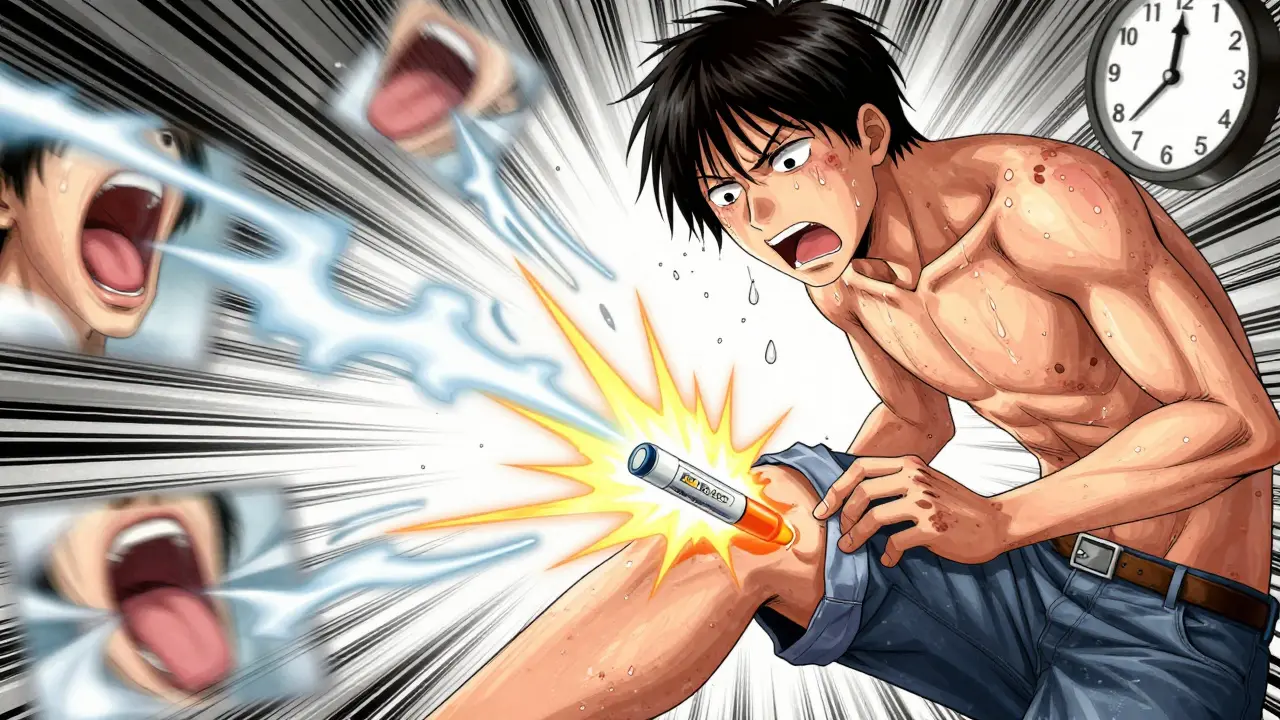
When anaphylaxis hits, you don’t have time to read instructions. Your heart races, your throat closes, your skin breaks out in hives - and every second counts. Epinephrine auto-injectors like EpiPen, Auvi-Q, or Adrenaclick can save your life, but only if you use them correctly. Too many people wait too long. Some even hesitate because they’re scared of the needle. But here’s the truth: epinephrine auto-injector use within five minutes of symptom onset cuts the risk of death by 75%. Delaying it for antihistamines or waiting to see if it gets worse? That’s when things turn deadly.
What Happens During Anaphylaxis?
Anaphylaxis isn’t just a bad allergic reaction. It’s your immune system going into full panic mode. Histamine floods your body, blood vessels leak, airways swell, and your blood pressure plummets. You might feel dizzy, nauseous, or like you’re suffocating. In severe cases, you lose consciousness. Without epinephrine, your body can’t fight back. The reaction can kill in under 30 minutes.Epinephrine works fast. It tightens blood vessels to raise your pressure, opens your airways so you can breathe, and stops the cascade of chemicals that make you sick. It’s not a cure - it’s a bridge. It buys you time to get to the hospital. That’s why it’s the only treatment recommended as first-line by every major allergy organization in the world.
Which Auto-Injector Do You Have?
There are four main types in use today. Knowing which one you’re holding matters.- EpiPen: The most common. Two doses: 0.15mg for kids under 66 lbs, 0.3mg for adults and teens over 66 lbs. It has a bright orange tip you press into the thigh. You hear a click, hold for 3 seconds, then remove.
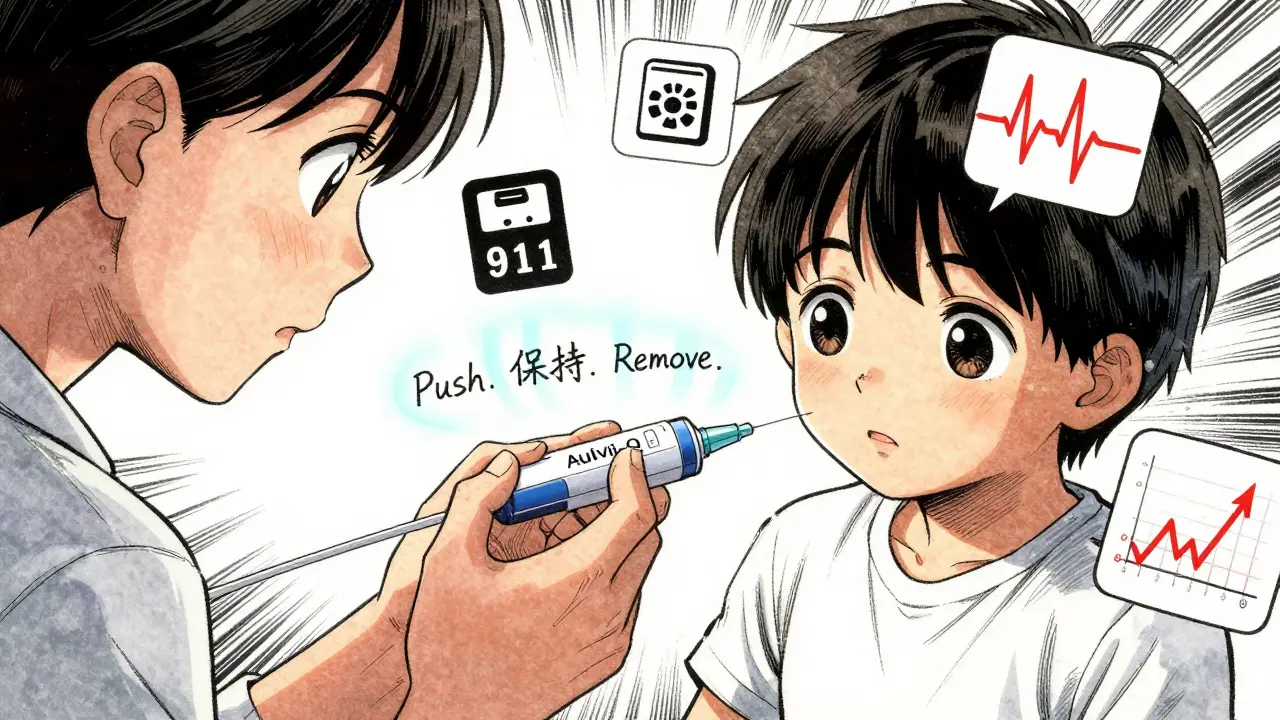
- Auvi-Q: Smaller, rectangular, and speaks to you. It tells you when to inject, when to hold, and when to remove. Voice guidance cuts user error by nearly half. It’s pricier but lifesaving if you panic.
- Adrenaclick: Cheaper, but you have to pull off two caps and press a button manually. It doesn’t auto-deploy the needle. More steps mean more room for mistakes.
- Neffy: The new needle-free option. You spray it into one nostril. Works for 81% of severe reactions, but if you don’t seal your nose properly, it fails. Still new - not yet widely available.
Most people have EpiPen. But if yours is expired, damaged, or you’re not sure how to use it, get a new one and train with it now - not when you’re in crisis.
Step-by-Step: How to Use an Epinephrine Auto-Injector
Follow these steps exactly. No shortcuts. No guessing.
- Recognize the signs. Swelling of lips, tongue, or throat. Trouble breathing. Wheezing. Hives. Dizziness. Vomiting. Rapid pulse. Feeling like you’re going to pass out. If you’re unsure - inject anyway. Better safe than dead.
- Call 911 immediately. Even if you feel better after the shot. Anaphylaxis can come back. You need to be monitored for at least 4 hours.
- Remove the safety cap. For EpiPen, pull off the blue cap. For Auvi-Q, pull the red tab. For Adrenaclick, remove both the gray and black caps. Don’t touch the orange tip - that’s where the needle comes out.
- Place it on the outer thigh. You can inject through clothing. Jeans, leggings, even thick pants - it doesn’t matter. The outer thigh is the best spot because it’s thick, has good blood flow, and is easy to reach.
- Push hard until you hear a click. Hold it firmly against the thigh. Don’t hesitate. Don’t tap it. Push hard enough to trigger the spring mechanism. You’ll hear a click. That means it’s working.
- Hold for 3 seconds. Don’t pull it away too soon. The full dose takes 3 seconds to deliver. Count out loud: “One-Mississippi, Two-Mississippi, Three-Mississippi.”
- Remove and massage the area. Take the device away. Rub the injection site for 10 seconds. This helps the medicine absorb faster.
- Call 911 again if you haven’t. If you’re alone, call while holding the device. If someone else is with you, have them call while you inject.
- Stay lying down. Don’t stand up. Don’t walk. Lie flat with your legs raised if you can. Standing can make your blood pressure drop even more and cause fainting.
- Be ready for a second dose. If symptoms don’t improve after 5-10 minutes - or if they come back - use the second injector. Always carry two.
Common Mistakes (And How to Avoid Them)
Real data shows most people mess up. Here’s what goes wrong - and how to fix it.
- Waiting too long. 42% of people wait more than 15 minutes before injecting. If you’re having trouble breathing or your throat is closing - don’t wait for a doctor. Inject now.
- Injecting in the wrong place. Some people aim for the arm, belly, or buttocks. Only the outer thigh works. It’s the only spot proven to deliver the drug fast enough.
- Not holding it long enough. 61% of users pull away before 3 seconds. That means you get less than half the dose. Hold it like your life depends on it - because it does.
- Forgetting the second dose. 38% of fatal cases involved only one dose. If you’re still struggling after 5 minutes - use the second one.
- Not calling 911. You might feel better after the shot, but the reaction can rebound. Emergency teams need to be on the way.
Storage and Expiration
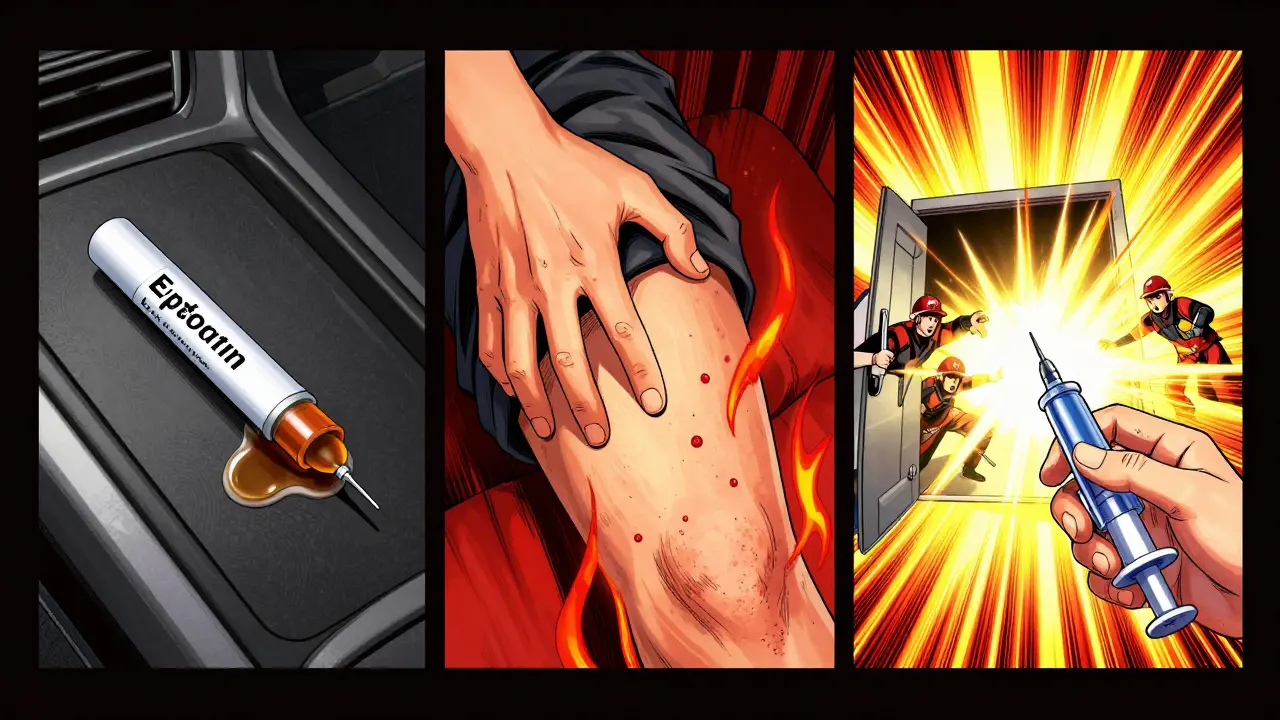
Your injector won’t work if it’s been sitting in a hot car or freezing glove compartment. Epinephrine breaks down in extreme heat or cold.
- Keep it between 59°F and 86°F (15-30°C). That’s room temperature.
- Avoid direct sunlight. Don’t leave it on the dashboard.
- Check the expiration date every month. Replace it before it expires - don’t wait.
- Carry it with you at all times. In your bag, your pocket, your child’s backpack. Don’t leave it in the car or at home.
- If the liquid turns brown or has particles in it - throw it out and get a new one.
Training and Practice
Practice with a trainer device - not your real one. Most pharmacies give you a training unit for free. Or ask your allergist.
Do this every 6 months:
- Remove the safety cap
- Practice the push-and-hold motion on a pillow or thick fabric
- Recite the steps out loud: “Call 911, push thigh, hold 3 seconds, massage, wait for help.”
Teach your family, your coworkers, your child’s teacher. Don’t assume they know how. Most don’t. A 2023 study found 72% of school nurses had seen students misused their injectors during drills - mostly because they forgot to remove the blue cap.
What About Kids?
If you’re giving it to a child, hold their leg firmly. Don’t let them kick or move. Use your whole hand to stabilize. If they’re small, lay them on their back and inject from the side. Don’t worry about being gentle - you need to get the full dose in. The needle is short, but it’s strong enough to go through clothes and skin.
Many kids are scared of needles. That’s why Auvi-Q’s voice guidance helps so much. It distracts them and guides you both through the panic.
What If You’re Not Sure It’s Anaphylaxis?
Here’s the rule: When in doubt, inject.
Epinephrine is safe. Side effects? A racing heart, shaky hands, anxiety. They last 10-20 minutes. Far better than dying. One study showed 68% of epinephrine doses were given for mild reactions that didn’t need it - but those were mostly unnecessary hospital visits, not deaths. The real danger is under-treating.
If you’re allergic to peanuts, shellfish, or bee stings - and you’re having any respiratory or cardiovascular symptoms - inject. Don’t wait for the rash. Don’t wait for swelling. If you’re struggling to breathe or feel faint - that’s the signal.
After the Injection
You’ve done your part. Now wait for help.
- Stay lying down. Don’t stand up.
- Keep the used injector with you. Paramedics will need to know what you took and when.
- Even if you feel fine, go to the ER. Biphasic reactions - where symptoms return hours later - happen in up to 20% of cases.
- Afterward, talk to your allergist. You may need a new action plan, new medications, or allergy testing.
Final Thought: This Is Not Optional
Anaphylaxis doesn’t care if you’re busy, scared, or forgetful. It doesn’t wait for you to find your phone or call your doctor. It strikes fast - and only epinephrine can stop it.
Carry two injectors. Train everyone around you. Practice every six months. Replace them before they expire. Don’t wait for a near-death experience to learn how to use one.
Because when the moment comes - you won’t have time to think. You’ll only have time to act. Make sure you’re ready.
Can I use an epinephrine auto-injector through clothing?
Yes. EpiPen and other auto-injectors are designed to work through clothing, including jeans, pants, and thick fabrics. You don’t need to remove clothing unless it’s extremely thick or has metal parts like zippers or buttons directly over the injection site. The needle is strong enough to penetrate most fabrics. This is especially important in emergencies where removing clothes could waste critical seconds.
What if I accidentally inject myself in the wrong place?
If you accidentally inject into your finger, hand, or arm, go to the emergency room immediately. Epinephrine injected into small blood vessels can cause tissue damage or restrict blood flow. Even if you feel fine, you need medical evaluation. Always aim for the outer thigh - it’s the only approved site for safe, fast absorption. If you’re unsure, use the thigh anyway - it’s safer than not injecting at all.
Can I reuse an epinephrine auto-injector?
No. Auto-injectors are single-use devices. Once the needle is deployed, the mechanism locks and cannot be reset. Even if you think not all the medicine was delivered, you cannot reuse it. Always carry two injectors so you can use a second one if needed. Never try to refill or repair a used device - it’s dangerous and ineffective.
How long does epinephrine last in the body?
Epinephrine starts working within seconds and peaks in about 5-10 minutes. Its effects last 10-20 minutes, which is why a second dose may be needed if symptoms return. The drug is metabolized quickly by the liver and kidneys. Even if you feel better, you still need to go to the hospital because the reaction can come back hours later - a phenomenon called biphasic anaphylaxis.
Is Neffy better than EpiPen?
Neffy is a needle-free nasal spray approved in 2023 and works for 81% of severe reactions. It’s a good option for people terrified of needles. But it requires proper technique - sealing your nose and breathing normally while spraying. In testing, 32% of people failed to use it correctly. EpiPen has decades of proven real-world use and is more reliable in panic situations. Neffy is promising, but EpiPen remains the gold standard for most people. Always follow your doctor’s recommendation.
What should I do if I only have one injector left?
Use it. Never hesitate. Even one dose can save your life. But after using it, call 911 immediately and go to the ER. You’ll need monitoring for possible biphasic reactions. Once you’re stable, get a new prescription right away. Never go without two injectors again. Many insurance plans cover replacements with a doctor’s note. Some manufacturers offer free or low-cost programs for those who can’t afford them.
Usha Sundar
December 22, 2025 AT 22:10I once panicked and used my EpiPen on my arm instead of my thigh. Didn’t know better. Got lucky. Never again.
Now I keep the trainer on my keychain.
Christine Détraz
December 23, 2025 AT 03:33This is the most important thing I’ve read all year. I used to think antihistamines were enough. I was wrong.
My daughter has a peanut allergy. We did a drill last weekend-me, her teacher, her babysitter. We all practiced with the trainer. She even said, ‘Click, hold, massage.’
That’s the moment I realized: knowledge saves lives. Not just medicine.
John Pearce CP
December 24, 2025 AT 07:27It is a national disgrace that so many Americans remain untrained in the use of life-saving medical devices. In Germany, schoolchildren are required to demonstrate proficiency with auto-injectors by age 10. Here, we wait until someone nearly dies.
Furthermore, the proliferation of needle-free alternatives like Neffy is a dangerous distraction. Epinephrine delivered intramuscularly is the gold standard. No compromise. No innovation over efficacy.
Those who hesitate are not merely negligent-they are a liability to public health.
CHETAN MANDLECHA
December 26, 2025 AT 00:24Been using EpiPen since 2018. Never had to use it for real. But I carry two. Always.
My mom used to say, ‘Better to look stupid than be dead.’ She was right.
Also, don’t store yours in the car. I learned that the hard way-mine turned brown after a Texas summer. Bought a new one. Worth every penny.
Ajay Sangani
December 27, 2025 AT 10:15i wonder if the fear of needles is really about the needle… or about how little control we have when our bodies betray us.
epinephrine doesn’t fix the allergy. it just buys time. and time is the one thing we can’t make more of.
maybe the real crisis isn’t the lack of training… it’s the fact that we’ve normalized living with the threat of sudden death.
and we don’t talk about that.
we just carry the pens.
and hope.
Gray Dedoiko
December 27, 2025 AT 16:18Just had to use mine last month. Felt like my throat was closing. Didn’t wait. Injected. Called 911. Felt shaky as hell. But I was breathing.
Paramedics said I did everything right. Still, I cried in the ambulance.
Thanks for this guide. It’s the reason I didn’t freeze.
Aurora Daisy
December 28, 2025 AT 20:07Oh look, another ‘just inject and pray’ guide from the US. Meanwhile, in the UK, we teach kids to recognize symptoms in primary school and have epinephrine in every school nurse’s office.
But sure, let’s keep pretending personal responsibility is enough.
Also, why is everyone so obsessed with EpiPen? Auvi-Q’s voice guidance is literally designed for panic. And you’re still using the old one? Wow.
Also, your ‘don’t wait’ advice is cute. But if you’re allergic to cashews and ate a trail mix at 2 PM, you had 45 minutes to react. You didn’t ‘wait.’ You just didn’t know.
Paula Villete
December 29, 2025 AT 17:20Wait-so you’re saying epinephrine is safe? Because I read a study that said 1 in 500 injections cause cardiac arrhythmias in people with undiagnosed heart conditions.
And yet, we’re told to inject without hesitation?
Also, I’m pretty sure the ‘hold for 3 seconds’ rule was based on a 2007 study with 12 participants. Since then, we’ve had better tech.
And Neffy? It’s not ‘promising’-it’s FDA-approved. The fact that you’re still clinging to EpiPen like it’s a religious icon… that’s the real problem.
Also, typo: ‘biphasic anaphylaxis’ is not ‘biphasic anaphylaxis.’
Georgia Brach
December 30, 2025 AT 00:25Let’s be honest: this entire guide is performative safety. Carrying two injectors doesn’t prevent anaphylaxis. It just delays the inevitable.
And the emphasis on ‘inject first, think later’ ignores the fact that most reactions are preceded by warning signs. If you’re not monitoring your environment, you’re not managing your allergy-you’re gambling.
Also, the claim that epinephrine reduces death risk by 75%? That’s a meta-analysis with selection bias. The real number is closer to 30% if you account for delayed EMS response.
Stop pretending this is a simple fix. It’s not. It’s a Band-Aid on a bullet wound.