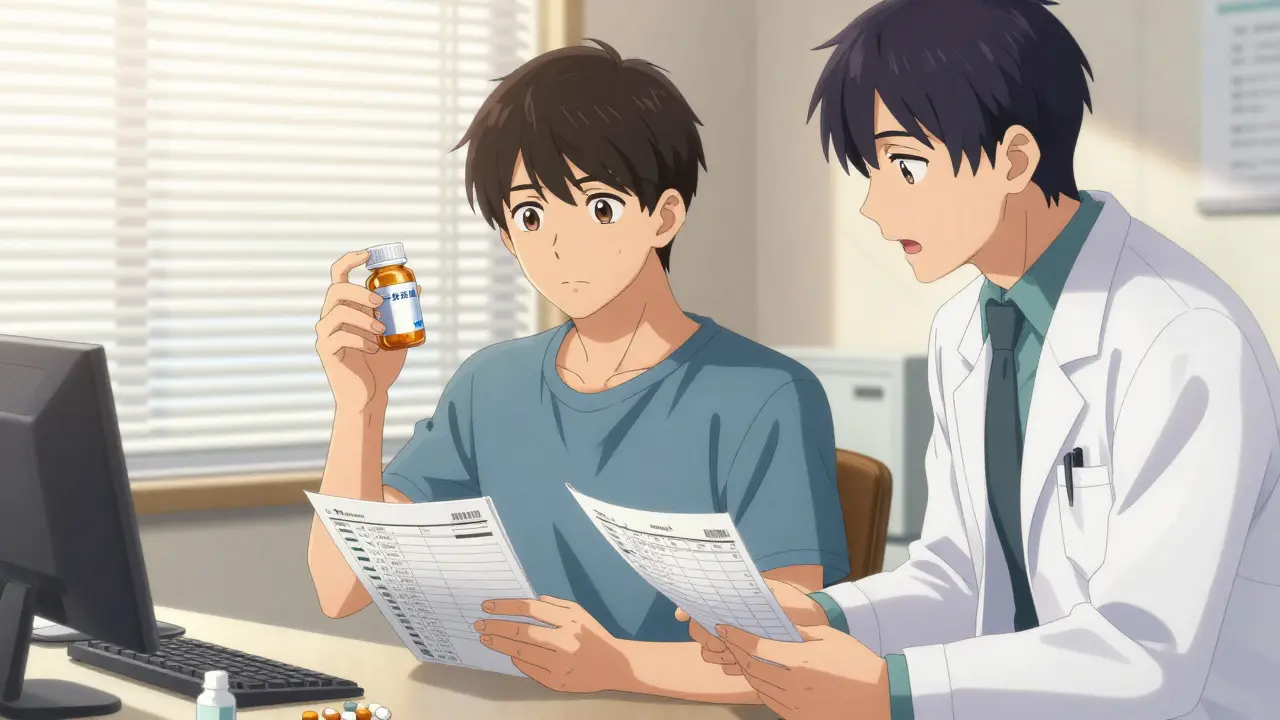
Switching from a brand-name medication to a generic isn’t always harmless-even if the FDA says they’re the same. Many people notice real differences: a medication that used to control their seizures, blood pressure, or mood suddenly doesn’t work the same way. And when your pharmacist hands you a different pill with a new label, it’s easy to feel powerless. But you’re not. You have the right to ask to stay on your brand medication, and you don’t need to be intimidating to make it happen. You just need to be prepared.
Why Some People Can’t Switch to Generics
Not all medications are created equal, even when they have the same active ingredient. For drugs with a narrow therapeutic index-like warfarin, levothyroxine, or certain anti-seizure meds-the difference between too little and too much can be dangerous. The FDA allows generics to vary by up to 20% in how much of the drug enters your bloodstream. That might sound small, but for someone on warfarin, that swing can mean a clot or a bleed. Studies show patients who switch between different generic versions of warfarin have a 17% higher chance of ending up in the ER because their blood levels became unstable. Then there are the inactive ingredients. Generics use different fillers, dyes, or preservatives. For people with allergies or sensitivities, that’s a problem. One person might react to lactose in a generic pill. Another might get migraines from a dye that wasn’t in the brand version. About 7% of patients report allergic or adverse reactions tied to these additives, according to the Journal of Allergy and Clinical Immunology. If you’ve had a rash, stomach upset, or weird side effects after switching, it’s not in your head. It’s real. And then there’s the psychological side. Some patients just feel more confident with the brand they’ve trusted for years. That matters too. If you’ve been stable on a brand-name drug for five years and a generic makes you feel off, your experience counts.What to Say to Your Doctor
Don’t go in saying, “I don’t trust generics.” That shuts the door. Instead, go in with facts. Use the SBAR method-it’s used in hospitals for a reason:- Situation: “I was on brand-name Keppra for five years with no seizures. After switching to the generic, I had three seizures in two months.”
- Background: “I’ve tried two different generics. Both caused the same problem. I stopped them both and went back to the brand, and my levels stabilized.”
- Assessment: “I believe this is a therapeutic equivalence issue, not just perception. My neurologist last year noted my blood levels dropped after the switch.”
- Recommendation: “Can we keep me on the brand? Or at least try one more time with the same generic under close monitoring?”
Insurance Won’t Cover It-Now What?
Most insurance plans force you to try the generic first. That’s called “step therapy.” But you can appeal. About 72% of these denials get overturned when you have solid documentation. Your doctor has to fill out prior authorization forms. That’s a pain for them-and they might skip it if you don’t help. Give them everything they need: your symptom log, lab reports, pharmacy records showing you tried generics and failed. Ask them to write “Dispense as Written” (DAW-1) on the prescription. That code tells the pharmacy: don’t substitute. This isn’t a request-it’s a medical necessity. If your doctor refuses, ask why. Is it because they’re overwhelmed by paperwork? Offer to help fill out the form. Many practices have patient advocates or pharmacy liaisons who can help. Call your insurance company. Ask for the appeals process. Keep a record of every call: date, name, what they said. You’re not being difficult. You’re protecting your health.
Know Your Medication’s Status
Not all brand-name drugs have generics. For example, most biologics-like insulin or rheumatoid arthritis treatments-don’t have true generics. They have biosimilars, which are close but not identical. And some brand drugs are still under patent, so no generic exists at all. Use the FDA’s Orange Book. It lists every approved drug and whether it’s therapeutically equivalent to a generic. Type your drug name into Drugs@FDA (FDA.gov) and look up the ANDA number. If it says “AB” rated, it’s considered interchangeable. If it says “BN” or has no rating, that’s a red flag. You can show this to your doctor. It’s not opinion-it’s federal data.What If Your Doctor Says No?
Sometimes, doctors say no because they’re pressured by insurers or think you’re being stubborn. Don’t take it personally. Ask for a referral to a specialist. If you’re on a thyroid med, see an endocrinologist. If it’s an epilepsy drug, see a neurologist. Specialists are more likely to understand the risks of switching. You can also ask for a trial. “Can we try the generic for 30 days with weekly blood tests?” That gives your doctor a way out without compromising your safety. If your levels drop or symptoms return, you have proof.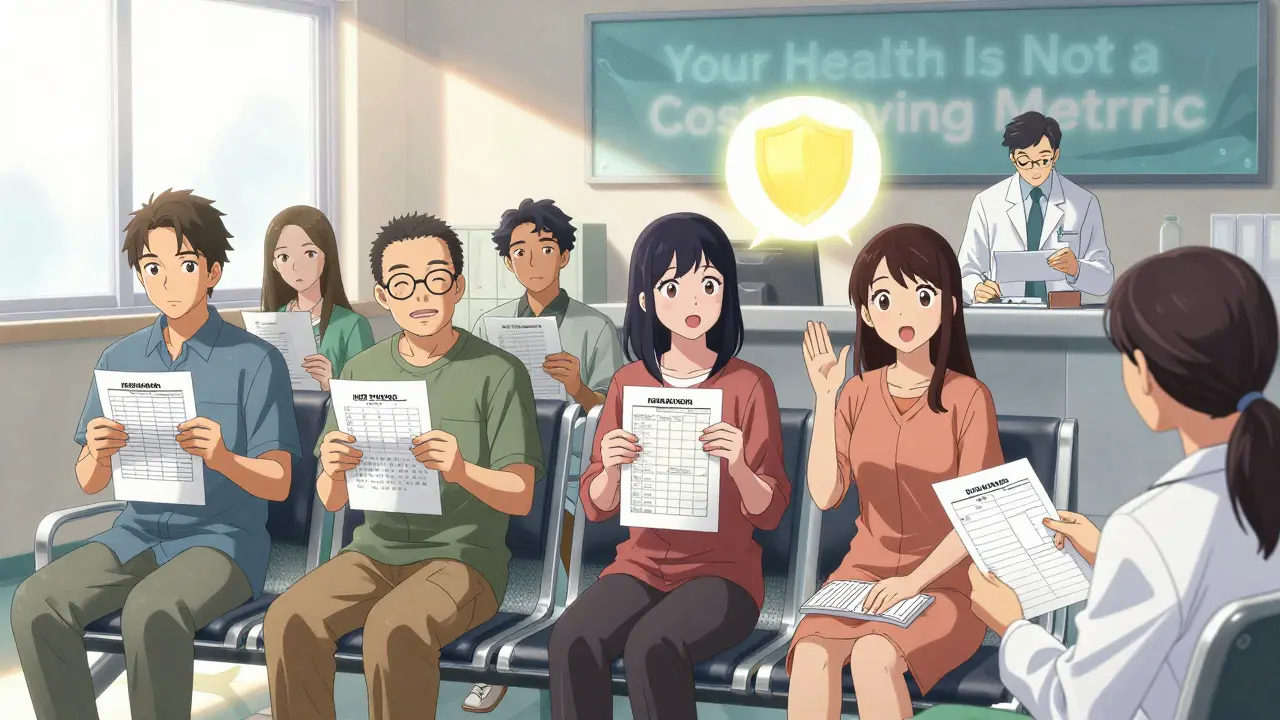
Real Stories, Real Results
One woman with bipolar disorder switched from brand-name Lamictal to a generic and started having panic attacks every night. She brought her sleep diary and mood tracker to her psychiatrist. They switched her back. Her insurance denied it twice. She appealed. Approved on the third try. A man on warfarin had his INR levels swing wildly after switching generics. His doctor didn’t believe him until he showed the lab reports from three different pharmacies. He got an exception. His INR has been stable for two years. These aren’t rare cases. A 2022 NCBI study found 29% of patients refused to switch to generics because of past bad experiences. You’re not alone.What You Can Do Right Now
- Check your last prescription. Is it labeled “Dispense as Written”? If not, ask your pharmacist why.
- Look up your drug on FDA.gov/Drugs@FDA. Find its therapeutic rating.
- Start a simple journal: Date, Medication, Symptoms, Severity (1-10).
- Save every pharmacy receipt. Note the manufacturer name.
- Ask your doctor: “Can we put DAW-1 on this script?”
Final Thought
You don’t have to fight the system. You just have to speak up clearly, with evidence, and ask for what you need. Your health isn’t a cost-saving metric. It’s your life. If a brand-name drug keeps you stable, safe, and functioning-you deserve to stay on it. Doctors want to help. They just need you to give them the tools to do it.Can my pharmacist switch my brand medication to a generic without telling me?
In 47 states, pharmacists can substitute a generic without telling you-unless your doctor writes "Dispense as Written" (DAW-1) on the prescription. Always check your pill bottle. If the name or color changed, ask your pharmacist if it’s the same drug. If you’re unsure, call your doctor’s office to confirm.
Are generics always cheaper than brand-name drugs?
Usually, yes-but not always. Some brand-name drugs have patient assistance programs that make them free or low-cost. Some generics, especially from foreign manufacturers, can be expensive due to supply issues. Always compare your copay at the pharmacy. Sometimes, the brand costs the same as the generic.
What if I can’t afford the brand medication even with insurance?
Ask your doctor about patient assistance programs. Most brand-name manufacturers offer free or discounted medication for people who qualify based on income. You can also check NeedyMeds.org or RxAssist.org. These are nonprofit sites that help people find financial aid for prescriptions.
Is it safe to split a brand pill to save money?
Only if your doctor approves it. Some pills are designed to release medicine slowly and shouldn’t be split. Others, like tablets without a coating, can be split safely. Never split capsules or extended-release pills. Always ask your pharmacist before cutting any pill.
Why do some doctors resist letting patients stay on brand medications?
Many doctors are under pressure from insurers to reduce costs. Prior authorization paperwork takes 15-30 minutes per patient. Some doctors give in just to avoid the hassle. That doesn’t mean your concerns aren’t valid. If your doctor dismisses you, ask for a second opinion or ask to speak with a specialist.
jeremy carroll
December 15, 2025 AT 18:40just had to switch my keppra generic last month and woke up having a seizure in the shower. no joke. my doc said it was 'probably coincidence' but i showed him my journal and he finally gave in. you're not crazy if it doesn't work. your body knows.
Edward Stevens
December 16, 2025 AT 10:39oh wow so the FDA just decided to turn healthcare into a game of russian roulette? brilliant. next they'll say 'it's all in your head' when your insulin stops working because the filler changed from cornstarch to potato starch. lol.
Jonny Moran
December 17, 2025 AT 02:31you’re not alone. i’ve been on warfarin for 12 years. switched generics once, ended up in the ER with a bleed. now my doc writes DAW-1 on everything. it’s not about being stubborn-it’s about survival. if your med keeps you alive, fight for it. your life > insurance spreadsheets.
Sinéad Griffin
December 18, 2025 AT 12:53YESSSSS 💪 this is why i keep my Lamictal brand no matter what. my insurance tried to force me onto generic 3x. i filed appeals, sent my mood graphs, and even called their CEO’s office. they finally caved. don’t let them gaslight you. your brain is not a cost center. 🧠❤️
Rulich Pretorius
December 20, 2025 AT 03:16the science here is solid, but the real issue is systemic. in the U.S., profit drives pharmaceutical policy, not patient outcomes. i’ve seen this in South Africa too-where generics are often the only option, and people suffer silently because they can’t afford to challenge the system. this post is a lifeline for those who feel powerless.
Daniel Thompson
December 21, 2025 AT 20:59I must point out that the FDA’s 20% bioequivalence variance is not a flaw-it is a regulatory standard designed to ensure broad accessibility. To claim that this leads to clinical instability is an overgeneralization. Many patients transition seamlessly. Your anecdotal experience does not invalidate population-level data.
Daniel Wevik
December 22, 2025 AT 22:29DAW-1 is non-negotiable. if your doc won’t write it, find a new one. pharmacists are legally allowed to substitute unless explicitly prohibited. this isn’t about preference-it’s about pharmacokinetic integrity. if your drug has a narrow therapeutic index, you’re not a patient-you’re a clinical trial subject. demand accountability.
Sarthak Jain
December 24, 2025 AT 00:20bro i switched my thyroid med last year and started feeling like a zombie. i thought it was stress. then i checked the bottle-different color, different name. called my doc, showed him the receipt. he said 'oh yeah that generic is trash for levothyroxine.' we switched back. saved my life. check your pills ppl.
Alexis Wright
December 25, 2025 AT 03:59Let me be the first to say this: the entire pharmaceutical-industrial complex is a rigged casino. The FDA is a puppet of Big Pharma. Generics are made in China with unregulated fillers. The 20% variance? That’s not a loophole-it’s a death sentence disguised as policy. And your doctor? He’s paid to shut you up. Wake up. This isn’t medicine. It’s corporate control.
Thomas Anderson
December 25, 2025 AT 10:00if your pill looks different, ask. always. i used to ignore it until my anxiety spiked and i couldn’t sleep. turned out the generic had a new dye. switched back. 2 minutes on the phone with your pharmacist can save you weeks of suffering.
Tim Bartik
December 26, 2025 AT 21:11they’re tryna turn us into lab rats with a side of copay. i got switched to some generic warfarin and started bleeding outta my gums. called the pharmacy-"oh that's just the new batch from India." i said "i don't care if it's from Mars, i need my brand." they gave me a discount card. still got my meds. screw their cost-cutting BS.
Rich Robertson
December 28, 2025 AT 05:36as someone who grew up in three countries, i’ve seen how this plays out differently. in germany, pharmacists must ask before switching. in the U.S.? you get a new pill and a receipt you don’t understand. this post is a quiet revolution. share it with your mom, your uncle, your friend on disability. knowledge is power-and it’s the only thing that can stop this.
Natalie Koeber
December 29, 2025 AT 00:23did you know the FDA allows generics to have different amounts of active ingredient because they're secretly testing how much the public will tolerate before they revolt? this is all part of the Great Medication Experiment. They want us dependent on emergency care so they can sell more drugs. The Orange Book? Fake. The whole system is a pyramid scheme.
Wade Mercer
December 30, 2025 AT 15:35People who demand brand-name drugs are just being selfish. Insurance exists to help the many, not pamper the few. If you can’t afford the brand, you shouldn’t be on it. There are cheaper alternatives. You’re not entitled to the most expensive option just because you feel better on it.
Dwayne hiers
January 1, 2026 AT 09:21For drugs with narrow therapeutic index-warfarin, levothyroxine, phenytoin, cyclosporine-bioequivalence thresholds are insufficient. The 80–125% AUC range is statistically acceptable but clinically inadequate for sensitive populations. DAW-1 should be mandated for these agents. The FDA’s AB rating is misleading; it indicates chemical equivalence, not clinical interchangeability. Advocate for therapeutic substitution protocols with therapeutic drug monitoring. Your life is not a statistical outlier-it’s a clinical imperative.