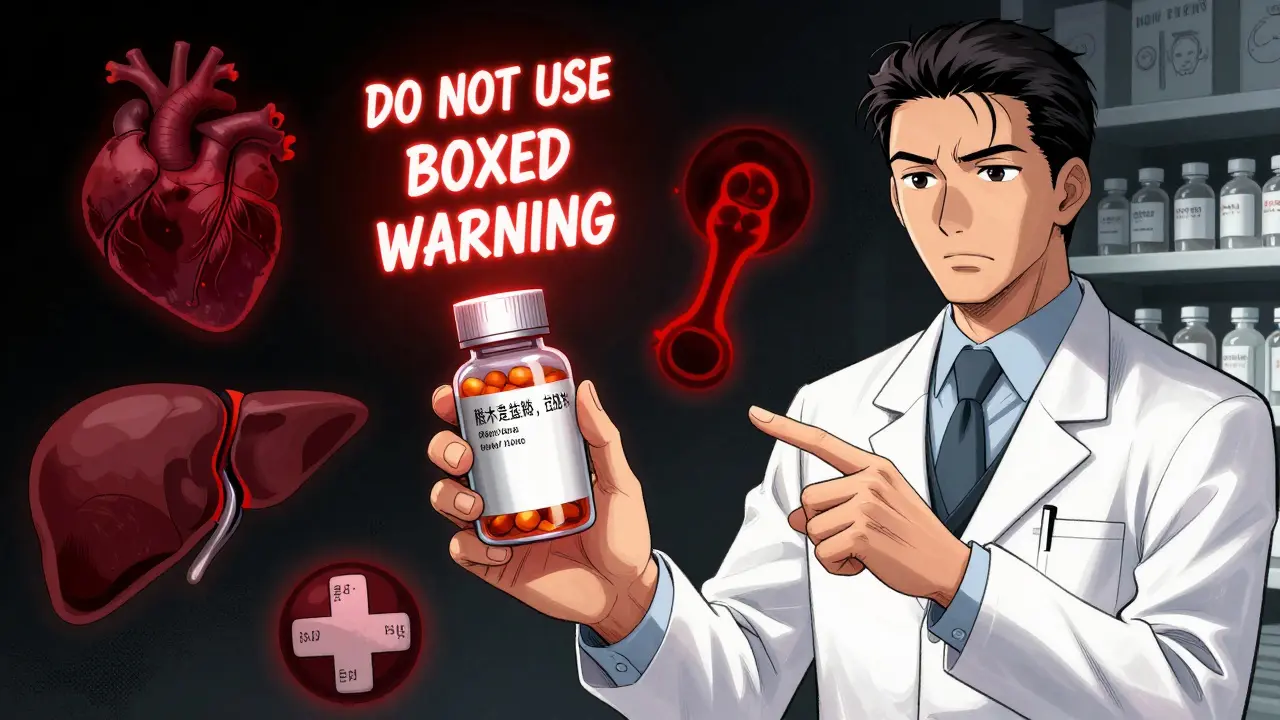
Every pill bottle, every prescription box, every OTC pack has a label. But most people glance at the name, check the dosage, and put it away-without ever reading the fine print. That’s dangerous. The contraindications and warnings on drug labels aren’t just legal jargon. They’re your last line of defense against serious harm. If you don’t know how to read them, you’re guessing with your health.
Why This Matters More Than You Think
In the U.S., about 1.3 million injuries each year happen because of unclear or ignored drug safety info, according to the Institute of Medicine. That’s not a small number. It’s not just about side effects like dizziness or nausea. It’s about heart attacks, internal bleeding, liver failure, or even death-all preventable if you knew what to look for. The FDA doesn’t make these labels easy to read. They’re written for doctors and pharmacists first. But you’re the one taking the drug. You need to understand them too.What’s the Difference Between Contraindications and Warnings?
Think of it this way: contraindications mean “don’t use this at all.” Warnings mean “use with extreme caution.” For prescription drugs, contraindications are in Section 4 of the prescribing information. They’re absolute. No exceptions. For example:- Don’t take rivaroxaban (Xarelto) if you’re actively bleeding.
- Don’t take methotrexate if you have severe liver disease.
- Don’t take certain antibiotics if you’re allergic to any ingredient.
Boxed Warnings: The Red Alert
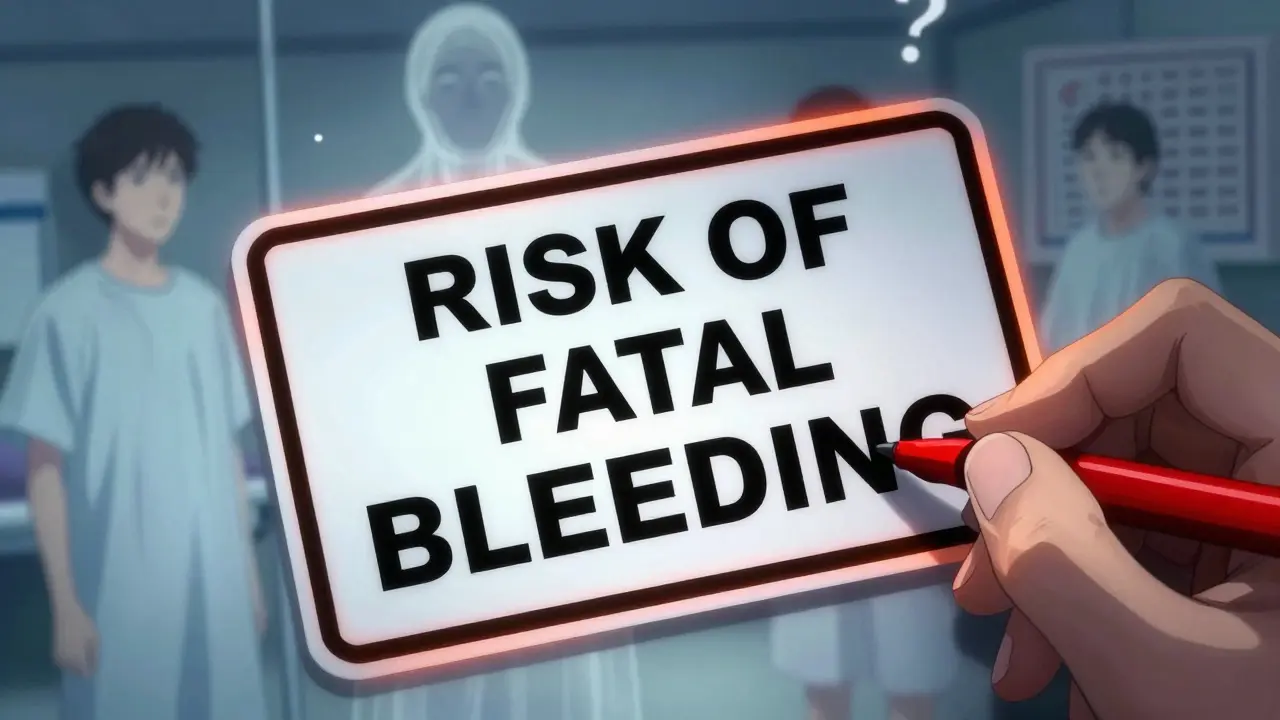
At the very top of every prescription label, if there’s a boxed warning, you’ll see a thick black border around bold text. This is the FDA’s highest-level alert. It means: “This drug can kill you or cause permanent injury.” There are over 400 boxed warnings on U.S. drug labels today. Some common ones:- Warfarin (Coumadin): “Risk of major or fatal bleeding.”
- Bupropion (Wellbutrin): “Increased risk of suicidal thoughts in young adults.”
- Fluoroquinolone antibiotics (like ciprofloxacin): “Risk of tendon rupture, nerve damage.”
How to Read OTC Labels (The Easy Way)
Over-the-counter meds like ibuprofen, antacids, or sleep aids don’t have sections like prescriptions. They use the “Drug Facts” label, which is simpler-but still easy to miss. Look for two key phrases:- “Do not use” - This is the OTC version of a contraindication. Example: “Do not use if you have had a stroke.”
- “Ask a doctor before use if” - This is a warning. Example: “Ask a doctor before use if you have high blood pressure.”
Relative vs. Absolute: The Hidden Trap
Here’s where most people get tripped up. Not all contraindications are black and white. An absolute contraindication means: never use it. Full stop. A relative contraindication means: use it only if the benefit outweighs the risk-and only under close supervision. Example: Amiodarone (a heart rhythm drug) has a contraindication for “severe lung disease.” But what if you have mild lung disease? The label doesn’t say “no.” It says “severe.” That’s the difference between a pharmacist refusing to fill it and your cardiologist prescribing it with monitoring. A 2021 study found that only 42% of doctors correctly identified relative contraindications. If they’re struggling, you need to be extra careful. Always ask: “Is this an absolute no, or just a caution?”What to Do When You Don’t Understand
You don’t need to be a doctor to read these labels. But you do need to ask the right questions. When you get a new prescription, write down these three questions:- What are the most serious risks listed here?
- How likely are they to happen to me?
- What should I do if I notice any of these symptoms?
What’s Changing in Drug Labeling (And Why It Matters)
The FDA is finally trying to fix this. In 2024, they started requiring a new “Highlights” section at the top of every prescription label. It summarizes the boxed warning, contraindications, and most important warnings in plain language. They’re also pushing for quantitative risk data. Instead of saying “may increase risk of heart attack,” labels will say “increases risk by 1.8 times in patients over 65.” That’s huge. Numbers make risk real. Some companies are already using digital labels with interactive tools. You scan a QR code, answer a few questions about your health, and it tells you if the drug is safe for you. That’s the future. But it’s not everywhere yet. Until then, you’re still the best safety net.Your Action Plan
Here’s how to protect yourself:- Always read the label before taking any new drug-even if you’ve taken it before. Labels change.
- Look for “Do not use” (OTC) or Section 4 (prescription) for contraindications.
- Find the boxed warning first. If it’s there, read the entire section below it.
- For warnings, ask: “Who is this warning for? What’s the risk? What should I watch for?”
- Keep a list of your meds and their warnings. Share it with every doctor you see.
- If something doesn’t make sense, ask. Don’t assume it’s too complicated.
Final Thought
Drug labels are designed to protect you. But they only work if you understand them. You don’t need a medical degree. You just need to slow down, read carefully, and ask questions. Your life might depend on it.What’s the difference between a contraindication and a warning?
A contraindication means you should not take the drug at all under specific conditions-like having a known allergy or active bleeding. A warning means you can take the drug, but with caution, because there’s a risk of serious side effects under certain conditions-like if you have kidney disease or are over 65. Contraindications are absolute; warnings are conditional.
What does a boxed warning mean on a drug label?
A boxed warning, also called a black box warning, is the FDA’s strongest safety alert. It appears at the top of prescription labels and highlights risks that could cause death or serious injury-like internal bleeding, liver failure, or suicidal behavior. These warnings are based on real patient data and must be clearly stated in bold text inside a black border. If your drug has one, you must read the full section below it.
Can I still take a drug if I have a listed contraindication?
If the contraindication is absolute-like a severe allergy or active bleeding-you should not take the drug. If it’s relative-like mild liver disease or a history of heart issues-it may still be safe under close medical supervision. Never assume it’s okay just because your doctor prescribed it. Ask: “Is this an absolute no, or can we manage the risk?” Always get a clear explanation.
How do I find contraindications on an over-the-counter (OTC) label?
On OTC Drug Facts labels, contraindications are listed under the “Warnings” section, usually starting with “Do not use.” For example: “Do not use if you have had a stroke” or “Do not use if you are allergic to aspirin.” These are your red flags. If you see “Do not use,” stop and talk to your doctor or pharmacist before taking it.
Why do some drug labels say “ask a doctor before use”?
This phrase means there’s a potential risk if you have certain health conditions, like high blood pressure, diabetes, or liver disease. It’s not a hard stop-but it’s a signal that you need to talk to a professional first. The FDA found that only half of consumers understand this phrase correctly. If you see it, don’t ignore it. Call your doctor or pharmacist. It’s not a suggestion-it’s a safety step.
How often do drug labels change?
Drug labels can change anytime new safety data becomes available. The FDA’s Sentinel Initiative has triggered over 147 label updates between 2020 and 2023 based on real-world patient data. Even if you’ve taken a drug for years, check the label each time you refill. A new warning might have been added last month. Don’t rely on memory-always read the current label.
Can I trust the information on the drug label?
Yes, but with context. The FDA requires drug manufacturers to base all contraindications and warnings on clinical data, post-market reports, and expert review. However, labels are written for professionals and can be dense or vague. They’re accurate-but not always clear. That’s why you need to ask questions. The label is your starting point, not your final answer.
Luke Davidson
January 23, 2026 AT 15:50Man, I used to just grab my meds like they were candy-until my grandma ended up in the ER because she didn’t realize her blood pressure med clashed with her garlic supplements. Now I read every tiny line like it’s a treasure map to staying alive. Seriously, if you skip the warnings, you’re playing Russian roulette with your organs.
Jenna Allison
January 25, 2026 AT 05:58As a pharmacist, I see this every day. People think ‘ask your doctor’ means ‘it’s fine’-but it’s actually a red flag. I’ve had patients take OTC painkillers with warfarin and wonder why they’re bruising everywhere. The label says it. They just don’t read it.
Phil Maxwell
January 25, 2026 AT 06:55Yeah I read the labels now. But honestly? Half the time I don’t even know what half the words mean. Like ‘hepatic impairment’-is that liver? Why can’t they just say liver?
Karen Conlin
January 26, 2026 AT 03:55THIS. So many people think if a doctor prescribes it, it’s automatically safe. But doctors are rushed. Pharmacists are overworked. YOU are the only one who has 100% skin in the game. Keep a little notebook. Write down every med, every warning, every question. Bring it to every appointment. You’re not being annoying-you’re being smart.
Patrick Gornik
January 27, 2026 AT 20:43Let’s be real-the entire pharmaceutical-industrial complex wants you confused. Why? Because if you understood contraindications, you’d stop taking half their products. They bury the truth in legalese so you’ll keep buying. The ‘boxed warning’? That’s the FDA’s last desperate scream before someone dies. And yet, we scroll past it while checking TikTok. We’re not patients-we’re consumers. And capitalism eats patients for breakfast.
Helen Leite
January 28, 2026 AT 14:56THEY’RE LYING TO US 😱 I found out my antidepressant has a black box warning and my doctor never mentioned it. I looked it up myself. Now I think they’re hiding stuff on purpose. The FDA? Big Pharma? The government? All in on the mind control. I’m switching to CBD and lemon water now. 🍋💚
Darren Links
January 30, 2026 AT 10:25Why are we even reading these labels? The government’s been lying about everything since 9/11. If they wanted us to be safe, they’d make all meds free and simple. But no-profit over people. And now they want us to read 12 pages of fine print just to take an aspirin? Nah. I’ll take my chances. Freedom > FDA.
venkatesh karumanchi
January 30, 2026 AT 10:47In India, we don’t have fancy labels. Sometimes the medicine comes in a plastic bag with a handwritten note. But we learn from our elders-what to avoid, what to ask. Maybe the real lesson isn’t in the text, but in the culture of asking. Don’t be afraid to say ‘I don’t understand.’
Sushrita Chakraborty
January 31, 2026 AT 01:11Thank you for this exceptionally well-researched and clearly structured guide. The distinction between absolute and relative contraindications is particularly vital, and your inclusion of FDA data underscores the urgency of patient education. I would only suggest adding a footnote regarding cross-cultural variations in labeling standards, as many immigrants encounter discrepancies between U.S. labels and those from their home countries.
Tommy Sandri
February 1, 2026 AT 02:28While the intent of this article is commendable, the assumption that the average patient has the literacy or time to parse dense regulatory language is fundamentally flawed. The burden of understanding should not fall on the individual-it should be on manufacturers to communicate risk in plain, standardized, universally accessible language. Until then, we are asking people to solve a systemic failure with personal vigilance.
Josh McEvoy
February 2, 2026 AT 22:03OMG I just realized my thyroid med has a boxed warning 😭 I’ve been taking it for 5 years and my doctor never said anything. I’m gonna cry. And post this on Instagram. Someone needs to know. #DrugSafety #WakeUpPeople
Elizabeth Cannon
February 3, 2026 AT 06:15Y’all act like reading labels is hard. It’s not. It’s just annoying. I read mine every time. I keep a sticky note on my fridge with my meds and what not to mix. My mom died from a bad interaction. Don’t be her. Just read the damn thing.
asa MNG
February 4, 2026 AT 02:00wait so u mean like if i take tylenol and drink wine i could die?? like fr?? i do that all the time 😭 my liver is gonna turn into a raisin 😭
Heather McCubbin
February 5, 2026 AT 09:14It’s not about reading labels. It’s about trust. You trust your doctor. You trust the system. You trust the pill. But the system doesn’t trust you. That’s why they make it confusing. They don’t want you to know what you’re really taking. The truth is buried. And you? You’re just a number in their database.