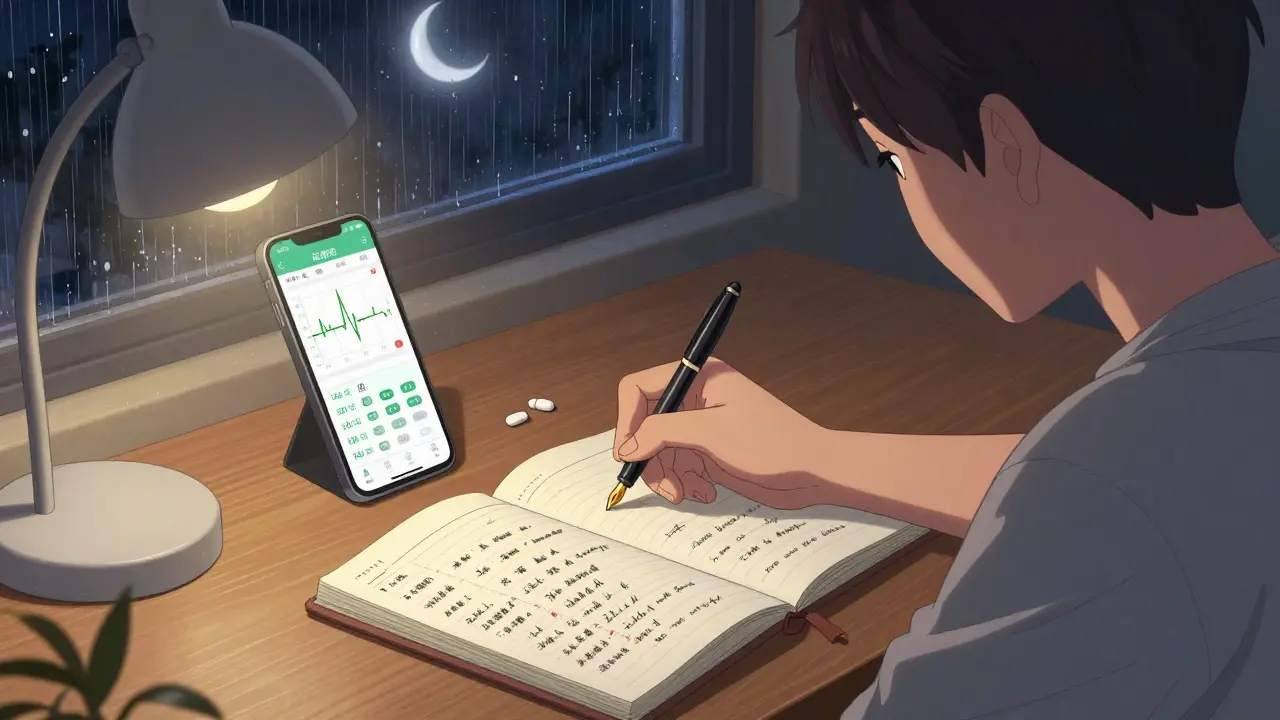
Have you ever felt off after starting a new medication - dizzy, itchy, nauseous - but your doctor shrugged it off as "just a side effect"? What if you could prove it wasn’t just coincidence? A symptom diary isn’t just paperwork. It’s your best tool to connect the dots between what you’re taking and how you’re feeling. And if you’re dealing with something unusual, unpredictable, or worsening, it might be the key to getting real help.
Why a Symptom Diary Matters
Most people assume their doctor will know what’s causing their symptoms. But here’s the truth: dizziness could be from your blood pressure pill… or your sleep apnea. Nausea might be from your new antibiotic… or a stomach bug. Without clear timing and details, doctors can’t tell the difference. That’s where a symptom diary changes everything. Studies show that patients who track symptoms accurately are 83% more likely to help their doctors identify a real drug reaction. One case from 2023 involved a patient who had a car accident after taking a painkiller. The insurance company blamed the driver - until the patient showed a diary proving the dizziness started 20 minutes after the pill, and lasted for hours. No one had asked for that data. The diary saved the case. The FDA and NIH now treat patient-reported symptom data as critical evidence. In fact, 73% of new drug trials require patients to use digital diaries. This isn’t just helpful - it’s becoming standard.What to Record: The 9 Essential Details
A good diary doesn’t just say "I felt bad." It answers: When? What? Why? How bad? Here’s what you need to write down every time:- Date and time - exact to the minute. Not "this morning." Write: Jan 10, 2026, 8:15 a.m.
- Medication name and dose - include brand and generic names. If you took 25 mg of lisinopril, write it. Don’t say "my blood pressure pill."
- Route of administration - swallowed? Injected? Applied to skin? Topical creams can cause reactions too.
- Other meds and supplements - even aspirin, melatonin, or fish oil. Drug interactions are common and often missed.
- Symptom description - be specific. "Headache" isn’t enough. Say: Throbbing pain behind left eye, started 45 minutes after pill, lasted 3 hours.
- When symptom started - relative to the drug. Did it begin 10 minutes later? 6 hours? 2 days?
- How long it lasted - minutes? Hours? Did it come and go?
- Environmental factors - were you stressed? Hot? Exercising? Sleeping? These can trigger or worsen reactions.
- What you did to fix it - did you lie down? Take antihistamine? Drink water? Note the result.
- Severity - use the CTCAE scale: Grade 1 (mild, no interference), Grade 2 (moderate, limits activity), Grade 3 (severe, medical attention needed), Grade 4 (life-threatening), Grade 5 (death).
Don’t guess. Don’t skip. If you don’t know the exact time, write "approx. 8 a.m." But get it as close as you can.
Paper vs. App: Which Works Better?
You can use a notebook. But most people quit within 72 hours. Why? It’s too slow. Too messy. Too easy to forget. Apps like Medisafe, CareClinic, and MyTherapy are designed for this. They auto-time entries, remind you to log symptoms, and show graphs linking drugs to reactions. In one study, 78% of people kept using app-based diaries after 30 days. Only 22% kept paper logs. Apps also sync with your phone’s health data. If your Apple Watch tracks heart rate, it can show spikes that match your nausea. That’s powerful evidence. But if you prefer paper, use a printed template. Many hospitals and pharmacies offer free ones. Look for ones with checkboxes for common symptoms (rash, swelling, fatigue) and space for time stamps. Pre-made forms cut documentation time by 67%.
What Counts as a "Real" Symptom?
This trips up most people. You don’t need to log every little thing. Expected side effects - like mild nausea from antibiotics or dry mouth from antihistamines - are normal. Don’t clutter your diary with those. Focus on:- Symptoms you’ve never had before
- Symptoms that are worse than usual
- Symptoms that appear only after starting a new drug
- Symptoms that interfere with daily life
For example: If you’ve never had a rash, and one shows up 3 days after starting a new statin? That’s reportable. If you’ve had occasional headaches for years, and they’re the same after the new pill? Probably not the drug.
One doctor in Sydney told me: "I see 15 patients a week with diaries. Half of them are logging every burp and yawn. I can’t find the signal in the noise."
Keep it clean. Keep it focused. Your doctor needs clarity - not a novel.
When and How Often to Log
Timing is everything. The NIH says memory starts fading after 48 hours. That’s why they require serious reactions to be logged within 72 hours. For acute reactions - like swelling, breathing trouble, or sudden rash - log immediately. Don’t wait. Write it down while it’s still happening. If you’re too unwell, ask someone to help. For chronic monitoring - like fatigue or joint pain - log at the same time every day. Morning is best. That way, you’re not mixing up yesterday’s symptoms with today’s. Set phone reminders. Two a day: one when you take your meds, one when you check in before bed. Apps make this easy. Paper? Tape a sticky note to your pill bottle.What to Do With Your Diary
Don’t just store it. Use it. Bring it to every appointment. Don’t say, "I think the pill is making me tired." Say: "Here’s my diary. Every time I took 50 mg of metoprolol, my heart rate dropped below 50 by 3 p.m. and I passed out twice. I stopped it on the 8th day, and it returned to normal by the 11th. What do you think?" One patient in Adelaide did this with her neurologist. She had been told her dizziness was "just anxiety." Her diary showed a perfect match between levodopa doses and episodes. Within 48 hours, her dose was lowered. Her balance returned. If you have a skin reaction, take a photo. The European Medicines Agency says visual evidence increases diagnosis accuracy by 78%. A picture of a rash is worth a thousand words.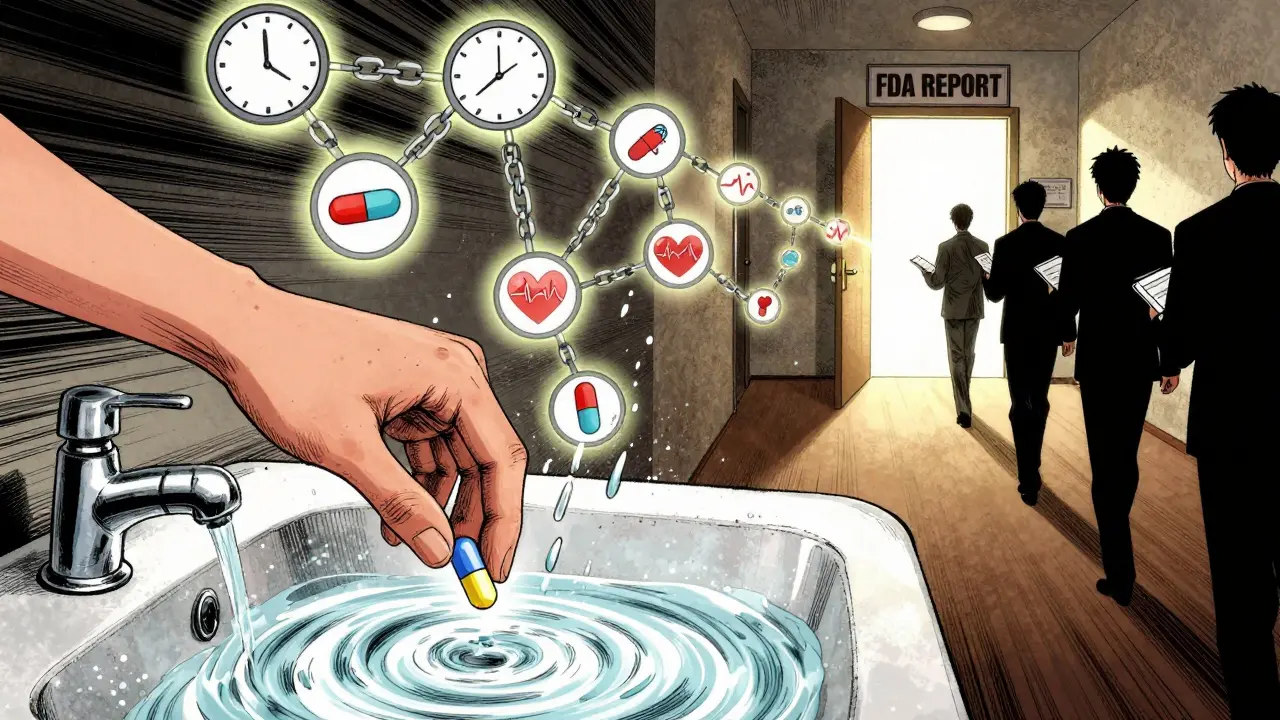
Common Mistakes (And How to Avoid Them)
Most diaries fail because of simple errors:- Wrong time - 63% of incomplete diaries have mismatched or estimated times. Use your phone’s clock. Don’t rely on your watch.
- Missing other meds - 71% of errors come from forgetting supplements or OTC drugs. Write down EVERYTHING.
- Ignoring environment - 89% of diaries skip stress, heat, or activity. These matter. A rash might flare in the sun, not because of the drug.
- Waiting too long - if you don’t log within 15 minutes of an acute reaction, the data is less useful.
- Overdoing it - logging every sneeze or burp makes it harder to spot the real problem. Be selective.
Fix these, and your diary becomes a powerful tool - not a chore.
What Happens Next?
Your diary doesn’t just help your doctor. It helps others. Pharmacovigilance systems use this data to spot new drug risks. The FDA now accepts direct patient reports - no doctor needed. If enough people report the same reaction, a drug warning can be issued. In 2024, the FDA launched a pilot program that links symptom diaries to electronic health records. If your diary shows a pattern matching a known reaction, your doctor gets an alert. That’s the future - and it’s already here.Start Today - No Perfection Needed
You don’t need to be perfect. You don’t need to log for a month. Start with one week. Pick one drug you suspect. Write down the time you take it. Note how you feel. That’s it. If you feel better after stopping the drug? Write that too. That’s data. The goal isn’t to scare yourself. It’s to speak clearly to your doctor. To turn "I think" into "I know." Your body is talking. A symptom diary is how you make sure it’s heard.Do I need to log every single pill I take?
No. Focus only on medications you suspect are causing reactions. But always include all other drugs, supplements, or OTC products you’re taking - even if you think they’re unrelated. Drug interactions are common and often hidden.
What if I forget to log a symptom?
If you remember later, log it anyway - but note that it’s a delayed entry. Example: "Symptom occurred around 2 p.m., logged at 8 p.m." Don’t skip it. Even delayed logs are better than nothing. But aim to log within 15 minutes for acute reactions.
Can I use a regular notebook or do I need an app?
You can use a notebook, but apps are far more effective. They auto-time entries, send reminders, and create visual charts showing when symptoms spike after taking a drug. Studies show 57% of people quit paper diaries within 3 days. Only 22% quit app-based ones. If you’re serious about tracking, use an app.
How detailed should my symptom description be?
Be specific. Instead of "felt sick," say: "Sharp pain in lower left abdomen, started 2 hours after taking ibuprofen, lasted 45 minutes, worsened when standing, relieved by lying down." Include location, intensity, triggers, and what helped. The more detail, the easier it is for your doctor to spot a pattern.
Should I show my diary to my pharmacist?
Yes. Pharmacists are trained to spot drug interactions and side effects. Many pharmacies now offer free review sessions. Bring your diary - even if you’re not sure it’s important. They’ve seen hundreds of cases and can help you identify what’s worth reporting.
What if my doctor dismisses my diary?
Ask for a referral to a specialist or a pharmacovigilance clinic. If your symptoms are serious - like swelling, trouble breathing, chest pain, or severe rash - go to an emergency department and bring your diary. You have the right to be heard. Your data is valid. Don’t let a dismissive attitude stop you from advocating for your health.
Is this only for serious reactions?
No. Even mild or unusual symptoms matter. A new rash, sudden fatigue, or strange taste in your mouth could be early signs of a reaction. Logging them early helps catch problems before they become dangerous. You don’t need to wait for a crisis to start tracking.
How long should I keep tracking?
Keep going until you’ve identified the cause - or until your doctor confirms the reaction is ruled out. For new drugs, track for at least 2-4 weeks. Some reactions take days or weeks to appear. Don’t stop too soon.
Shweta Deshpande
January 26, 2026 AT 16:50I started keeping a symptom diary after my blood pressure med gave me that weird metallic taste and constant fatigue. At first I thought I was just being dramatic, but after two weeks of logging everything-meds, sleep, stress, even what I ate-I showed my doctor and she immediately suspected a drug interaction with my fish oil. We tweaked the dose and I’ve felt like a new person. This isn’t just paperwork-it’s power.
Also, use an app. Paper diaries are cute until you lose them or forget to write for three days. I use MyTherapy and it even sends me little nudges like, ‘Hey, did you take your pill today?’ I hate being reminded, but I love the data.
Don’t wait for a crisis. Start with one drug. One week. You’ll be shocked how much you learn.
Angie Thompson
January 28, 2026 AT 00:26OMG YES. I logged my rash after starting that new cholesterol med and it was the only reason my dermatologist didn’t write it off as ‘just allergies.’ Took a photo every day, noted the time I took the pill, and even tracked the weather. Turns out the rash only flared when I was outside after taking it-sun + drug = bad combo. My doctor was blown away.
Also, pharmacists are wizards. I brought my diary to CVS and they said, ‘Oh, this interaction is documented. Here’s a free alternative.’ Felt like a superhero.
Jessica Knuteson
January 28, 2026 AT 00:27Interesting how we’ve turned medical self-tracking into a productivity hack. The real issue isn’t whether people log symptoms-it’s whether doctors have time to read them. Most EHRs still treat patient input as noise. A diary won’t fix a broken system.
Also, Grade 5 is death? That’s not a scale. That’s a morbid footnote.
Robin Van Emous
January 29, 2026 AT 18:49I respect this post a lot. I used to think symptom diaries were for hypochondriacs until my mom had a reaction to a new antibiotic and the only thing that saved her from being misdiagnosed was the 17-page log she kept. She didn’t use an app-just a notebook and a pen. She wrote in pencil so she could erase if she felt silly.
It’s not about perfection. It’s about showing up for yourself. Even if your doctor doesn’t get it, you’ll know you tried.
And yes, if you forget to log, write it down later with a note. Better late than never.
Skye Kooyman
January 31, 2026 AT 04:29My mom died because her doctor ignored her symptom log. She had a rash, fatigue, joint pain. She wrote it all down. They called it ‘aging.’
I keep one now. For her.
Neil Thorogood
January 31, 2026 AT 09:36So let me get this straight: we’re being told to become amateur pharmacologists, log every burp, and pray our overworked GP doesn’t scroll past it like a spam email?
Meanwhile, Big Pharma is selling apps that charge $9.99/month to track the side effects their drugs cause. The real story isn’t the diary. It’s the system that made it necessary.
But hey, at least we’ve got emojis now. 📊💊🤯
Rakesh Kakkad
February 1, 2026 AT 19:31As a clinical researcher from Mumbai, I have reviewed hundreds of patient-reported adverse event forms. The most valuable submissions are those with precise timestamps, dosage details, and concurrent medication lists. In India, where polypharmacy is common and doctor-patient ratios are dire, a well-kept diary is often the only objective data available.
One patient in Pune documented dizziness after starting a generic statin. The diary showed a pattern: symptoms occurred only after 10 a.m. doses, not evening. This led to a simple switch to nighttime administration-no side effects since. No lab test. No scan. Just time and truth.
Do not underestimate the power of consistency. Even if your doctor seems dismissive, the data is yours. And it matters.
Simran Kaur
February 1, 2026 AT 20:07I cried when I finally showed my diary to my neurologist. For two years, I was told my tremors were ‘stress-related.’ I kept logging-every time I took my new antidepressant, the shaking started 45 minutes later, peaked at 3 hours, and vanished by midnight. I even included my mood, what I ate, whether I slept well.
When I showed her the graph from my app, she sat back and said, ‘I’ve never seen this pattern before.’ We changed my med. I haven’t had a tremor in 11 weeks.
This diary didn’t just help me-it helped her learn something new. That’s the magic. You’re not just a patient. You’re a scientist. And your body? It’s your lab.
rasna saha
February 1, 2026 AT 22:05Just started my diary today. Took a photo of my new rash, wrote down the time I took the pill, and noted I was stressed because my cat was sick. I didn’t think any of it mattered. But the post said to start small. So I did.
Thank you for making me feel like I’m not crazy for caring.
John Wippler
February 3, 2026 AT 17:56There’s a quiet revolution happening here. We’re moving from passive patients to active participants in our own healing. The symptom diary is the first tool that turns intuition into evidence.
It’s not about proving your doctor wrong. It’s about speaking the same language. Medicine speaks in data. We’ve been speaking in feelings. Now we’re learning to translate.
And yes, it’s exhausting. But think of it this way: every time you log a symptom, you’re not just tracking your body-you’re building a bridge between your lived experience and the cold, clinical world of pharmaceutical science.
That bridge? It saves lives.
So log the rash. Log the dizziness. Log the weird taste. Log the sleepless night.
Because someone, someday, might need your data to survive.