
Every year, over 100 million drug shipments enter the United States. Some come from big pharmaceutical factories in Germany and Japan. Others arrive from small labs in India and China. And until recently, even tiny packages-worth less than $800-could slip through without a second look. That changed in late 2023. Now, every single drug shipment entering the U.S. is reviewed by the Food and Drug Administration (FDA). No exceptions. No loopholes. This isn’t just bureaucracy-it’s the frontline defense against contaminated, fake, or unsafe medicines reaching patients.
How the FDA Knows What’s Coming In
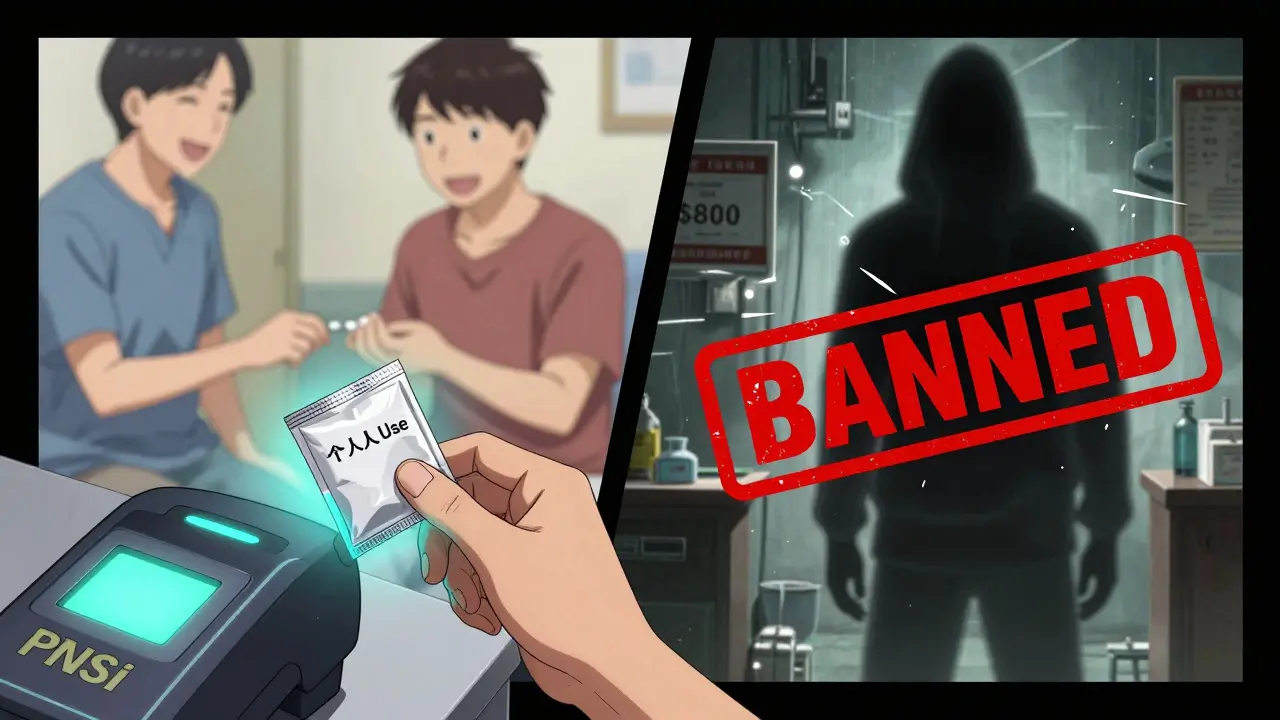
The FDA doesn’t physically check every box. That’s impossible. Instead, it uses a smart, data-driven system that starts the moment a shipment is booked. Before a drug even leaves a foreign port, the importer must submit an electronic entry notice through the FDA’s Prior Notice System Interface (PNSI). This system collects basic info: what’s being shipped, where it’s from, who’s sending it, and who’s receiving it. It’s like an airport security checkpoint-but for medicine.Over 98% of these entries are screened automatically using risk-based algorithms. The system flags shipments based on history, origin, product type, and past violations. For example, a shipment of insulin from a facility that had three previous FDA detentions is automatically flagged. So is a batch of antibiotics from a country with a known history of counterfeit drug production. Only about 15.7% of entries get flagged for deeper review. The rest move through quickly.
The Five Steps of FDA Import Inspection
The FDA’s import process has five clear stages:
- Entry Submission - The importer files the required paperwork electronically.
- Entry Review - FDA’s system analyzes the data and assigns a risk score. If it’s low, the shipment moves forward. If not, it’s held.
- Examination and Sampling - Inspectors may physically check the product, verify labels, or take samples for lab testing. About 1.2% of all shipments get physically examined-because there’s no way to check them all.
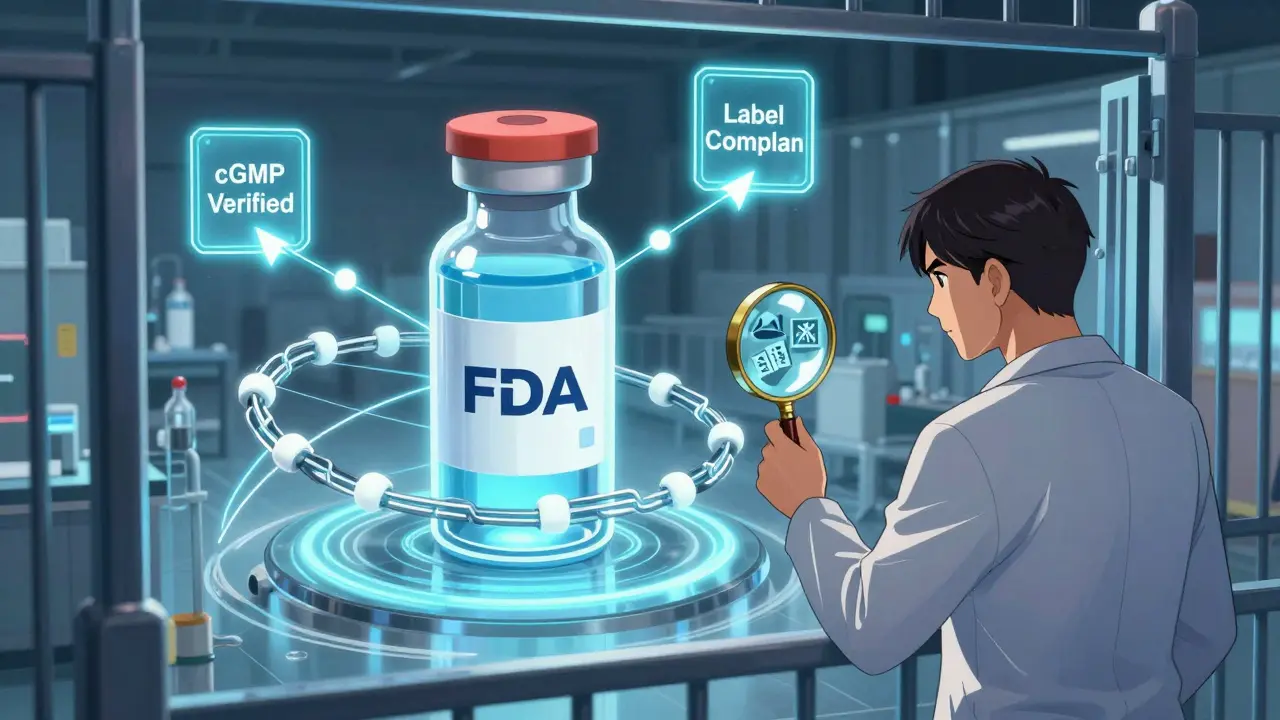
- Compliance Review - FDA checks if the product meets U.S. standards: Is it manufactured under current good manufacturing practices (cGMPs)? Is the facility registered? Is the labeling accurate? A missing lot number or incorrect dosage info can trigger detention.
- Final Admissibility Decision - The shipment is either allowed in, held for correction, or refused. In 2022, 14.3% of examined shipments were detained. Of those, 67.8% were permanently blocked.
When a shipment is detained, it doesn’t just sit there. The FDA notifies the importer and gives them a chance to fix the issue-like replacing a mislabeled bottle or providing missing documentation. But if the problem is serious-like contamination, unapproved ingredients, or counterfeit packaging-the product is destroyed or returned.
What Gets Flagged? Common Reasons for Detention
Not all violations are the same. Some are simple mistakes. Others are dangerous. Here’s what commonly causes delays:
- Incorrect product coding - Using the wrong FDA product code? That’s responsible for 28% of delays.
- Unregistered facilities - If the factory making your drug isn’t registered with the FDA, the shipment is stopped. This is a major issue for generic drug makers.
- Labeling errors - Missing expiration dates, wrong language, or incorrect dosage info? That’s 19% of problems.
- Unapproved ingredients - Especially common with supplements disguised as drugs. In 2022, the FDA blocked over 1,200 shipments of products containing hidden, unapproved pharmaceuticals.
- Detention Without Physical Examination (DWPE) - If a facility has a history of violations, the FDA can automatically detain all future shipments from it-even before inspecting them. In Q2 2023, some Indian API suppliers saw DWPE rates as high as 37%.
The Fast Lane: The Secure Supply Chain Pilot Program
Not all importers are treated the same. The FDA runs a special program called the Secure Supply Chain Pilot Program (SSCPP). It’s designed for companies with a perfect track record. To qualify, a manufacturer must have:
- No FDA violations in the last three years
- Passed an on-site inspection by FDA or an approved international regulator
- Implemented advanced supply chain controls
Once accepted, they can import up to five products with near-instant clearance. Instead of waiting 7-10 days, shipments clear in 24-48 hours. Companies like Johnson & Johnson use this to keep their just-in-time manufacturing running smoothly. As of late 2023, 27 companies were in the program. By mid-2024, that number is expected to rise to 50, including contract manufacturers.
But here’s the catch: it’s only for big players. Smaller biotech firms can’t afford the time, cost, or compliance burden to qualify. So while the program speeds things up for some, it leaves others stuck in the slow lane.
Why This Matters: Real-World Consequences
Behind every detention is a real person. A child who might have received tainted infant formula. A diabetic who got fake insulin. A cancer patient who received a batch with the wrong active ingredient. The 2022 valsartan contamination incident-where a carcinogen slipped into blood pressure meds-started with a shipment that wasn’t flagged. That’s why the FDA had to change its rules.
Before October 2023, shipments under $800 were exempt from inspection. That loophole was abused. Illicit pill presses, counterfeit opioids, and unapproved drugs were being mailed directly to U.S. homes. The Partnership for Safe Medicines estimated that $4.3 billion in fake drugs entered the U.S. in 2022-mostly through those small packages. The elimination of the de minimis exemption was a necessary, if painful, fix.
But the change hit hard. Academic labs now pay $285-$420 more per shipment to send biological samples. Small biotech startups report delays of 3-5 days just to get research materials. The Association of American Medical Colleges estimates this has increased research costs by 22-35%.
The Gaps in the System
The FDA’s system is smart-but it’s not perfect. Here’s the reality:
- Only 1.2% of shipments are physically inspected - That means 98.8% rely on paperwork and risk scores. A clever bad actor can slip through if they know how to game the system.
- Too many indicators aren’t tracked - The Government Accountability Office found that only 4 of 17 key performance metrics from the 2012 FDASIA law have been fully implemented.
- Generic drug supply chains are under-monitored - The National Association of Chain Drug Stores found 78% of pharmacy leaders believe the system works for brand-name drugs but fails for generics, especially when it comes to active pharmaceutical ingredients (APIs) from overseas.
- Online pharmacies are a blind spot - The FDA admits that 41% of websites selling drugs to U.S. consumers operate outside its jurisdiction. Many of these sites sell counterfeit versions of popular drugs like Viagra, Ozempic, and Xanax.
What Importers Need to Do Right
If you’re importing drugs into the U.S., here’s what actually works:
- Know your codes - Use the correct FDA product code. Mistakes here cause delays.
- Register early - Make sure your facility is on the FDA’s list. It takes weeks to get approved.
- Double-check labels - Every word, every symbol, every language must match FDA’s 21 CFR Part 201 rules.
- Use PNSI - Even if you’re small, use the electronic system. Paper submissions are slower and more error-prone.
- Build relationships - Experienced importers say talking directly to FDA reviewers at major ports (like Los Angeles or New York) can cut processing time by 22-35%.
- Keep records - You must keep all import documents for three years. One missing invoice can trigger an Import Alert-meaning all future shipments get automatically detained.
The Future: AI, Blockchain, and Global Alignment
The FDA isn’t standing still. Its 2023 roadmap includes:
- AI-powered risk scoring - Targeting a 25% improvement in detection accuracy by 2025.
- Blockchain for supply chain tracking - A pilot program launching in early 2024 to verify drug movement from factory to pharmacy.
- Harmonization with international regulators - Working with the Pharmaceutical Inspection Co-operation Scheme (PIC/S) to align standards with Europe, Canada, and Japan.
These changes could reduce clearance times by 30-40% while catching more bad products. But they’ll cost $187 million over five years. And not everyone agrees it’s worth it. Critics say the system is still reactive, not preventive. Supporters say it’s the best we have-and it’s getting better.
One thing’s clear: the days of letting drugs slip through the cracks are over. The FDA’s job isn’t to stop trade. It’s to make sure every pill, injection, and capsule that enters the U.S. is safe, effective, and exactly what it claims to be.
What happens if my drug shipment gets detained by the FDA?
If your shipment is detained, the FDA will notify you with the reason. You have a chance to correct the issue-like fixing labeling, providing missing documentation, or proving compliance. If the problem can’t be fixed, the product will be refused entry and either destroyed or returned. Repeated detentions can lead to an Import Alert, which automatically holds all future shipments from your facility.
Can I import drugs for personal use?
The FDA generally allows personal imports of drugs that aren’t commercially available in the U.S., but only if they’re for a serious condition, not for resale, and the quantity doesn’t exceed a 90-day supply. However, since October 2023, even these personal shipments are now subject to review. Many are still allowed in, but some are detained-especially if they’re controlled substances or lack proper labeling.
How do I know if a foreign drug manufacturer is FDA-approved?
The FDA doesn’t "approve" foreign manufacturers like it does drugs. Instead, manufacturers must be registered with the FDA and list their products. You can search the FDA’s Drug Establishment Registration database online. If a facility isn’t listed, any shipment from it will likely be detained. Always verify this before placing an order.
Why are generic drugs detained more often than brand-name drugs?
Generic drug manufacturers often source active ingredients from countries with less consistent regulatory oversight. Many facilities have never been inspected by the FDA, or their compliance records are incomplete. The FDA flags these as higher risk. Brand-name companies usually have global compliance teams and long-standing FDA relationships, making their shipments less likely to be flagged.
Is the FDA’s import system effective at stopping counterfeit drugs?
It’s improved-but not perfect. The elimination of the de minimis exemption stopped many counterfeit shipments. However, the Government Accountability Office found the FDA lacks enough metrics to prove how well it’s detecting counterfeits. The Partnership for Safe Medicines estimates $4.3 billion in fake drugs still entered the U.S. in 2022. Better tools like blockchain and AI are coming, but the system still relies heavily on risk scoring, which can miss new threats.
bill cook
February 27, 2026 AT 05:07Byron Duvall
February 28, 2026 AT 13:28Ben Estella
March 2, 2026 AT 12:26Jimmy Quilty
March 2, 2026 AT 19:06Vikas Meshram
March 3, 2026 AT 00:56Sneha Mahapatra
March 4, 2026 AT 18:38Brandie Bradshaw
March 6, 2026 AT 15:23Charity Hanson
March 7, 2026 AT 08:39Brandon Vasquez
March 8, 2026 AT 18:34Miranda Anderson
March 9, 2026 AT 17:17Gigi Valdez
March 11, 2026 AT 12:22Angel Wolfe
March 11, 2026 AT 19:47Sophia Rafiq
March 13, 2026 AT 02:45Noah Cline
March 13, 2026 AT 23:36