
When a doctor or nurse sees signs of abuse, neglect, or dangerous behavior, they don’t just have a moral duty to act-they have a legal one. In the U.S., healthcare providers are required by law to report certain conditions to authorities. This isn’t optional. It’s built into the job. And yet, many providers still feel confused, overwhelmed, or even afraid about what exactly they’re supposed to report, when, and how.
What You Must Report: The Big Four Categories
There are four main areas where reporting is mandatory for nearly all healthcare workers in the U.S. These aren’t suggestions. They’re legal obligations tied to state laws, and failure to report can mean fines, license suspension, or even criminal charges.
- Child abuse and neglect: Every state requires reporting if you have reasonable suspicion that a child under 18 is being abused or neglected. This includes physical injury, sexual abuse, emotional harm, or failure to provide basic needs like food, shelter, or medical care. You don’t need proof-just suspicion based on your training. A bruise that doesn’t match the story, a child who flinches at touch, or a parent who refuses treatment for a broken bone-all can trigger a report.
- Elder and vulnerable adult abuse: Forty-seven states and Washington, D.C., require reporting of abuse against adults over 60 or those with physical or cognitive disabilities. Signs include unexplained injuries, poor hygiene, sudden financial changes, or isolation from family. In California, since January 2023, all licensed healthcare professionals must report elder abuse, not just those working in nursing homes. In Texas, however, only staff at long-term care facilities are legally required to report.
- Public health threats: Certain infectious diseases must be reported immediately to state or local health departments. The CDC tracks 57 nationally notifiable conditions. Some, like anthrax or botulism, require reporting within one hour. Others, like syphilis or hepatitis B, have 24- to 72-hour windows. Electronic systems now automate much of this-78% of states use eCR (electronic case reporting), cutting reporting time from 30 minutes to under five.
- Professional misconduct: If you see a colleague practicing while impaired by drugs, alcohol, or mental illness-or if you witness dangerous negligence-you must report it. In Minnesota, the Chief Nursing Officer must report nurse misconduct within 30 days. In Nebraska, any healthcare worker who suspects impairment must report it. Utah law explicitly protects reporters from retaliation. But in many states, the rules are vague. A nurse who reports unsafe staffing levels might be ignored-or worse, punished.
How Reporting Works: The Paperwork, the Timelines, and the Gray Areas
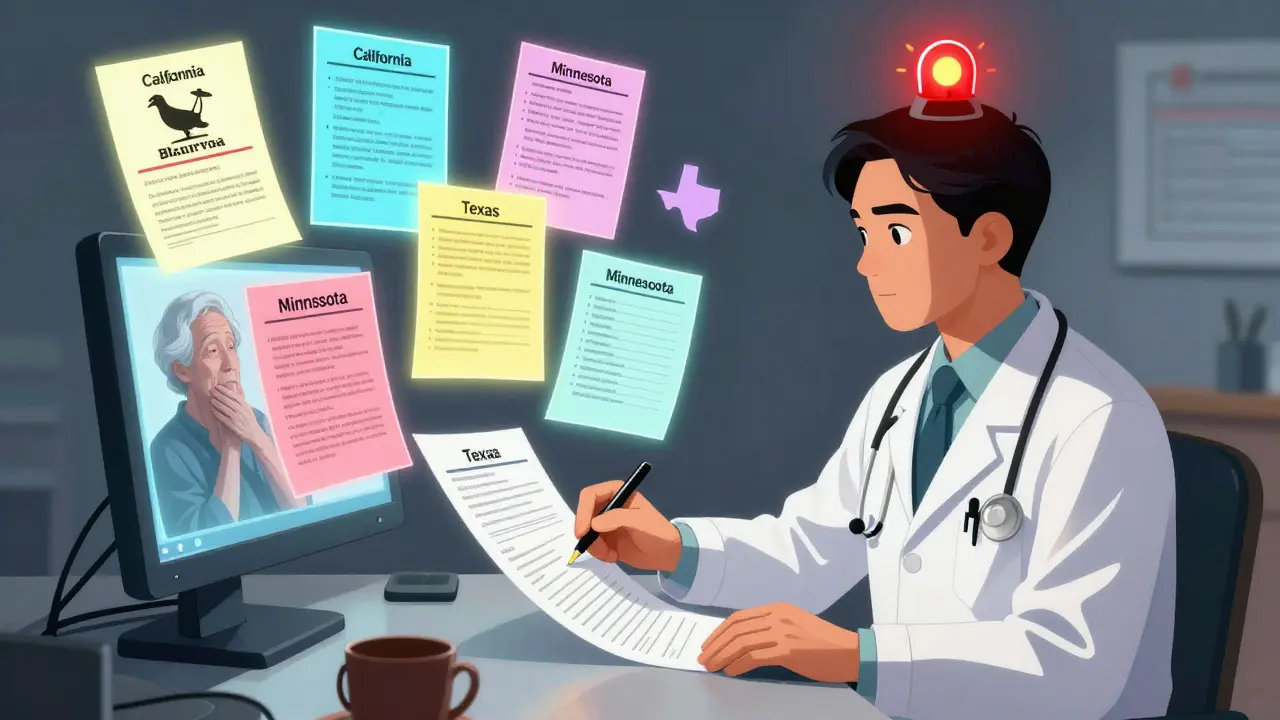
Reporting isn’t just a phone call. It’s documentation. Each state has its own form, its own deadline, and its own definition of what counts as “reasonable suspicion.”
Take child abuse. In California, you have to report within 36 hours. In Texas, you have 48 hours. In Florida and New York, you’re expected to report immediately-which means the same day, often within hours. You must include the child’s name, age, address, the nature of the injury, and who you suspect. Missing one detail can delay an investigation.
Elder abuse reporting is even more confusing. In 26 states, only providers working in nursing homes or hospitals must report. In 14 states, every doctor, nurse, EMT, or therapist must report-even if they see the patient in a private clinic. In 10 states, there’s no law at all. So if you’re a telehealth provider treating a patient in Minnesota but licensed in Arizona, which rules apply? Most providers don’t know.
Then there’s the HIPAA problem. Patient privacy is sacred. But mandatory reporting is a legal exception. You can share protected health information (PHI) to report abuse, even without patient consent. Still, many providers hesitate. They worry they’re breaking the rules. They’re not. But that doesn’t stop the fear.
What Happens After You Report?
After you file a report, you’re not done. You might be called to testify. You might be asked to provide medical records. You might face backlash.
One pediatrician in Michigan reported 17 cases of child abuse last year. Fifteen led to protective actions-children removed from dangerous homes. That’s success. But another pediatrician in Ohio said a patient stopped coming for opioid treatment because they feared their kids would be taken. That’s the dark side.
Nurses report similar stories. One nurse in Minnesota reported a colleague who was mixing up insulin doses. The colleague was suspended. The nurse got a thank-you note. Another nurse in Texas reported unsafe conditions at her facility. Two weeks later, she was moved to the night shift with no explanation. No law protected her because Texas doesn’t require individual providers to report elder abuse-and has no law protecting whistleblowers.
Documentation is your armor. Always write down what you saw, when, and why you suspected abuse. Use the exact language your state requires. Save your report confirmation number. If you’re unsure, call your hospital’s compliance officer. In Washington State, there’s a 24/7 hotline: 1-800-252-0230. In 14 states? No hotline at all.
Why This Matters: The Numbers Don’t Lie
Studies show mandatory reporting saves lives. A 2019 JAMA study found states with mandatory reporting identified 37% more child abuse cases than states with voluntary reporting. In Wisconsin, after implementing a standardized reporting system, substantiated cases rose by 32% in two years.
But there’s a cost. A 2022 AMA study found providers spend an average of 2.7 hours per report-filling out forms, making calls, waiting for responses. That’s time taken from patient care. And it’s not evenly distributed. Nurses report the highest levels of anxiety: 63% say they’re afraid of getting it wrong. 47% of physicians say reporting contributes to burnout.
The bigger issue? Inconsistency. A provider in New York must report domestic violence. A provider in Alabama doesn’t. A nurse in Utah is legally protected from retaliation. A nurse in Louisiana isn’t. This patchwork creates liability risks. In 2021, 12% of malpractice claims against physicians involved failure to report.

What You Need to Know Right Now
Here’s what every doctor and nurse should do today:
- Know your state’s laws. Go to your state’s health department website. Search for “mandatory reporting requirements.” Bookmark it.
- Know your employer’s policy. Hospitals and clinics must have written protocols. Ask for a copy. Attend the training-even if it’s boring.
- Document everything. Write down dates, times, quotes, injuries. Use your facility’s form. Don’t rely on memory.
- When in doubt, report. It’s better to report and be wrong than to stay silent and miss a child or elder in danger.
- Use available tools. If your hospital uses an electronic reporting system, learn it. If you’re a telehealth provider, know the rules for every state you treat patients in.
What’s Changing? The Future of Reporting
Change is coming. In 2023, the Department of Health and Human Services launched a push to standardize public health reporting nationwide by 2025. AI tools are being tested-like one at Massachusetts General Hospital that reduced reporting errors by 38%. Some states are adding human trafficking as a reportable condition. Others are creating centralized portals so providers don’t have to juggle 50 different systems.
But until federal standards are in place, you’re still stuck with the patchwork. The bottom line? Reporting isn’t about bureaucracy. It’s about survival. For children. For elders. For patients who can’t speak for themselves. And for you-the provider who has to make the call when no one else will.
If you’re unsure, report anyway. Your license, your conscience, and maybe a life depend on it.
Do I need patient consent to report child abuse?
No. Under HIPAA, healthcare providers are allowed to disclose protected health information without consent when reporting suspected child abuse, elder abuse, or certain public health threats. The law prioritizes safety over privacy in these cases. You do not need to inform the patient or get their permission before filing a report.
Can I be sued for reporting abuse?
Generally, no. All 50 states have laws that protect healthcare providers from civil or criminal liability if they report in good faith-even if the report turns out to be wrong. This is called “immunity from liability.” As long as you acted based on reasonable suspicion and followed your state’s procedures, you’re protected. Retaliation, however, is different-some states don’t protect whistleblowers who report unsafe practices.
What if I report and nothing happens?
That’s normal. Most reports don’t lead to immediate action. Child protective services may investigate and find no evidence. Elder abuse reports may be deemed insufficient. That doesn’t mean your report was unnecessary. It means you did your job. You created a paper trail that can be used later. One report may be the first step in a pattern that eventually leads to intervention.
Do I have to report if I’m not the primary provider?
Yes-if your state requires it. In 14 states, any licensed healthcare professional who suspects abuse must report, regardless of their role. In others, only direct caregivers are required. But if you see something, you’re ethically obligated to speak up. Even if you’re not legally required to report, you can still make a permissive report. Many providers do.
How do I report if I work in telehealth?
You report based on the patient’s location, not your own. If a patient is in California, you follow California’s laws-even if you’re licensed in Florida. This is a major source of confusion. Many telehealth providers don’t know this. Always confirm the patient’s state of residence before making clinical decisions. Use state-specific reporting guides, and if you’re unsure, consult your employer’s compliance team.
Chris Bird
March 11, 2026 AT 06:48Miranda Varn-Harper
March 13, 2026 AT 04:01Alexander Erb
March 13, 2026 AT 11:27Donnie DeMarco
March 14, 2026 AT 17:04Tom Bolt
March 15, 2026 AT 13:15Shourya Tanay
March 17, 2026 AT 06:32Gene Forte
March 18, 2026 AT 17:57LiV Beau
March 19, 2026 AT 14:24Adam Kleinberg
March 21, 2026 AT 10:20Denise Jordan
March 22, 2026 AT 02:04Kenneth Zieden-Weber
March 22, 2026 AT 21:02