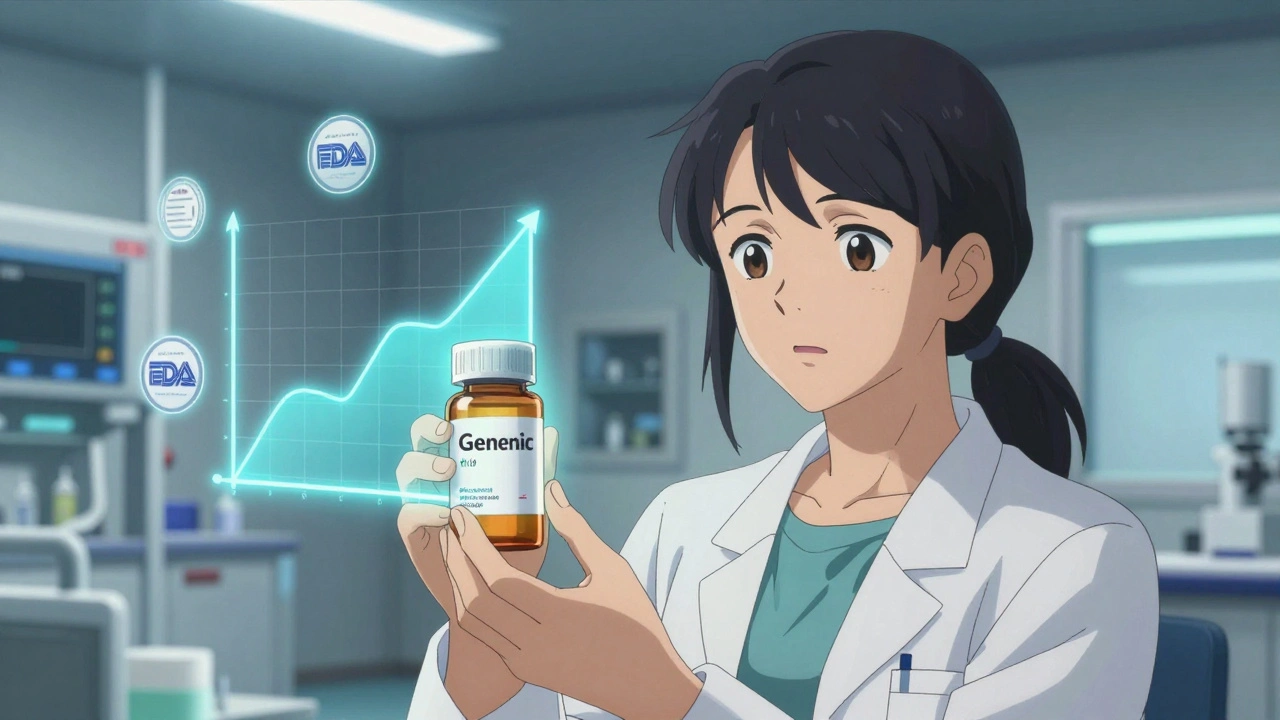
When you pick up a prescription and see a different name on the bottle than what your doctor wrote, it’s natural to wonder: is this generic drug really the same? You’re not alone. Millions of people in the U.S. and around the world take generic medications every day - over 90% of prescriptions filled - yet doubts still linger. Is it cheaper because it’s weaker? Could switching hurt me? Is the FDA cutting corners? Let’s clear up the noise.
Myth: Generic Drugs Are Less Effective
The biggest fear? That generics don’t work as well. But here’s what the data says: if a generic drug is approved by the FDA, it must deliver the same amount of active ingredient into your bloodstream at the same rate as the brand-name version. That’s not a suggestion - it’s a legal requirement. The FDA calls this bioequivalence. To prove it, manufacturers run studies with healthy volunteers, measuring how much of the drug enters the blood (AUC) and how fast it peaks (Cmax). The results must fall within 80% to 125% of the brand’s numbers. That’s not a wide gap - it’s a tight window designed to ensure identical performance.
A 2020 study in Nature analyzed 17 cardiovascular drugs and found that patients on generics had fewer heart attacks and deaths than those on brand names. Another study tracked over 136,000 older adults on blood pressure meds. When generics replaced brands, ER visits went up - but that wasn’t because the drugs failed. It was because patients suddenly had to pay more out-of-pocket after switching, and many skipped doses. The drug worked. The system didn’t.
Myth: Generic Drugs Are Made in Poorer Facilities
Many assume generics come from shady factories overseas. The truth? The FDA inspects every facility - brand or generic - the same way. In 2022, 98.7% of generic drug manufacturing sites passed inspection. Brand-name sites? 97.3%. That’s not a coincidence. The same rules apply. The same clean rooms. The same quality controls. The same penalties for violations. In fact, many brand-name companies make their own generics after the patent expires. You’re not getting a downgrade - you’re getting the same product, just without the marketing budget.
Myth: All Generics Are Identical
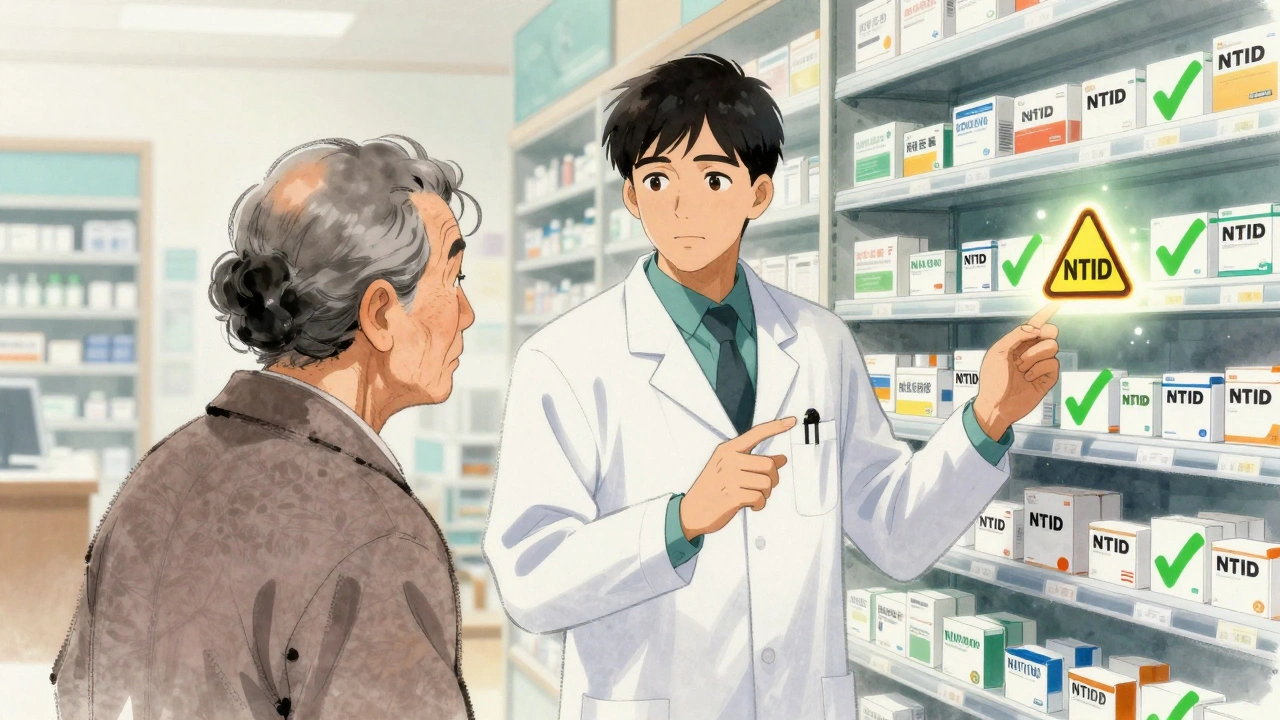
Here’s where things get tricky. While the active ingredient is identical, the inactive ingredients aren’t. That’s the fillers, dyes, preservatives, and coatings. For most people, this doesn’t matter. But if you’re allergic to red dye #40, or can’t tolerate lactose, the difference can be real. Some generics use different binders that affect how fast the pill dissolves - which is why doctors sometimes recommend staying on the same manufacturer’s version, especially for drugs with a narrow therapeutic index (NTID).
NTIDs are drugs where a tiny change in blood level can cause harm. Think warfarin, levothyroxine, or phenytoin. For these, the FDA requires tighter bioequivalence standards - 90% to 112% - and more monitoring. In rare cases, patients report side effects after switching. One Reddit user switched from brand Synthroid to generic levothyroxine and saw wild swings in TSH levels. Another had breakthrough seizures after switching from Keppra to generic levetiracetam. These aren’t myths - they’re documented cases. But they’re also rare. The FDA found that only 47 out of more than 1,600 generic drugs are classified as NTIDs. For the rest? Switching is safe.
Myth: Generics Are Always Cheaper - So Why Do Prices Jump?
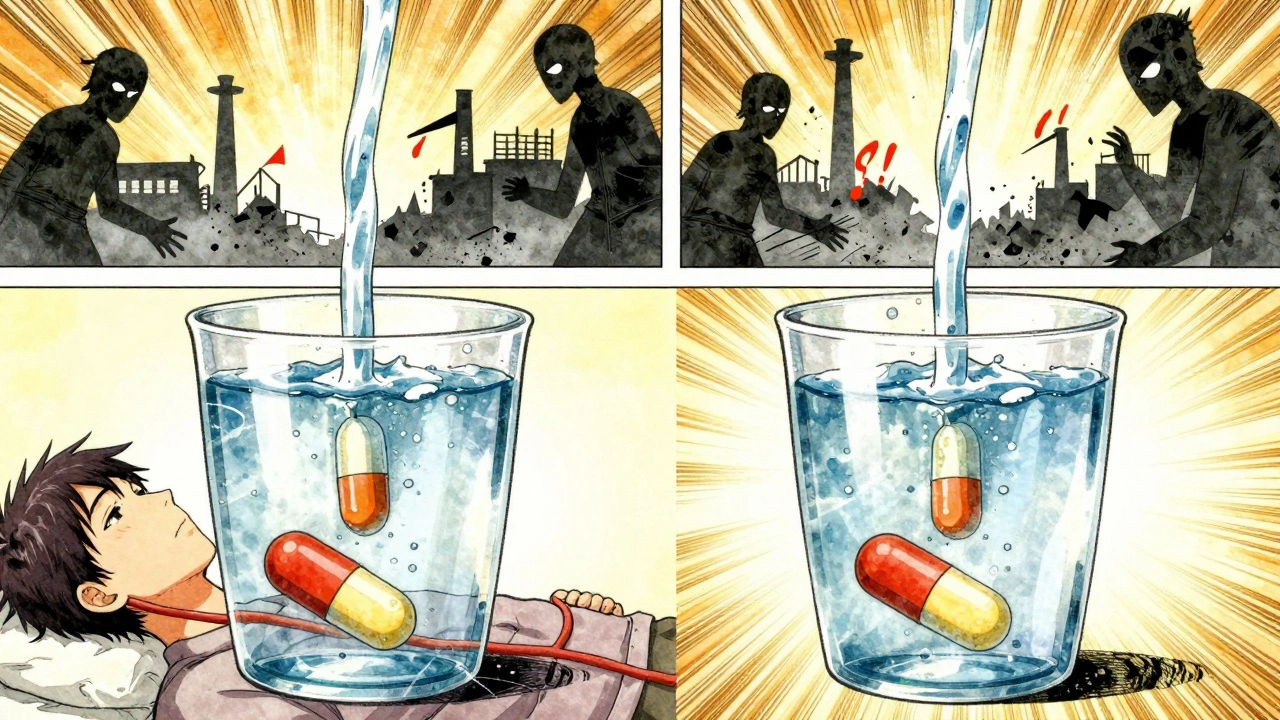
Yes, generics are cheaper. On average, they cost 80-85% less than brand names. Between 2010 and 2020, they saved the U.S. healthcare system $2.29 trillion. But prices don’t stay low forever. When only one company makes a generic, it’s cheap. When a second company enters, prices drop further. But if three out of five manufacturers shut down? Prices spike. That’s what happened with the antibiotic doxycycline - it jumped from $20 to $1,800 for a month’s supply. Or the epilepsy drug phenytoin - shortages led to price hikes of over 2,000%. The problem isn’t the generic itself. It’s market consolidation. Most active ingredients now come from just two countries: China and India. If a factory there shuts down? The U.S. feels it.
Myth: Doctors Don’t Trust Generics
Most doctors do. In fact, 98% of U.S. hospitals use generics as first-line treatment. The American Academy of Family Physicians says generics are safe and effective. But some doctors still hesitate - especially with psychiatric drugs. A 2019 study found slightly higher hospitalization rates for patients switched from brand escitalopram to generic. Was the drug less effective? Maybe. Or maybe the patient’s anxiety spiked because they believed the generic was inferior. Placebo effect works both ways. Some doctors avoid switching unless they’re confident the patient will stay compliant. Others don’t even mention it - they just prescribe the generic and assume the patient won’t notice.
What You Should Do
If you’re on a regular medication and your pharmacy switches to a generic:
- Check the label. Look for the manufacturer name. If you’ve had issues before, stick with the same one.
- Don’t panic if you feel slightly different. Give it two to four weeks. Your body needs time to adjust.
- If you notice real changes - mood swings, seizures, heart palpitations, unexplained fatigue - talk to your doctor. Don’t assume it’s ‘all in your head.’
- For NTID drugs like thyroid meds or blood thinners, ask your pharmacist to keep you on the same brand of generic. Many will honor that request.
- Use the FDA’s Orange Book to look up which generics are approved for your drug. It’s free, public, and updated weekly.
Why This Matters
Generic drugs aren’t just a cost-saving trick. They’re a lifeline. In Australia, where I live, Medicare subsidizes generics so that people with chronic conditions can afford their meds. In the U.S., without generics, millions would skip doses or skip treatment entirely. The science is clear: for 99% of prescriptions, generics are just as safe and effective. The exceptions exist - but they’re not the rule. They’re the exception. And we know how to handle them.
The real question isn’t whether generics work. It’s whether we’re willing to trust the system that makes them. The FDA doesn’t cut corners. The labs don’t cut corners. The manufacturers don’t cut corners. The only thing that’s cut is the price tag - and that’s a good thing.
Are generic drugs as safe as brand-name drugs?
Yes. The FDA requires generic drugs to meet the same strict standards for quality, strength, purity, and potency as brand-name drugs. Manufacturing facilities are inspected using the same rules, and over 98% pass inspections. The active ingredient is identical, and bioequivalence testing ensures the drug behaves the same way in your body.
Why do some people say generics don’t work for them?
In rare cases, switching to a generic can cause issues - especially with narrow therapeutic index drugs like levothyroxine or warfarin. Differences in inactive ingredients or dissolution rates can affect absorption. Some patients report side effects or loss of symptom control. But these cases are uncommon. For most people, switching causes no change. If you notice new symptoms after a switch, talk to your doctor - don’t assume it’s psychological.
Can I switch back to the brand-name drug if I don’t like the generic?
Yes. Your doctor can write a prescription that says "Do Not Substitute" or "Dispense as Written." Pharmacists must follow that. But be aware: your insurance may charge you more. Some plans require you to try the generic first. If you’re paying out of pocket, the brand might cost 5-10 times more.
Are all generic manufacturers the same?
No. While all approved generics meet FDA standards, different companies use different fillers, coatings, and manufacturing processes. Some patients report better results with one brand of generic over another. If you find a generic that works well, stick with it. Ask your pharmacist to keep you on the same manufacturer - especially for critical medications.
Do generic drugs take longer to work?
No. Bioequivalence testing ensures that the time it takes for the drug to reach peak concentration (Cmax) and the total exposure (AUC) are within a very narrow range of the brand-name version. For most drugs, the onset and duration of action are identical. If you feel a delay, it may be psychological - or due to changes in inactive ingredients affecting how quickly the pill dissolves in your stomach.
Is it safe to switch between different generic brands?
For most drugs, yes. But for drugs with a narrow therapeutic index - like thyroid meds, seizure drugs, or blood thinners - switching between different generic manufacturers can cause fluctuations in blood levels. The FDA recommends staying with the same manufacturer when possible. If you’re on one of these drugs, ask your pharmacist to note your preferred brand on your profile.
Aman deep
December 11, 2025 AT 05:02Man, I’ve been taking generic metformin for years now-no issues at all. My grandma in Delhi switched from brand to generic insulin and saved half her monthly bill. India’s pharma industry isn’t perfect, but the FDA doesn’t sleep. If it passes inspection here, it’s good to go. Don’t let fear sell you a more expensive pill.
Nikki Smellie
December 12, 2025 AT 07:27Have you seen the FDA’s inspection reports? No. I have. And I know what they’re hiding. The same labs that make your generic levothyroxine also make pesticides for China. They clean the same machines. One wrong rinse and your thyroid goes haywire. They don’t tell you this because you’re too busy scrolling.
Vivian Amadi
December 12, 2025 AT 14:55My doctor switched me to generic Adderall and I had panic attacks for two weeks. It wasn’t in my head. The pill looked different. The effects were different. You can’t just say ‘it’s the same’ when your brain is screaming.
Rebecca Dong
December 13, 2025 AT 20:56They say generics are safe. But who’s ‘they’? Big Pharma owns the FDA. The same CEOs. The same lobbyists. The same $500M in campaign donations. You think they want you to save money? No. They want you to be dependent. The real scam isn’t the pill-it’s the system that makes you believe it’s safe.
Lisa Stringfellow
December 14, 2025 AT 16:28Oh please. I switched to generic Synthroid and my TSH went from 2.1 to 8.7. I was exhausted, gaining weight, crying for no reason. My doctor said ‘it’s placebo.’ No. It’s not. You don’t know what it’s like to feel your body fail because some factory in Mumbai used cheaper fillers. I’m back on brand now. And I’m not going back.
Regan Mears
December 16, 2025 AT 03:19Look, I get it-some people have real reactions to inactive ingredients. But blaming generics for every side effect? That’s like blaming the car for bad gas. The system’s broken, not the drug. If you’re on a narrow therapeutic index med, stick with one manufacturer. Ask your pharmacist to lock it in. Most will. And if they won’t? Go elsewhere. Your health isn’t a cost center.
Ben Greening
December 16, 2025 AT 12:25The data is clear. Bioequivalence thresholds are rigorously enforced. For non-NTID drugs, the variation between brand and generic is statistically insignificant. Studies show no difference in clinical outcomes across millions of patients. The outliers exist, but they are not the norm. The emotional response to switching is often psychological, reinforced by anecdotal narratives.
David Palmer
December 17, 2025 AT 18:36I used to think generics were trash. Then I got laid off and had to switch to generic Zoloft. I didn’t feel different. Still got my shit done. Still laughed with my kid. Still slept. The only thing that changed? My bank account. Maybe the real problem isn’t the pill-it’s the fact that we’re taught to fear cheap things.
Jimmy Kärnfeldt
December 19, 2025 AT 17:05Hey, I get why this feels scary. Medicine is personal. But you’re not alone. I switched my mom from brand Lipitor to generic atorvastatin-she was terrified too. We tracked her cholesterol for 3 months. Same numbers. Same energy. Same life. Sometimes the thing we fear most turns out to be the thing that sets us free. Don’t let fear write your prescription.
Ariel Nichole
December 20, 2025 AT 17:39Just wanted to say thank you for this post. I’ve been taking generic levothyroxine for 5 years. No issues. My doctor never even mentioned the switch. I didn’t know there was even a brand version. I’m glad someone’s explaining this calmly. We need more of this, not fear-mongering.
Stephanie Maillet
December 21, 2025 AT 18:40It’s fascinating how we assign moral value to price. We assume cheap = inferior, expensive = sacred. But medicine isn’t wine. It’s chemistry. The molecule doesn’t care if it cost $1 or $100 to produce. The real tragedy isn’t the generic-it’s that we’ve built a system where access to basic health is tied to wealth, and then we blame the patient for wanting to survive.
Sylvia Frenzel
December 21, 2025 AT 19:25Generic drugs are fine for poor people. But if you have money, why risk it? My cardiologist says if you can afford the brand, take it. Why gamble with your heart? I don’t care what the FDA says. I trust my doctor’s instinct over a government form.
john damon
December 22, 2025 AT 19:07Just switched to generic Keppra. Had a seizure 3 days later. 😱 I knew it. 😭 They’re all lying. 🤬 I’m calling my senator. 📞 #GenericDrugScam 🚨
Sarah Clifford
December 24, 2025 AT 09:16My cousin’s kid has epilepsy. Switched to generic and had three seizures in a week. Now they’re back on brand. You think that’s coincidence? Nah. That’s not science. That’s a gamble. And my family ain’t betting our kid’s life on a $20 pill.