
Ever wonder why a medication that worked like a charm for your sibling does absolutely nothing for you? Or why you might have a severe reaction to a drug that everyone else seems to tolerate? It isn't just bad luck or a "sensitive stomach." The real culprit is often tucked away in your DNA. When you switch from a brand-name medication to a generic drug response, your genetic blueprint determines whether that medicine is a lifesaver or a liability.
The science behind this is called Pharmacogenetics is the study of how your specific genetic makeup influences your body's response to drugs. It's a fancy word for a simple reality: we are all built differently. Experts from the American Academy of Family Physicians have noted that genetic factors can account for anywhere from 20% to 95% of the variability in how patients respond to a single drug. If you have a family history of medication failure or unexpected side effects, your genes are likely sending a loud signal.
The Role of the Liver and CYP450 Enzymes
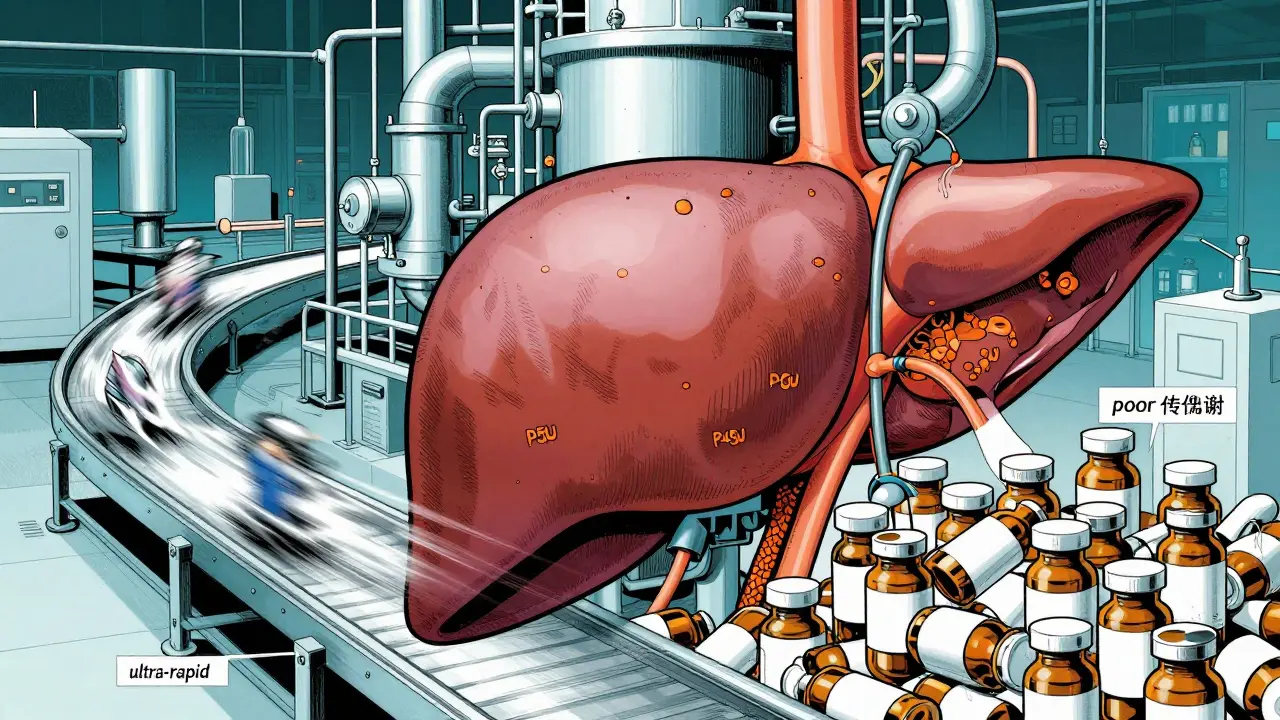
To understand how genetics affect drug response, we have to look at the liver. Your liver uses a group of proteins called enzymes to break down medication so your body can use it and eventually flush it out. The most important players here are the Cytochrome P450 is a superfamily of enzymes responsible for the metabolism of the vast majority of medications enzymes.
One specific enzyme, CYP2D6 is a highly polymorphic gene involved in metabolizing about 25% of all clinical drugs, including many antidepressants and painkillers, is a bit of a wildcard. Because it is so variable, people generally fall into a few categories:
- Ultra-rapid metabolizers: Your body breaks down the drug so fast it never reaches a therapeutic level. The medicine essentially vanishes before it can work.
- Poor metabolizers: Your body processes the drug too slowly. This leads to a buildup of the medication in your bloodstream, which can trigger toxic side effects even at a standard dose.
- Normal metabolizers: You process the drug at the expected rate.
If you're switching to a generic version of a drug like paroxetine, these genetic differences remain. The active ingredient is the same, but your CYP2D6 status determines if that ingredient becomes a cure or a cause for concern.
Common Genetic Markers and Real-World Impacts
It isn't just one enzyme doing the work. Different genes control different medications. For instance, if you are taking blood thinners, the CYP2C9 is an enzyme that plays a critical role in the metabolism of the anticoagulant warfarin gene is vital. People with specific variants (like *2 or *3) metabolize the drug much slower. For these individuals, a standard dose could lead to dangerous internal bleeding; they often require 15-30% lower doses to stay safe.
Similarly, the TPMT is an enzyme that metabolizes thiopurine drugs used in leukemia and autoimmune treatment gene can be a matter of life and death. Patients with low TPMT activity can suffer severe bone marrow suppression, leading to a drastic drop in white blood cells. Preemptive testing for this gene has actually reduced severe reactions by 90% in some pediatric leukemia patients.
| Gene/Enzyme | Associated Medication | Impact of Genetic Variant | Potential Outcome |
|---|---|---|---|
| CYP2D6 | Antidepressants, Beta-blockers | Poor or Ultra-rapid metabolism | Toxicity or Lack of Efficacy |
| CYP2C9 | Warfarin | Decreased metabolism | Increased bleeding risk |
| TPMT | Azathioprine, 6-MP | Low enzyme activity | Severe myelosuppression |
| DPYD | 5-Fluorouracil (Chemo) | Slower metabolism | Harmful drug buildup in blood |
Why Ancestry Matters in Drug Response
Your family history isn't just about your parents; it's about your broader ancestral roots. Genetic variants aren't spread evenly across the globe. For example, about 15-20% of people of Asian descent are poor metabolizers of CYP2C19 is an enzyme that metabolizes proton pump inhibitors and certain antiplatelet drugs, compared to only 2-5% of Caucasians. This means a generic proton pump inhibitor for acid reflux might work differently depending on your heritage.
We see similar patterns with blood pressure and cholesterol meds. A 2024 study found that variants in the HMGCR gene, which can make the drug pravastatin less effective, appear much more frequently in Sub-Saharan African populations than in European ones. This is why a "one size fits all" approach to generic prescribing is becoming outdated. Your heritage provides a map of how you are likely to react to certain chemical compounds.

Moving Toward Personalized Medicine
The goal of all this research is Personalized Medicine is a medical model that tailors healthcare and medication based on a person's unique genetic profile. Instead of the traditional "trial and error" method-where you try a drug for six weeks, realize it doesn't work, and then switch-doctors can use Pharmacogenomic Testing is the process of analyzing a patient's DNA to predict drug response before prescription to pick the right dose and drug the first time.
Large institutions like the Mayo Clinic have already implemented protocols (such as the RIGHT Protocol) that preemptively test patients for dozens of gene-drug pairs. In one study of 10,000 patients, 42% had at least one high-risk interaction identified through testing. More importantly, 67% of those patients saw their medications changed, which reduced adverse drug events by 34%.
Practical Tips for Patients and Families
If you are planning to switch to a generic medication or starting a new prescription, don't ignore your family's medical history. If your father had a severe reaction to a specific antidepressant or your mother struggled with the efficacy of a certain blood thinner, tell your doctor. This "phenotypic history" is often the first clue that a genetic variant is at play.
If you're considering genetic testing, be aware of the landscape. Companies like Color Genomics or OneOme offer panels that can identify these variants. However, the most critical step is the interpretation. A test result is just a piece of paper unless your doctor knows how to translate a "CYP2D6 poor metabolizer" result into a specific dose reduction. Always ensure your provider is familiar with CPIC is The Clinical Pharmacogenetics Implementation Consortium, which provides evidence-based guidelines for gene-drug pairs guidelines.
Does a generic drug have different genetic requirements than a brand-name drug?
No. Genetic response is based on the active pharmaceutical ingredient. Since generic drugs contain the same active ingredient as the brand-name version, your body's genetic ability to metabolize that chemical remains the same regardless of the manufacturer.
Can I get pharmacogenetic testing through my insurance?
It depends on the test and the drug. For high-risk medications like warfarin or certain chemotherapies, many insurance providers and programs (including Medicare's Molecular Diagnostic Services Program) provide coverage because the risk of failure or toxicity is so high.
If my parents had bad reactions to a drug, does that mean I will too?
There is a high probability, but it's not a guarantee. You inherit half of your genes from each parent. You might inherit the specific variant that causes the reaction, or you might inherit a "wild-type" (normal) copy that protects you from that reaction.
What is the difference between pharmacogenetics and pharmacogenomics?
Pharmacogenetics typically looks at a single gene and how it affects a drug response. Pharmacogenomics is a broader term that looks at the entire genome to understand complex drug interactions and responses.
How do I know if I should ask for genetic testing?
You should consider testing if you have a history of "treatment resistance" (drugs not working), unexpected severe side effects at low doses, or a strong family history of adverse reactions to common medications.