Statin Drug Interaction Checker
Check Your Statin Safety
Select your statin and medications to see potential interactions
When you're taking a statin to lower your cholesterol, you might not think about what else is in your medicine cabinet. But the truth is, many common drugs can turn a safe statin into a serious risk. The difference between a statin that works well and one that causes muscle damage often comes down to how it's processed in your body-not just which one you're on, but how it's made.
Why Some Statins Are Riskier Than Others
Not all statins are created equal. Seven are approved in the U.S.: atorvastatin, simvastatin, pravastatin, lovastatin, fluvastatin, rosuvastatin, and pitavastatin. Each lowers LDL cholesterol by 30-60%, but their safety profiles vary wildly when mixed with other medications. The biggest danger comes from drug interactions that spike statin levels in your blood. Too much statin can lead to rhabdomyolysis-a rare but life-threatening breakdown of muscle tissue that can damage your kidneys. The risk isn't random. It’s tied to how your body breaks down each statin. Five statins-atorvastatin, simvastatin, lovastatin, fluvastatin, and the withdrawn cerivastatin-rely heavily on liver enzymes called CYP450s to get broken down. Simvastatin and lovastatin are mostly handled by CYP3A4. That’s the same enzyme used by antibiotics like clarithromycin, antifungals, and many HIV drugs. When you take one of those with simvastatin, your body can’t clear the statin fast enough. Studies show clarithromycin can boost simvastatin levels by up to 10 times. For lovastatin? Up to 16 times. That’s not a small bump. That’s a red flag. Atorvastatin also uses CYP3A4, but less intensely. Clarithromycin raises its levels about fourfold. Still risky, but not as extreme. Fluvastatin is different-it’s mainly processed by CYP2C9, so it avoids the CYP3A4 trap. That’s why it’s often a better pick if you’re on antibiotics or antifungals. Then there are the statins that barely touch CYP enzymes at all: pravastatin, rosuvastatin, and pitavastatin. They’re cleared mostly by the kidneys or through glucuronidation, a different pathway. That makes them much less likely to clash with common drugs. But they have their own vulnerability: the OATP1B1 transporter.The Hidden Risk: OATP1B1 Transporters
Even if a statin doesn’t rely on CYP enzymes, it still needs help getting into liver cells to do its job. That’s where OATP1B1 comes in. This transporter shuttles statins into the liver. But if something blocks it-like cyclosporine, used after organ transplants-statins pile up in your bloodstream. Cyclosporine is a classic offender. It can boost pitavastatin levels by 7.1 times, rosuvastatin by 4.9 times, and atorvastatin by up to 3 times. That’s why the FDA explicitly bans combining cyclosporine with lovastatin, simvastatin, and pitavastatin. Pravastatin is the only statin approved for use with cyclosporine at doses up to 40 mg daily. Rosuvastatin can be used cautiously, but only with close monitoring. This isn’t just about transplant patients. Other drugs like gemfibrozil (a fibrate for triglycerides) also block OATP1B1. Gemfibrozil is especially dangerous because it also inhibits glucuronidation-the backup clearance route for rosuvastatin and pitavastatin. The result? A double hit. That’s why experts say never combine gemfibrozil with any statin except pravastatin. Fenofibrate, another fibrate, doesn’t interfere as much and is a safer alternative if you need both drugs.What About Common Medications? Diltiazem, Ticagrelor, Colchicine
You might be surprised how everyday prescriptions can interact with statins. Calcium channel blockers like diltiazem and verapamil, used for high blood pressure and heart rhythm issues, also inhibit CYP3A4. They can raise simvastatin and lovastatin levels by 3 to 8 times. That’s why many cardiologists avoid prescribing high-dose simvastatin to patients on these drugs. Atorvastatin is safer here, but even then, doses over 10 mg daily with diltiazem should be used with caution and CK monitoring. Ticagrelor, a blood thinner used after heart attacks, was once thought to be risky with statins. But newer data from the American College of Cardiology shows it only slightly increases atorvastatin levels-so it’s generally safe. The same can’t be said for simvastatin and lovastatin: their doses should never exceed 40 mg daily if you’re on ticagrelor. Colchicine, often prescribed for gout, is another tricky one. It doesn’t directly block enzymes, but it can increase the risk of muscle damage when combined with statins. The FDA doesn’t ban the combo, but doctors often lower the statin dose or monitor creatine kinase levels more closely. The key is awareness. If you’re on colchicine for gout flares and start a statin, tell your doctor. They’ll watch for muscle pain or weakness.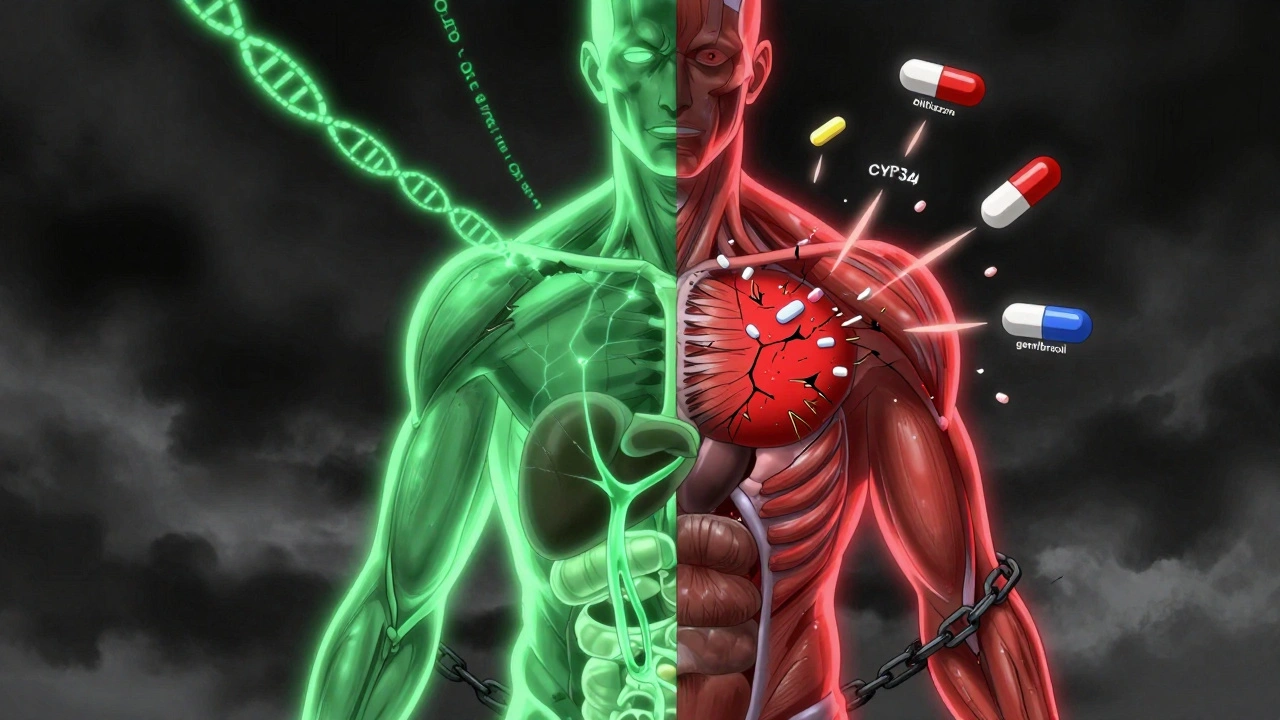
Genetics Play a Role Too
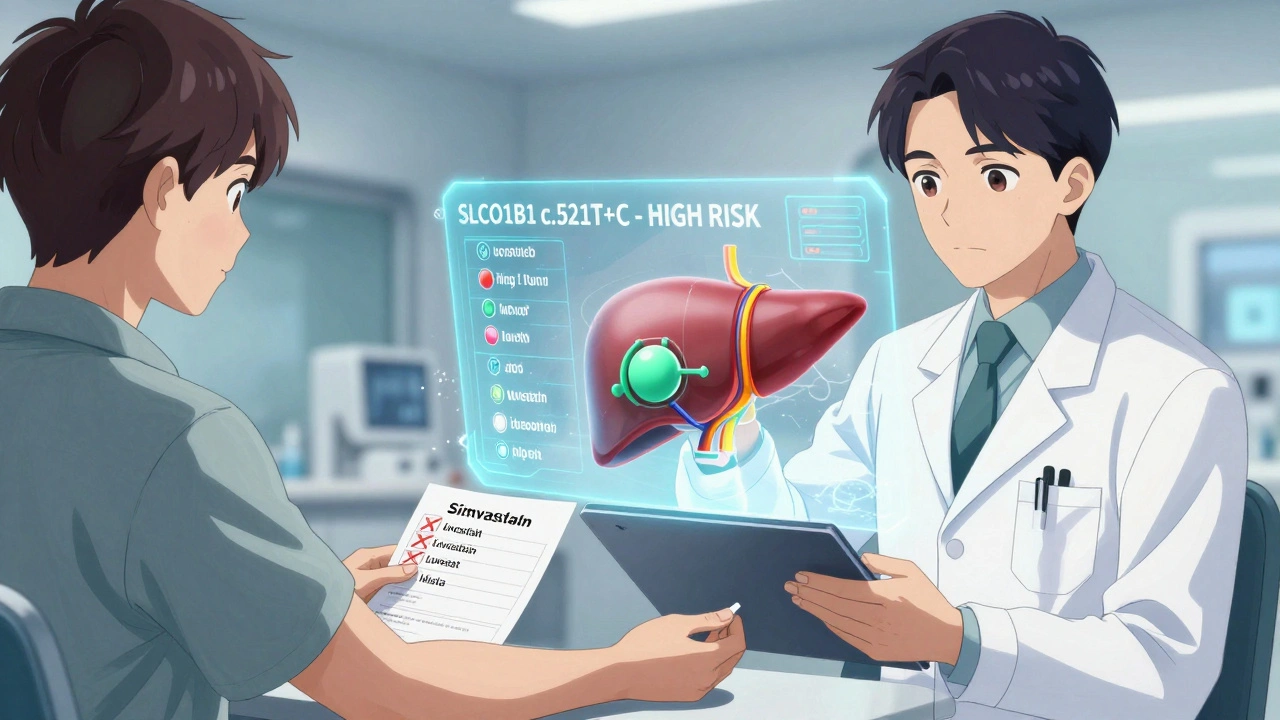
Your genes matter more than you think. A common genetic variation in the SLCO1B1 gene affects how well your body transports statins into the liver. If you have the c.521T>C variant, your risk of muscle damage from simvastatin jumps 4.5 times. That’s why the FDA added pharmacogenetic info to simvastatin’s label back in 2011. This isn’t routine testing yet-but it should be. If you’ve had unexplained muscle pain on a statin, or if your family has a history of statin side effects, ask about genetic testing. It’s not expensive, and it can prevent serious harm.Which Statin Is Safest for You?
Here’s a quick guide based on interaction risk:| Statin | Primary Metabolism Pathway | High-Risk Interactions | Best For |
|---|---|---|---|
| Simvastatin | CYP3A4 | Clarithromycin, cyclosporine, diltiazem, gemfibrozil | Low-risk patients, no other meds |
| Lovastatin | CYP3A4 | Clarithromycin, cyclosporine, HIV drugs | Avoid if on multiple medications |
| Atorvastatin | CYP3A4, OATP1B1 | Cyclosporine, diltiazem, high-dose clarithromycin | Patients on moderate-risk drugs, need strong LDL drop |
| Fluvastatin | CYP2C9 | Fluconazole, some antifungals | Patients on CYP3A4 inhibitors |
| Pravastatin | Kidney excretion, minimal CYP | Very few | Best choice for polypharmacy, transplant patients |
| Rosuvastatin | OATP1B1, CYP2C9 | Cyclosporine, gemfibrozil | High LDL, low interaction risk (except with cyclosporine) |
| Pitavastatin | Glucuronidation, OATP1B1 | Cyclosporine | Patients needing once-daily dosing, avoid with transplant meds |
What You Should Do Right Now
If you’re on a statin, here’s what to do:- Make a list of every medication you take-prescription, over-the-counter, even supplements. Don’t forget herbal stuff like St. John’s wort or red yeast rice.
- Bring it to your doctor or pharmacist. Ask: “Could any of these interact with my statin?”
- If you’re on cyclosporine, everolimus, or sirolimus, ask if your statin is safe. Pravastatin is usually the answer.
- If you’re on clarithromycin or an HIV drug, avoid simvastatin and lovastatin. Atorvastatin may be okay at low doses, but check first.
- If you get unexplained muscle pain, weakness, or dark urine, stop the statin and call your doctor immediately. Don’t wait.
- If you’ve had muscle side effects before, ask about SLCO1B1 testing.
What’s Next?
Newer drugs like bempedoic acid (Nexletol) are being developed specifically to avoid these interactions. In the CLEAR Outcomes trial, it lowered heart attack risk by 17% without the same drug interaction risks as statins. It’s not a replacement yet, but it’s a sign of where things are headed. Pharmacogenomics-using your genes to pick the right statin-isn’t standard yet, but it’s coming. In the next five years, we’ll likely see clinics using genetic data to avoid dangerous combos before they happen. For now, the best advice is simple: know your statin. Know what else you’re taking. And never assume a statin is safe just because it’s common. The right one for you depends on your full health picture-not just your cholesterol number.Can I take a statin with grapefruit juice?
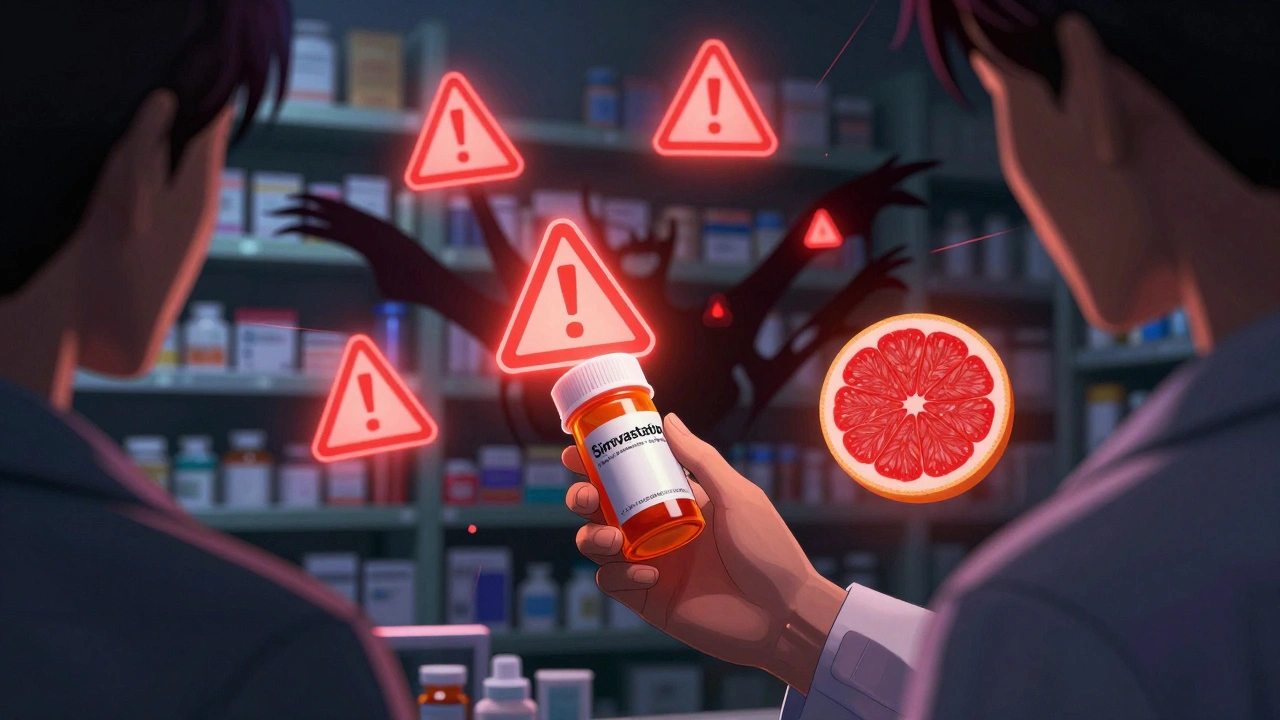
Grapefruit juice blocks CYP3A4 in the gut, which can raise levels of statins processed by that enzyme. Simvastatin and lovastatin are the biggest concerns-even one glass can increase their levels by up to 15-fold. Atorvastatin is also affected, but less so. Fluvastatin, pravastatin, rosuvastatin, and pitavastatin aren’t significantly impacted. If you drink grapefruit juice regularly, avoid simvastatin and lovastatin entirely. For others, occasional small amounts are usually okay, but check with your doctor.
Is it safe to take statins with aspirin or ibuprofen?
Aspirin doesn’t interact with statins and is often prescribed alongside them for heart protection. Ibuprofen and other NSAIDs like naproxen don’t directly interfere with statin metabolism. However, both NSAIDs and statins can affect kidney function. If you have kidney disease or take high doses of NSAIDs long-term, your doctor may monitor your kidney health more closely. There’s no need to avoid them, but don’t self-medicate with high-dose NSAIDs while on a statin.
Why is simvastatin 80 mg no longer recommended?
The FDA removed the 80 mg dose of simvastatin in 2011 because studies showed it increased the risk of muscle damage without offering extra heart protection. The risk is highest in the first year of use and in older adults or those on other interacting drugs. Even 40 mg can be risky with certain medications. Today, doctors rarely prescribe 80 mg, and if they do, it’s only for patients who’ve tolerated it long-term with no side effects.
Can I switch statins if I’m having side effects?
Yes, and it’s often the best solution. Many people who stop statins due to muscle pain can tolerate a different one. Pravastatin and fluvastatin are often the first alternatives because they’re least likely to interact with other meds. Rosuvastatin can also work well if you don’t have kidney issues. Switching isn’t just about avoiding side effects-it’s about finding the right fit for your body and your other medications.
Do I need blood tests if I’m on a statin?
Yes, but not as often as you might think. Your doctor should check liver enzymes before you start and again after 12 weeks. After that, annual checks are usually enough unless you’re on high doses or interacting drugs. Creatine kinase (CK) testing is only needed if you have muscle symptoms. Routine CK checks for everyone aren’t recommended because most muscle pain isn’t from statins. But if you feel unexplained soreness, weakness, or dark urine, get tested right away.
Kurt Russell
December 7, 2025 AT 20:58This is the kind of post that makes me want to hug my pharmacist. Seriously, if you're on a statin and don't know what else you're mixing it with, you're playing Russian roulette with your muscles. I had a buddy who took simvastatin with clarithromycin and ended up in the ER with CK levels through the roof. He thought grapefruit juice was just "healthy." Nope. It's a silent killer with a smile.
Pravastatin is the MVP here. If you're on a cocktail of meds, go with that. No drama. No surprises. Just works.
Olivia Hand
December 9, 2025 AT 15:03Let’s be real - most doctors don’t even know the difference between CYP3A4 and OATP1B1. I’ve had three different cardiologists tell me "it’s all the same" until I showed them the FDA’s interaction charts. The fact that simvastatin 80mg was even a thing is criminal. It’s like handing someone a loaded gun and saying "just don’t pull the trigger."
And don’t get me started on how no one tests for SLCO1B1 unless you’re already in the ICU. We’re talking about a genetic variant that quadruples your risk and it’s treated like a footnote. This isn’t medicine. It’s guesswork with a stethoscope.
Louis Llaine
December 11, 2025 AT 04:53Wow. A 2000-word essay on statins. Congrats, you just turned a cholesterol pill into a Netflix documentary. I’m sure the 87-year-old with diabetes and 12 meds is sitting there with a highlighter and a flowchart. Meanwhile, I’m just trying not to die of a heart attack before I can finish my coffee.
Can we just agree that if you’re taking more than three pills a day, you’re already on the express train to pharmacy hell? Pick one statin, don’t eat grapefruit, and stop Googling "rhabdomyolysis symptoms" at 3 a.m.
Jane Quitain
December 11, 2025 AT 18:26Ashley Farmer
December 12, 2025 AT 03:28I appreciate how thorough this is. As someone who’s been on statins for 12 years and switched three times because of muscle pain, I wish more people understood how personal this is. It’s not just "take a pill." It’s about your liver, your kidneys, your genes, your diet, your other meds - it’s a whole ecosystem.
I ended up on pravastatin after my SLCO1B1 test came back positive for the variant. I was skeptical, but now I feel like I finally found my match. No more aching legs. No more "is this normal?" panic. Just quiet, steady heart health.
Thank you for writing this. It’s the kind of info that saves lives - not just stats.
Sam Mathew Cheriyan
December 13, 2025 AT 12:21Okay but what if this is all a Big Pharma lie? I read on a forum that statins were invented to make people dependent on pills so they’d keep buying them. The real cause of heart disease is sugar and stress. And why do all the "safe" statins cost $500 a month? Coincidence? I think not.
My cousin in India takes turmeric and lemon water and his cholesterol is lower than mine. He’s 72 and rides a bicycle to the market. Meanwhile, I’m on rosuvastatin and still feel like my legs are made of wet cement.
Maybe the real interaction is between capitalism and your arteries.
Nancy Carlsen
December 14, 2025 AT 18:51OMG this is SO helpful!! 🥹 I’ve been terrified to even take ibuprofen for my knee pain because I thought it’d wreck my statin. Now I know it’s fine! And grapefruit? I thought it was healthy! 😅 I’m going to my doc tomorrow to switch to pravastatin - I’ve been on simvastatin for years and my muscles have been killing me. This could be life-changing!!
Also, I’m printing this out and giving it to my mom. She’s 68 and on 8 meds. She needs this. ❤️
Ted Rosenwasser
December 16, 2025 AT 07:30How is it possible that someone with a medical degree didn’t include the full pharmacokinetic diagrams? You’ve mentioned CYP450 and OATP1B1, but you didn’t even touch on the role of BSEP or MRP2 efflux transporters. This is amateur hour.
And why no mention of the 2023 JAMA meta-analysis on statin-induced myopathy in Asian populations? Or the recent FDA advisory on pitavastatin and renal impairment? This is a cherry-picked, oversimplified pamphlet masquerading as clinical guidance.
At least cite the sources. Or better yet - go back to med school.
David Brooks
December 17, 2025 AT 14:28I was skeptical about statins until my dad had a heart attack at 62. He’s on pravastatin now, no issues. I used to think meds were for weak people - until I realized my body wasn’t built to process cholesterol like a 1950s farmer. We’re not cavemen anymore. Our diets, our stress, our meds - they’re all different.
This isn’t about fear. It’s about empowerment. Knowing your statin isn’t weakness. It’s wisdom.
And yes - if you’re on grapefruit juice, stop. I don’t care how much you love it. Your liver doesn’t.
Kyle Flores
December 18, 2025 AT 07:39Just wanted to say thank you. My sister had rhabdo after a combo of simvastatin and amiodarone. She was fine, but it scared the hell out of us. I’ve been telling everyone I know to ask their doc about this stuff - especially if they’re over 50 or on more than three meds.
And yes, SLCO1B1 testing? Do it. It’s $80 at 23andMe. Worth it if it keeps you out of the hospital.
Also - gemfibrozil is a nightmare. My uncle took it with rosuvastatin and ended up in dialysis for a month. Don’t let anyone tell you it’s "fine."
Ryan Sullivan
December 18, 2025 AT 10:10While the article is superficially accurate, it lacks critical nuance regarding the clinical relevance of transporter inhibition. The 7.1-fold increase in pitavastatin AUC with cyclosporine is statistically significant but rarely clinically actionable in the absence of myalgia or elevated CK. The FDA’s contraindications are overly conservative, driven by litigation risk rather than evidence-based thresholds.
Moreover, the assertion that pravastatin is "the only statin approved" for cyclosporine use is misleading - off-label use of low-dose rosuvastatin is common in transplant centers with therapeutic drug monitoring. The real issue is not the statin, but the lack of standardized protocols for polypharmacy in elderly patients with multimorbidity.
Recommendation: Replace blanket avoidance with individualized risk stratification using validated tools like the Statin Risk Calculator v2.0.
Kyle Oksten
December 19, 2025 AT 15:29What’s fascinating isn’t the drug interactions - it’s how we’ve turned a biological process into a checklist. We’re not just managing cholesterol anymore. We’re managing risk matrices, genetic variants, enzyme pathways, and pharmaceutical marketing.
Statins were supposed to be simple. A pill. A number. A life saved.
Now, you need a PhD in pharmacology just to know if you can take ibuprofen.
Maybe the real problem isn’t the statins.
Maybe it’s that we’ve lost the art of listening - to our bodies, to our patients, to the quiet signals before the crisis hits.
Technology helps. But wisdom? That’s still human.
Ashley Farmer
December 21, 2025 AT 03:41Just wanted to reply to @KyleOksten - you’re so right. I’ve been thinking about this a lot lately. My mom’s doctor told her to "just avoid grapefruit" but never explained why. She didn’t even know simvastatin and lovastatin were the big ones. I showed her this post and she cried. Not because she was scared - but because for the first time, someone treated her like a person, not a chart.
That’s what this is really about. Not enzymes. Not genes. Not even statins.
It’s about being seen.