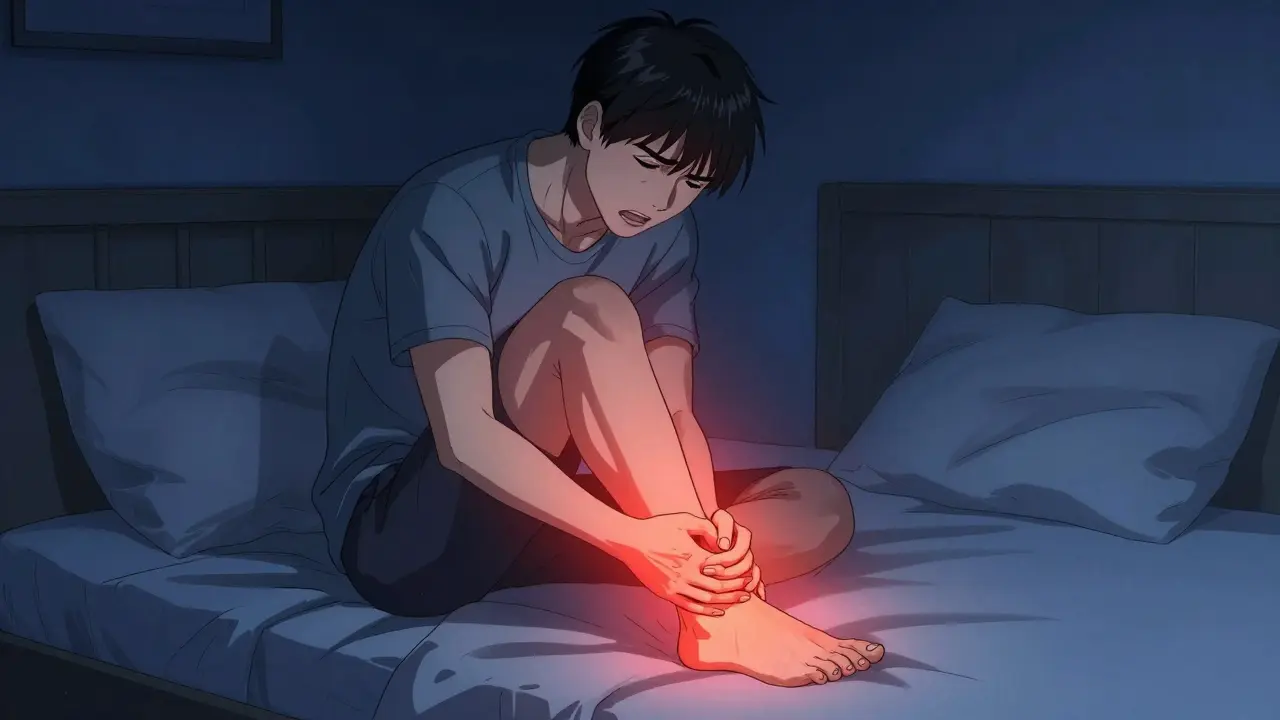
Understanding the Nerve Damage
Living with diabetes often means managing blood sugar levels, but many people face a secondary challenge that isn't always visible: diabetic neuropathy. This condition involves damage to your nerves, primarily caused by prolonged high blood sugar over time. According to data from the American Diabetes Association, approximately 50% of people with diabetes develop some form of neuropathy. While some forms of nerve damage might just cause numbness, painful diabetic neuropathy (PDN) affects between 10% to 26% of patients globally.
The pain itself can feel like burning, stabbing, or shooting sensations, often worst at night. What makes treatment tricky is that while we have ways to manage the symptoms, current medical consensus confirms there is no therapy that can reverse established nerve damage once it occurs. This reality shifts the goalpost for treatment: instead of a cure, the focus becomes symptom management and preventing further complications, particularly regarding the feet.
FDA-Approved Medication Options
When it comes to pharmacological intervention, the Food and Drug Administration (FDA) has approved specific medications specifically designed to handle this type of nerve pain. These aren't just standard painkillers; they target the nervous system directly.
Duloxetine (Cymbalta) stands out as a first-line option. Approved in 2004, it is typically prescribed at a dose of 60mg daily. Because it belongs to the SNRI class, it also helps treat comorbid depression, which affects about one-third of patients dealing with chronic nerve pain.
Pregabalin (Lyrica) is another major player. Also approved in 2004, it is used at doses ranging from 75mg to 150mg daily, split into two or three divided doses. It works quickly to reduce pain signals in the brain. However, it carries a higher cost profile than some alternatives.
Capsaicin Patch (Qutenza) offers a non-systemic solution. The 8% capsaicin patch was approved in 2009 specifically for pain on the feet. Unlike pills, it delivers medication locally to the skin, though the application process itself can be intensely uncomfortable initially.
Tapentadol Extended-Release (Nucynta ER) rounds out the four main FDA-approved options. Approved in 2012, it uses a different mechanism combining opioid activity with norepinephrine reuptake inhibition, usually reserved for cases where other treatments fail.
| Medication | Typical Dose | Effect Onset | Cost (Estimate) |
|---|---|---|---|
| Duloxetine | 60mg daily | 3 days to steady state | $15.59 / 90 caps |
| Pregabalin | 75-150mg daily | Peak in 1 hour | $378.99 / 90 caps |
| Gabapentin | 300-3600mg daily | Variable | $4.00 / 90 caps |
| Capsaicin Patch | Every 12 weeks | Immediate | Varies widely |

Off-Label and Alternative Treatments
Beyond the FDA-approved list, doctors frequently prescribe "off-label" medications based on clinical experience and efficacy data. Gabapentin, for instance, is extremely common due to its affordability. Despite costing as little as $4.00 for 90 capsules, it follows similar pathways to pregabalin but is often taken in higher doses, sometimes reaching up to 3600mg daily.
Tricyclic antidepressants, particularly Amitriptyline, are recommended by expert panels like the Toronto Consensus Panel despite lacking FDA approval specifically for neuropathy. They offer a low number needed to treat (NNT) of 3.1 for achieving a 50% reduction in pain. Venlafaxine is another alternative often tried when duloxetine fails or causes intolerable weight gain.
For those who haven't found relief with oral medications, topical lidocaine patches (Lidoderm) at 5% concentration are sometimes utilized. While they lack the potency of capsaicin patches for deep pain, they provide numbing relief without systemic side effects. Opioids like tramadol are generally considered third-line options, reserved for severe refractory pain, with guidelines suggesting careful monitoring due to addiction risks.
Navigating Side Effects and Costs
Choosing a medication isn't just about efficacy; it is often about managing side effects and financial burden. For example, pregabalin shows a standardized mean difference (SMD) of 0.44 for pain improvement, which is moderate confidence, yet roughly 30% of users report dizziness and 20% experience somnolence. These side effects can interfere significantly with daily life, especially for those who need to drive or operate machinery.
TCAs like amitriptyline have a different profile. They are cheap but come with dry mouth in 57% of users and constipation in 40%. For older adults, there is a cardiac risk involving QT prolongation, requiring monitoring for those over age 45. Duloxetine brings its own set of issues, with 37% of negative reviews citing weight gain of 5-10 pounds over time.
Cost disparities are stark. While gabapentin is budget-friendly, brand-name or newer formulations of anticonvulsants can soar to nearly $300 per month even with insurance coverage in some markets. This financial pressure sometimes leads patients to discontinue effective treatments prematurely. Generic versions of duloxetine now capture about 92% of SNRI prescriptions, helping to mitigate these costs somewhat.

The Critical Role of Foot Care
Medication treats the pain, but physical care prevents the devastation of ulcers and amputation. Because neuropathy reduces sensation, you might not feel a blister forming or a pebble in your shoe. Research indicates that 15% of neuropathy patients develop foot ulcers within five years. Therefore, a rigorous daily routine is mandatory.
Your self-check should happen every single day. Inspect the tops and bottoms of your feet, between toes, and around nails. Look for cuts, sores, swelling, or infected toenails. Keeping moisture in check is vital; too much sweat promotes fungal infections, while too much dryness leads to cracks.
Professional care cannot be neglected. The NHS mandates annual comprehensive foot exams for all diabetic patients, including 10g monofilament testing to assess sensation loss. You should wear specialized footwear that provides extra cushioning. Even simple socks can make a huge difference-avoid tight elastic bands that cut off circulation.
- Check feet daily under good lighting.
- Maintain proper hydration and skin moisture.
- Avoid walking barefoot, even indoors.
- Schedule annual professional screenings.
- Monitor temperature carefully before soaking feet.
Treatment Plans and Expectations
Patients should understand that finding the right medication is often a trial-and-error process. Guidelines recommend offering therapeutic trials for 4 to 8 weeks at adequate doses before deciding a drug doesn't work. Maximum benefit is typically seen by week 12.
About half of patients achieve 30-50% pain reduction compared to placebo with these treatments. It is crucial to manage expectations here; if you do not get 100% relief, it does necessarily mean the treatment failed, as complete elimination of pain is rare. Titration matters: 65% of patients require dose titration to minimize dizziness associated with gabapentinoids.
New research is constantly emerging. In 2023, the FDA accepted a New Drug Application for mirogabalin, which showed promising results in Phase III trials. Additionally, precision medicine is entering the space, using genetic testing (specifically CYP2D6 polymorphisms) to predict how well a patient will respond to duloxetine. Sodium glucose cotransporter-2 (SGLT2) inhibitors are also showing neuroprotective effects in recent studies.
Tony Yorke
March 26, 2026 AT 23:41The cost disparity shown here is quite stark.
Devon Riley
March 27, 2026 AT 21:33It really hits home seeing how many people struggle silently with this nerve damage. I wish more doctors pushed the foot care routine harder since prevention is key.
Rohan Kumar
March 29, 2026 AT 17:41They push these pills until you break down. Anyway the capsaicin patch sounds like hell 🌶️😈 Big pharma loves the broken body narrative 👀
Monique Ball
March 31, 2026 AT 01:00The cost comparison chart is eye-opening!!! You see!!! Gabapentin is so cheap compared to Lyrica!!! It is crazy!!! But then you read about the dizziness side effects!!! And that is real talk!!! I know people who stopped taking it because they could not drive safely!!! But pain makes you do things!!! So balancing it is hard!!! The foot care part is non-negotiable!!! You really can lose a toe!!! Literally overnight without knowing!!! Inspect those feet daily!!! Do not skip the monofilament test!!! Just because it seems simple does not mean it is easy!!! Consistency is what saves limbs!!! And we can not ignore the mental health aspect either!!! Depression runs high with chronic pain!!! Treating both helps immensely!!! Hope everyone finds relief soon!!! 💪🩺
gina macabuhay
March 31, 2026 AT 10:07We must acknowledge the reality of chronic conditions without resorting to conspiracy theories. Ignoring science benefits no one except the disease itself. Please exercise more caution when discussing sensitive health topics.
Philip Wynkoop
April 2, 2026 AT 00:31Thanks for sharing this stuff :)
Jordan Marx
April 3, 2026 AT 01:45From a therapeutic perspective, titration schedules matter significantly here. Patients often self-discontinue due to immediate somnolence rather than efficacy thresholds. Pharmacokinetics play a major role in compliance rates with SNRIs versus anticonvulsants. Long-term adherence is the real bottleneck in clinical outcomes.
Aaron Olney
April 4, 2026 AT 13:39I cant beleive how much money insurance charges for this. Its literally stealing. My uncle took the cymbalta and he felt worse af. Like why would you spend 300 dollars on something. The foot care thing is scary too. What if you cut yourself sleeping. Thats a disaster waiting to happen fr. Meds are expensive and life is hard.
Sabrina Herciu
April 6, 2026 AT 04:52Actually,, the studies show significant improvement in quality of life,,, despite the cost issues!!! Many patients do find relief after the initial trial period,, which usually takes about eight weeks,,, before discontinuing prematurely!!!! Stick with the regimen!!! Your doctor can help adjust doses,,, if side effects become intolerable during titration!!! Safety is paramount!!! Always consult professionals!!! Do not stop cold turkey!!! Abrupt cessation causes withdrawal!!!
Debra Brigman
April 8, 2026 AT 01:15Pain is merely the nervous system screaming its dissonance against modern metabolic decay. To numb the signal is to silence the messenger, yet survival demands some form of adaptation. Perhaps true healing lies beyond the chemical scaffold entirely.
Sophie Hallam
April 9, 2026 AT 12:08That is a unique way to look at it. Sometimes managing symptoms feels like a compromise but it works for keeping people mobile. Different strokes for different folks.
Jeannette Kwiatkowski Kwiatkowski
April 10, 2026 AT 00:48Most of this is generic fluff masquerading as deep analysis. Still useful for the basics i guess.