
As of November 2025, more than 287 drugs are in short supply across the U.S., with nearly half of them being critical medications for heart failure, cancer, and infections. Hospitals are rationing insulin, antibiotics, and chemotherapy drugs. Doctors are calling patients to delay treatments. Families are scrambling to find alternatives that may not work as well-or aren’t available at all. This isn’t a glitch. It’s a system failure-and Congress is finally trying to fix it.
The Two Bills Trying to Stop the Crisis
Two bills introduced in the 119th Congress are the most direct attempts to tackle this problem. The first is the Drug Shortage Prevention Act of 2025 (S.2665). Introduced by Senator Amy Klobuchar in August, it would require drug manufacturers to notify the FDA the moment they see a spike in demand for a critical medication. Right now, companies don’t have to say anything until it’s too late. By then, pharmacies are empty, and patients are going without. The second bill, Health Care Provider Shortage Minimization Act of 2025 (H.R.1160), targets a different but equally deadly problem: not enough doctors, nurses, and pharmacists. Over 122 million Americans live in areas where there aren’t enough primary care providers. Rural clinics shut down. ERs stay understaffed. Patients wait days for appointments. This bill, though still vague in public records, is believed to focus on funding training programs, loan forgiveness for providers working in underserved areas, and expanding telehealth access.Why These Bills Are Still Stuck
As of November 13, 2025, neither bill has moved past committee. That’s not because they’re unpopular-it’s because the federal government has been shut down since October 1, 2025. The longest shutdown in U.S. history. Over 800,000 federal workers are furloughed, including nearly every FDA employee who monitors drug supply chains. The Drug Shortage Portal, the FDA’s own tool for tracking shortages, is barely functional. No one’s updating it. No one’s responding to alerts. Even if S.2665 passes, it needs funding. The Congressional Budget Office estimates it would cost $45 million a year to run the new notification system. But Congress just passed a $9 billion cut to foreign aid and public media. There’s no money left for drug safety. And H.R.1160? No one even knows what’s in it. The House hasn’t released the full text. No sponsors are listed publicly. No committee has taken it up. It’s a ghost bill.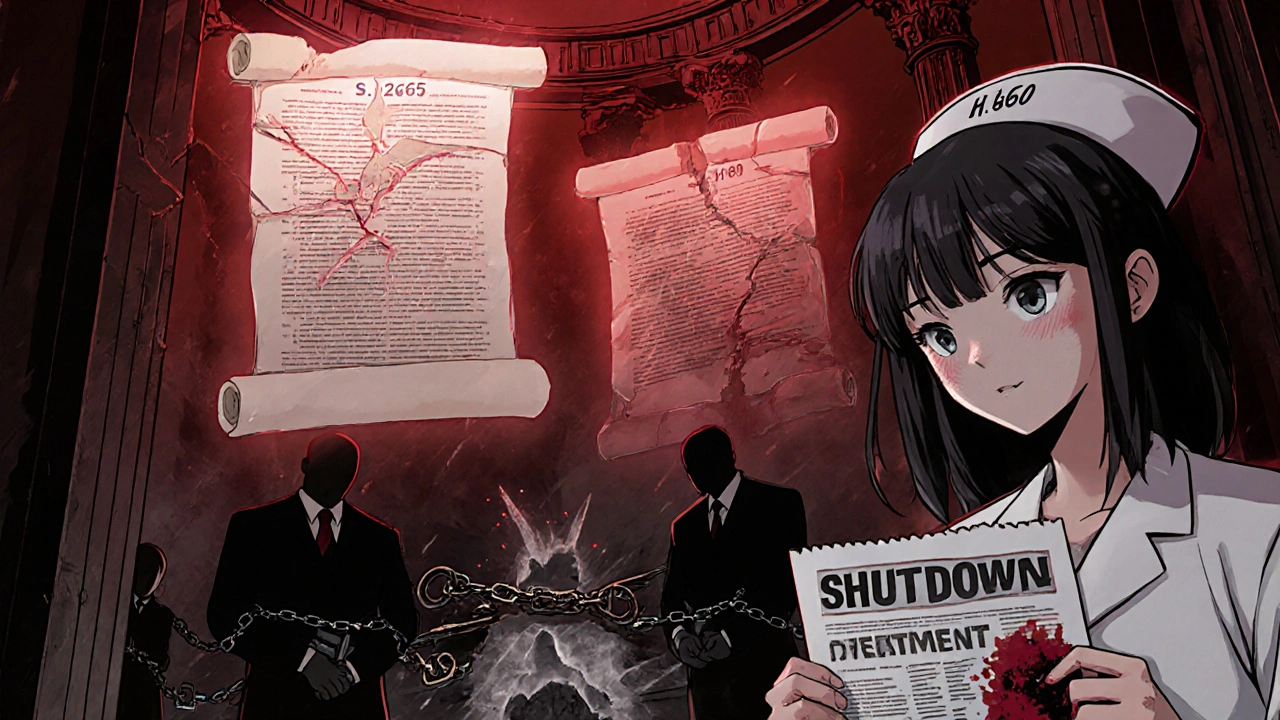
What’s Really Causing the Shortages?
It’s not just Congress being slow. The problem started years ago. Most drug shortages-63% of them-are caused by manufacturing delays. A single factory in India or China shuts down for inspection, and suddenly, the entire U.S. runs out of a generic antibiotic. There are no backup suppliers. No stockpiles. No regulations forcing companies to keep extra inventory. The FDA approves hundreds of new drugs every year, but almost none of them are made in the U.S. The supply chain is global, fragile, and opaque. Companies don’t report early warning signs because there’s no penalty for staying silent. And when a shortage hits, pharmacies don’t get notified until the shelves are bare. Meanwhile, the healthcare workforce is collapsing. The American Association of Medical Colleges predicts a shortage of 124,000 doctors by 2034. Medical schools can’t keep up. Residents are burned out. Rural hospitals can’t afford to hire. And now, with the shutdown, federal programs that train nurses and pharmacists are frozen. Grants are paused. Applications aren’t being processed.What’s Being Done-And What’s Not
Some lawmakers are trying to fix this by cutting other programs. The Rescissions Act of 2025 slashed $7.9 billion from foreign aid. The Stop Secret Spending Act wants to make Treasury spending more transparent. But none of those touch the root causes of drug or provider shortages. Meanwhile, hospitals are desperate. According to the American Hospital Association, 98% of hospitals experienced at least one critical drug shortage in the third quarter of 2025. Eighty-seven percent of physicians say they’ve had to change a patient’s treatment plan because a drug wasn’t available. And yet, only 12% of doctors even knew H.R.1160 existed. The public is noticing. On Reddit’s r/healthpolicy, users are angry. “Congress ignores drug shortages while fighting over phone records,” one post reads. It’s been upvoted over 140 times. But anger doesn’t pass bills. Funding does. Action does.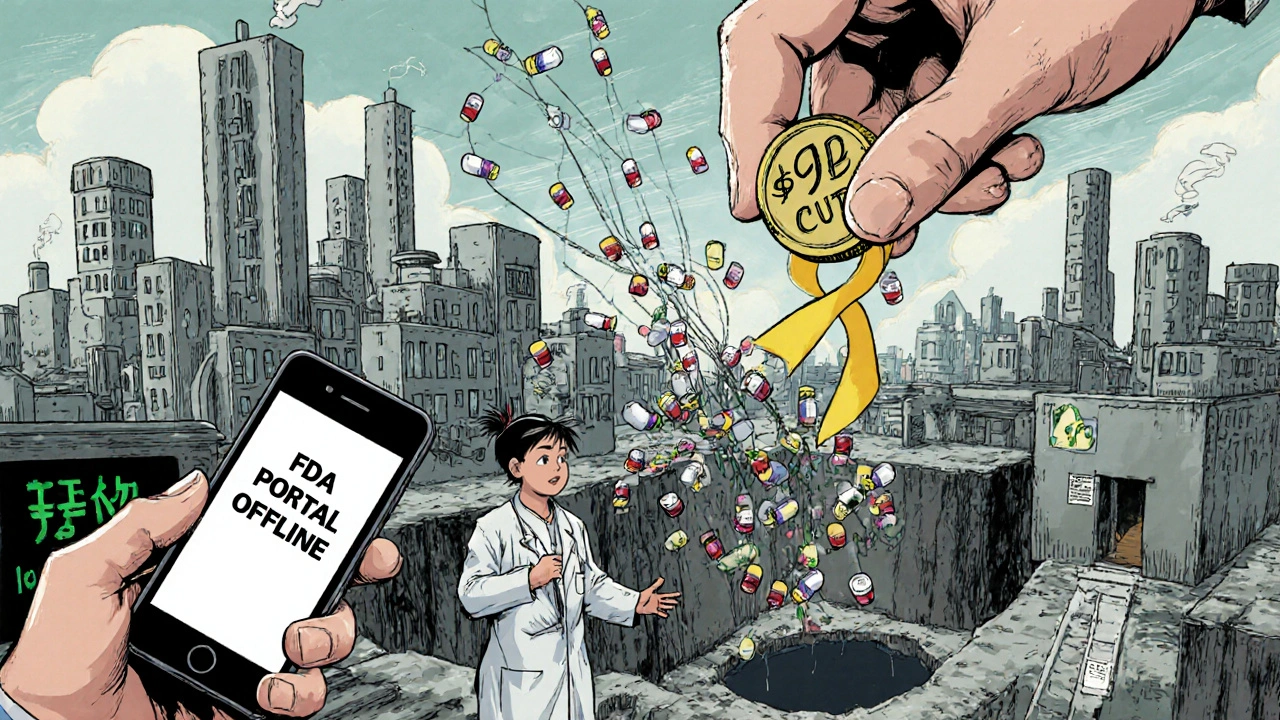
What Needs to Happen Next
If S.2665 becomes law, it must do three things: First, define exactly which drugs are “critical.” Second, set clear deadlines for manufacturers to report demand spikes-no more than 30 days after a 20% increase. Third, create real penalties: fines, suspension of approvals, or public disclosure of non-compliant companies. For H.R.1160, Congress needs to stop hiding the text. The bill must include concrete funding for medical training programs, expand the National Health Service Corps, and offer student loan relief for providers who commit to working in shortage areas for five years. Telehealth should be permanently covered by Medicare and Medicaid at the same rate as in-person visits. And both bills need one thing they don’t have right now: urgency. The shutdown has to end. The FDA needs its staff back. The Drug Shortage Portal needs to be fixed. Patients can’t wait until January 2027 for the next Congress to try again.What You Can Do
You don’t have to wait for Congress to act. Call your representative. Ask them: “Where is H.R.1160? Why hasn’t S.2665 been voted on?” Share stories of delayed treatments or skipped medications. Tag your senators on social media. Demand transparency. Hospitals and pharmacies can also push back. They can report shortages directly to the FDA-even if the portal is down. They can form regional supply networks to share inventory. They can pressure manufacturers for better communication. But real change won’t come from individual action alone. It comes from pressure. From visibility. From voters who refuse to accept that a child with cancer or an elderly person with diabetes should be denied care because of a broken system. The tools to fix this exist. The data is clear. The human cost is undeniable. What’s missing is the political will.What is the Drug Shortage Prevention Act of 2025?
The Drug Shortage Prevention Act of 2025 (S.2665) is a Senate bill that would require pharmaceutical manufacturers to notify the FDA when they see a significant increase in demand for critical drugs. The goal is to give regulators time to respond before shortages occur. As of November 2025, the bill has been referred to the Senate Health Committee but has not moved forward due to the government shutdown.
How many drugs are currently in short supply in the U.S.?
As of September 30, 2025, the FDA listed 287 drugs in shortage, with 47% classified as critical-meaning they’re used to treat life-threatening conditions like cancer, heart failure, or severe infections. Many of these are generic medications that are cheap to make but hard to source reliably.
Why isn’t H.R.1160 getting attention?
H.R.1160, the Health Care Provider Shortage Minimization Act, has no publicly available text, sponsor list, or committee assignment as of November 2025. Without details, media can’t report on it, experts can’t analyze it, and the public can’t advocate for it. Its lack of transparency makes it nearly impossible to support or oppose.
How does the government shutdown affect drug shortages?
The shutdown has furloughed 800,000 federal workers, including FDA staff who monitor drug supply chains and update the Drug Shortage Portal. Without these workers, manufacturers’ reports aren’t reviewed, alerts aren’t acted on, and inspections aren’t scheduled. The system meant to prevent shortages is now part of the problem.
What’s the biggest obstacle to fixing drug shortages?
The biggest obstacle is a lack of accountability. Drug manufacturers aren’t punished for not reporting demand spikes. The FDA lacks funding and staff to enforce rules. Congress prioritizes budget battles over public health. And until these structural failures are fixed, no new law-no matter how well-intentioned-will solve the crisis.
Ryan Anderson
November 13, 2025 AT 10:53Man, I can’t believe we’re still dealing with this. I had to delay my dad’s chemo last month because the hospital ran out. They gave him a substitute that made him sick for a week. 🤢 This isn’t politics-it’s life or death. And Congress is playing games while people suffer.
Eleanora Keene
November 13, 2025 AT 19:44It’s heartbreaking to see how many lives are being put on hold because of bureaucratic inertia. The fact that the FDA portal is down means families are flying blind-no updates, no warnings, no recourse. We need action, not just bills that gather dust. This is a moral emergency.
Joe Goodrow
November 14, 2025 AT 21:16Why are we letting foreign factories control our medicine supply? We used to make antibiotics in Ohio. Now we beg China for pills? This shutdown is a joke. Bring the manufacturing home. Stop outsourcing our health. Build the factories. Pay the workers. End the dependency.
Don Ablett
November 15, 2025 AT 17:09While the legislative framework is commendable, the absence of enforceable metrics and accountability mechanisms renders both bills structurally inadequate. The systemic fragility of the pharmaceutical supply chain necessitates not merely notification protocols, but mandatory inventory buffers and diversified sourcing mandates.
Peter Aultman
November 16, 2025 AT 06:05Been waiting for this for years. My cousin’s kid needs insulin every day. Last time they were out, she had to drive 3 hours to another state just to get a refill. No one should have to do that. Let’s just fix it already.
Nathan Hsu
November 17, 2025 AT 02:19India and China produce 80% of our generic drugs-why? Because they have cheaper labor, less regulation, and no unions. The U.S. has the tech, the talent, the capital. We just lack the will. Let’s tax imports that don’t meet U.S. safety standards. Fund domestic production. Protect our people.
Ashley Durance
November 17, 2025 AT 12:30Let’s be honest: these bills are performative. They’re written to look like they’re doing something while actually protecting the pharma lobby. No one in Congress has ever lost a vote because a drug was unavailable. But they lose votes if Big Pharma gets mad. That’s the real calculus.
Scott Saleska
November 18, 2025 AT 23:16Did you know the FDA has 400 inspectors for 7,000 foreign drug plants? That’s one inspector per 17.5 factories. And now they’re all on furlough? This isn’t incompetence-it’s negligence. Someone’s getting paid to let this happen.
Dilip Patel
November 19, 2025 AT 05:07Why do we even care about these bills when the real problem is illegal immigration draining our healthcare system? These drugs go to people who shouldn’t be here. Fix the border first. Then we can talk about insulin.
Jane Johnson
November 19, 2025 AT 08:29It is not the bill that is deficient. It is the societal expectation that government should solve problems that are fundamentally economic and logistical. The market, not legislation, must correct this. Subsidies distort incentives. Regulation creates dependency. The solution is not more law.
Sean Hwang
November 21, 2025 AT 03:22My cousin’s a nurse in rural Iowa. She’s been working 12-hour shifts for months because no one else showed up. They’re using old IV bags because the new ones didn’t arrive. People don’t realize how bad it is out here. Just talk to someone who’s on the front lines.
Barry Sanders
November 22, 2025 AT 08:02Oh wow, another crying post about drugs. Newsflash: people die every day. That’s life. The system isn’t broken-it’s working exactly how it’s supposed to. Stop acting like you deserve free medicine.
Chris Ashley
November 23, 2025 AT 05:02bro the FDA portal is literally just a google doc at this point. i tried to check my meds last week and it said 'server error 404'. no one's even trying. this is a joke.