FDA Boxed Warning Tracker
Track Boxed Warning Changes
Search for FDA boxed warning updates on prescription drugs using the official SrLC database. See when warnings were added, updated, or removed.
Results for
Last Update:
No boxed warning changes found for your search. Try different search terms or check the SrLC database.
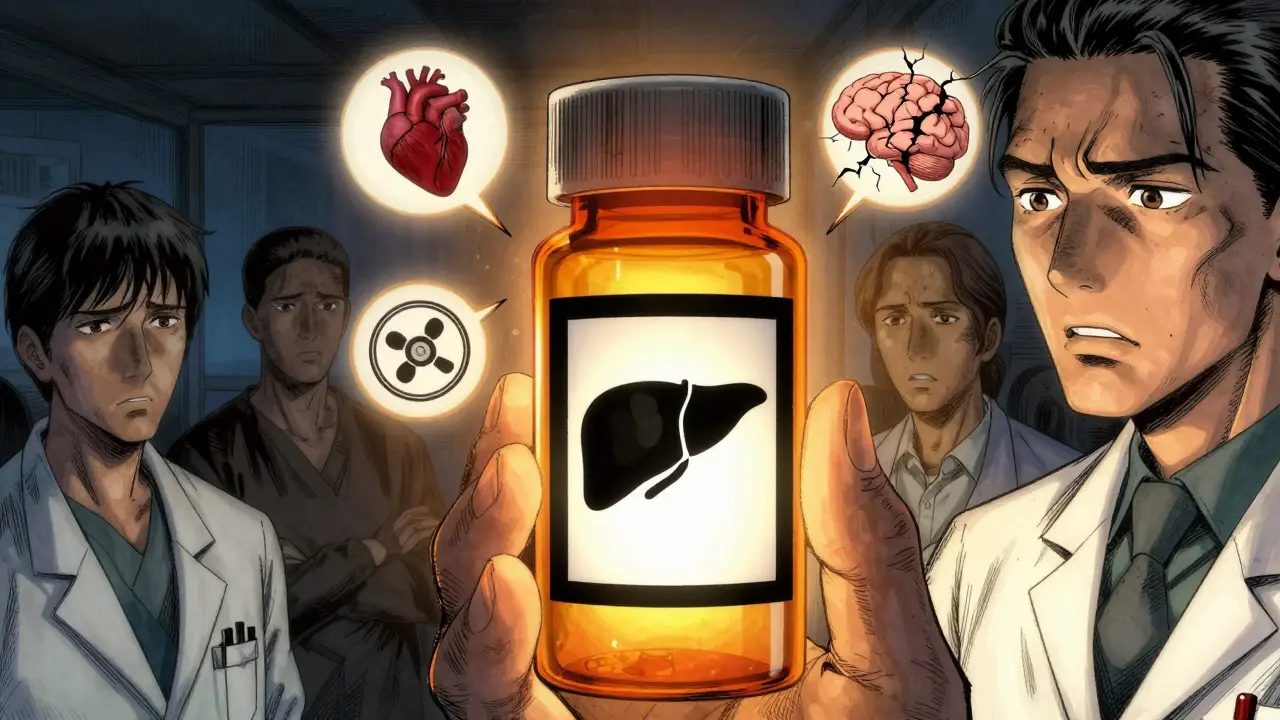
When a drug comes with a boxed warning, it’s not just a caution - it’s a red flag. This isn’t some fine-print footnote. It’s a bold, black-bordered alert at the very top of a prescription drug’s prescribing information, screaming: “This could kill you.” The U.S. Food and Drug Administration (FDA) introduced this format in 1979, and since then, it’s become the gold standard for communicating life-threatening risks. But here’s the thing: these warnings don’t stay the same. They change. They get updated. Sometimes they’re added. Sometimes they’re removed. And tracking those changes? That’s where things get messy - and critical.
What Exactly Is a Boxed Warning?
A boxed warning, also called a black box warning, is the strongest safety alert the FDA can require on a drug label. It’s not optional. It’s not vague. It’s mandatory, with strict formatting rules: bold uppercase header, black border, bullet points, and placed right at the start of the Prescribing Information section - before even contraindications or general warnings. This isn’t just for show. The FDA designed it to be impossible to miss. If a drug has a boxed warning, it means there’s evidence - often from real-world use after approval - that the medication can cause death or serious injury.
Think about fluoroquinolone antibiotics like Cipro or Levaquin. In 2008, the FDA added a boxed warning about tendon rupture. Suddenly, doctors stopped prescribing them for simple sinus infections. Or take Chantix (varenicline), used to quit smoking. In 2009, it got a boxed warning for suicidal thoughts and behavior. Prescriptions dropped by 40% in some clinics. But in 2016, after more data came in, the FDA removed it. That’s not a mistake - it’s how the system is supposed to work: evidence evolves, and so do the warnings.
How Often Do These Warnings Change?
Between January 2008 and June 2015, the FDA issued 111 boxed warnings. Not all were new. About 29% were entirely new alerts. Another 32% were major updates - like expanding the warning to include new patient groups or adding monitoring requirements. The rest? Minor tweaks: clarifying language, adjusting dosage limits, or correcting typos. But even minor updates matter. A single word change can alter how a pharmacist counsels a patient.
What kinds of risks trigger these warnings? Death was the most common theme - appearing in over half (51%) of all new or major warnings. Cardiovascular problems came second (27%). But the single most frequent specific concern? Drug addiction. That’s right. Opioids, stimulants, even some antidepressants - if they carry abuse potential, they’re likely to get a boxed warning. And here’s something surprising: 64% of drugs with boxed warnings are meant for long-term use. That’s not a coincidence. The FDA knows that risks grow over time. A drug that’s safe for a week might be dangerous after six months.
The Delay Problem: Why Warnings Take So Long
Here’s the ugly truth: boxed warnings almost always come too late. The median time between a drug’s approval and the first boxed warning? Eleven years. That’s not a typo. In 2002, it was seven years. Now it’s over a decade. That means thousands - sometimes tens of thousands - of patients are exposed to serious risks before the FDA acts.
Why? Because pre-approval clinical trials are small. They last months, not years. They exclude people with other health conditions. Real harm shows up in the real world - in nursing homes, in outpatient clinics, in patients taking five other drugs. The FDA relies on post-marketing data, which is slow to collect. A 2010 study found that 71% of serious drug risks weren’t identified until more than five years after the drug hit the market. And when the warning finally comes? It’s often based on weak or incomplete evidence.
Take Avandia (rosiglitazone), a diabetes drug. It got a boxed warning in 2007 for heart attack risk. But many endocrinologists argued the data was shaky. They felt the warning scared off patients who could have benefited. That’s the catch-22: the system is meant to protect, but it can also restrict useful treatments.
How Are These Changes Tracked? The SrLC Database
Before January 2016, tracking boxed warning updates was a nightmare. You had to check three separate sources: the FDA’s MedWatch archives (for warnings before 2016), Drugs@FDA (for original approval info), and scattered press releases. No one system had it all.
That changed with the launch of the Drug Safety-related Labeling Changes (SrLC) database. Now, every change since January 2016 is logged here - 1,842 updates so far, including 147 new boxed warnings. You can search by drug name, active ingredient, or even the specific section of the label changed. It’s searchable. It’s free. It’s official.
But here’s the catch: it’s not user-friendly. A 2019 study found it takes pharmacists 3 to 5 hours just to learn how to use it effectively. Hospitals assign full-time staff to monitor it. One academic medical center spends 12 pharmacist-hours a month just on this task. Most community pharmacies? They don’t have the time. They rely on automated alerts - but 41% of those systems generate too many false alarms. Doctors end up ignoring them.
Who’s Affected? The Real-World Impact
Boxed warnings don’t just sit on a label. They change behavior.
A 2022 survey on Sermo, a physician forum, showed that 68% of doctors changed how they prescribed fluoroquinolones after the tendon rupture warning. Internists were the most cautious. On Reddit, family doctors reported that after the Chantix psychiatric warning, prescriptions plummeted - and didn’t recover until the warning was removed. That’s not just clinical data. That’s real people changing their lives because of a label.
But not all changes are helpful. A 2023 Medscape poll found that 52% of physicians think some boxed warnings are overly cautious. They feel the system is too blunt. A warning for “possible psychiatric side effects” doesn’t tell you how likely it is. Is it 1 in 100? 1 in 1,000? 1 in 10,000? Without context, doctors don’t know how to weigh the risk.
And patients? Only 35% of pharmacies consistently hand out the Medication Guides that explain these warnings in plain language. A 2021 study found that when patients got those guides, their understanding of risks jumped from 42% to 78%. But without them? They’re left guessing.

What’s Next? Modernization and the Future
The FDA knows the system is outdated. In 2023, they announced a plan to modernize the boxed warning format by 2026. Pilots are already underway - testing new designs that use icons, color coding, and clearer risk levels. Imagine a warning that says: “High risk of liver failure - requires monthly blood tests” instead of vague language like “may cause hepatic injury.”
They’re also investing in the OHDSI consortium - a global network of health data systems - with $25 million to cut the 11-year delay in half. If they succeed, warnings could be issued in under five years. That’s huge.
Meanwhile, the market is responding. The pharmaceutical risk management industry grew from $1.2 billion in 2015 to $2.8 billion in 2023. Companies are building tools to auto-alert prescribers. Some hospitals have reduced adverse events by 27% using smart monitoring systems. But community pharmacies? Only 38% have any formal process. That gap is dangerous.
Antipsychotics? 87% carry boxed warnings. Anticoagulants? 78%. Diabetes drugs? 63%. These aren’t rare outliers. They’re the backbone of modern care. And every change to their labels ripples through millions of prescriptions.
What You Need to Do
If you’re a prescriber, pharmacist, or even a patient managing multiple medications:
- Check the SrLC database monthly - even if it’s just one drug you’re worried about.
- Ask your pharmacy: “Do you provide Medication Guides?” If not, request them.
- Don’t assume a warning means “never use.” Ask: What’s the actual risk? Is there an alternative? Do I need monitoring?
- If you’re on a drug with a boxed warning, keep a list of your medications and share it with every provider you see.
The system isn’t perfect. But it’s the best we have. And it only works if people use it - correctly, consistently, and critically.
What drugs are most likely to have a boxed warning?
Antipsychotics (87%), anticoagulants (78%), and diabetes medications (63%) are the most common. These drugs are often taken long-term, affect vital systems like the heart or liver, or carry abuse potential. Opioids, SSRIs, and fluoroquinolone antibiotics also frequently carry boxed warnings due to risks like addiction, suicidal behavior, or tendon rupture.
Can a boxed warning be removed?
Yes. The FDA removes or modifies boxed warnings when new evidence shows the risk is lower than originally thought, or if monitoring protocols reduce harm. For example, Chantix’s psychiatric warning was removed in 2016 after further studies showed the risk was manageable with proper screening. Removal doesn’t mean the drug is risk-free - it means the warning no longer matches the best available data.
How do I know if my drug’s warning has been updated?
Check the FDA’s Drug Safety-related Labeling Changes (SrLC) database. You can search by drug name or active ingredient. If you’re a healthcare provider, your pharmacy or hospital may have automated alerts. Patients should ask their pharmacist: “Has the warning on this drug changed recently?” and request the latest Medication Guide.
Why do some doctors ignore boxed warnings?
Some warnings are vague, lack context, or come too late after patients have already been harmed. Others are seen as overly cautious - like warnings that discourage use of effective drugs due to low-probability risks. A 2023 survey found 52% of physicians believe some warnings lead to unnecessary avoidance of beneficial treatments. Also, too many false alerts from automated systems train providers to tune them out.
Do boxed warnings actually prevent harm?
Evidence shows they do - but inconsistently. When paired with Medication Guides, patient understanding of risks increases from 42% to 78%. Hospitals with formal monitoring systems report 27% fewer adverse events. But if warnings are buried in outdated databases, poorly communicated, or ignored due to alert fatigue, their impact drops sharply. The key is not just having the warning - it’s making sure it’s seen, understood, and acted on.
Danielle Gerrish
February 21, 2026 AT 00:33Okay, but let’s be real - boxed warnings are basically the FDA’s way of saying, ‘We knew this could kill someone, but we didn’t want to be sued before the drug made us a billion.’ I’ve seen patients on Chantix who never had a single psychiatric symptom, then suddenly their doctor cuts them off because of a black box that got removed seven years later. It’s not safety - it’s liability theater. And don’t even get me started on how pharmacies just hand out those Medication Guides like they’re coupons for free toothpaste. No one reads them. No one understands them. And yet, we act like the warning itself is some kind of moral shield. It’s not. It’s a legal loophole with a border.
Liam Crean
February 21, 2026 AT 07:21I get the frustration, but I also think we’re underestimating how much these warnings actually save lives. I work in a hospital pharmacy, and I’ve seen the aftermath of drugs that didn’t have strong enough alerts. A patient on Avandia who had a heart attack because no one told him the risk. He survived, but barely. The system is slow, sure - but it’s not broken. It’s just underfunded and overworked. The SrLC database? It’s clunky, but it’s the only thing we’ve got. Maybe we need more people trained to use it, not fewer.
madison winter
February 22, 2026 AT 23:43So let me get this straight - we’re spending millions to track changes to warnings that are based on data collected after people are already dead or disabled? And we’re surprised it takes 11 years? That’s not a system failure. That’s a societal acceptance of harm as a cost of innovation. We don’t want to slow down drug development. We just want to pretend we care once the bodies pile up. The real problem isn’t the FDA. It’s us. We want miracle drugs on Tuesday and perfect safety by Friday. And if we don’t get it? Blame the label. Never mind that we’re the ones who voted for the system that lets this happen.
Ellen Spiers
February 24, 2026 AT 12:35It is imperative to note that the current regulatory framework governing boxed warnings is predicated upon a post-marketing surveillance paradigm that is fundamentally anachronistic in the context of contemporary pharmacovigilance infrastructure. The median latency of eleven years between market authorization and warning issuance is not merely suboptimal - it is epistemologically indefensible. Furthermore, the SrLC database, while ostensibly a step toward transparency, remains inaccessible to non-specialist stakeholders due to its non-intuitive UI and lack of semantic interoperability with EHR systems. This is not a policy gap - it is a structural failure of governance.
Marie Crick
February 25, 2026 AT 03:40John Cena
February 27, 2026 AT 00:46I’ve been prescribing for 20 years, and I’ve seen warnings come and go. The truth? Most of the time, the warning doesn’t change how I prescribe - it changes how I explain things to my patients. If I can say, ‘This might cause X, but here’s how we monitor it,’ they’re way more likely to stick with the treatment. The real issue isn’t the warning - it’s how we communicate it. And yeah, I’ve seen patients get scared off by vague language like ‘may cause hepatic injury.’ That’s not helpful. It’s fearmongering dressed up as safety.
Tommy Chapman
February 28, 2026 AT 22:29USA has the best drug safety system in the world - and we’re still letting bureaucrats take 11 years to warn people? That’s not safety, that’s socialism. In China, they’d have pulled the drug off the shelf in six months. In Germany? They’d have fined the company $100 million. Here? We make a website no one uses and call it progress. Meanwhile, grandma’s on that diabetes drug with the black box, and her pharmacist doesn’t even know the warning changed last month. You call that freedom? I call it negligence wrapped in bureaucracy.
Freddy King
March 2, 2026 AT 01:48Here’s the thing nobody talks about: the boxed warning system works fine for drugs that are already on the market. But for new ones? It’s a joke. Take that new Alzheimer’s drug - approved last year, no boxed warning yet. Why? Because the trials were too short. So we’re letting thousands take it before we even know if it causes strokes. The FDA’s not slow - they’re just waiting for the body count to rise. And don’t get me started on how pharma companies game this. They push drugs fast, then quietly fund studies to get the warning removed. It’s not about safety. It’s about profit cycles. The SrLC database? It’s just a fancy dashboard for the same old game. We’re not fixing the system. We’re just making it look prettier.