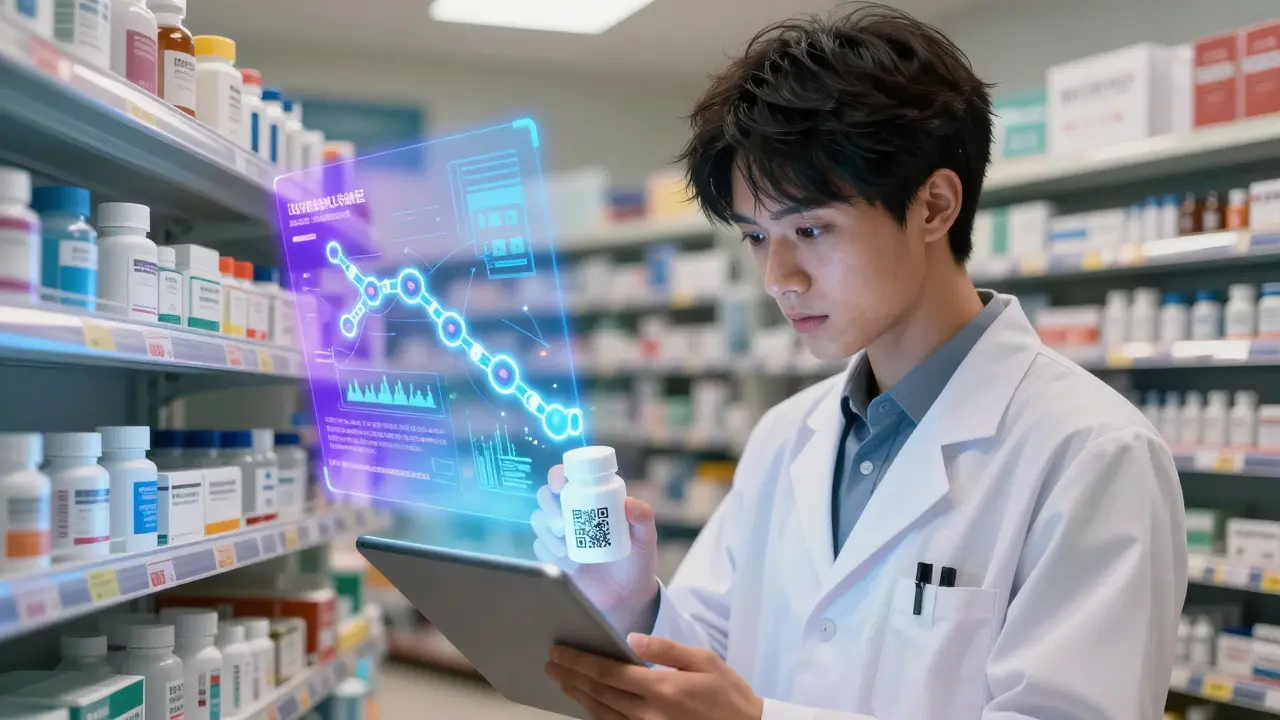
Every year, millions of people buy medicines online-some for convenience, others because they can’t afford prescriptions at local pharmacies. But what if the pill you just ordered isn’t what the label says? Counterfeit drugs are a growing crisis, especially in online pharmacies. The World Health Organization estimates that 1 in 10 medicines sold globally are fake. In some countries, that number jumps to 1 in 3. And while fake antibiotics or painkillers are dangerous enough, counterfeit cancer drugs or heart medications? Those can be deadly.
Enter blockchain. It’s not just for cryptocurrency. In 2024, blockchain became the most reliable way to verify if a drug is real-from the factory floor all the way to your medicine cabinet. And it’s already changing how online pharmacies operate.
How Fake Drugs Slip Through Online Pharmacies
Counterfeit drugs don’t look fake. They’re packaged to look identical. They have the right color, shape, even the same imprint. The difference? They might contain no active ingredient. Or too much. Or toxic chemicals like rat poison or floor cleaner. In 2022, the FDA seized over 1.2 million fake drug packages shipped from overseas. Most of them were sold through websites that looked like legitimate pharmacies.
Traditional methods of spotting fakes-holograms, color-changing ink, or even barcode checks-don’t work well anymore. Counterfeiters copy them. A 2020 INTERPOL report found that 38% of fake drugs had fake security features that fooled even trained pharmacists. Centralized databases? They’re vulnerable. One breach, one corrupted record, and the whole system breaks.
Blockchain: The Unbreakable Chain of Trust
Blockchain works by creating a digital fingerprint for every single pill bottle, vial, or blister pack. This isn’t just a barcode. It’s a unique, encrypted serial number tied to a public ledger that no one can alter. Every time the drug changes hands-manufacturer to distributor, distributor to wholesaler, wholesaler to pharmacy-the transaction is recorded on the blockchain. No one can delete it. No one can fake it.
Here’s how it works in practice:
- A drug manufacturer assigns a unique serial number to each unit using GS1 standards (the same system used for barcodes in groceries).
- That number is printed as a QR code on the packaging.
- At every step, the drug’s location, time, and condition are logged on the blockchain.
- When a pharmacist scans the QR code at the pharmacy counter, their app checks the blockchain in under 2.3 seconds.
- If the chain is broken-say, the drug was never registered by the manufacturer-the system flags it instantly.
This isn’t theory. The FDA’s 2022 pilot project with Pfizer, Genentech, and AmerisourceBergen showed a 99.8% accuracy rate in detecting fake drugs. That’s nearly perfect.
Why This Matters for Generic Drugs
Generic drugs are the backbone of affordable healthcare. But they’re also the most counterfeited. Why? Because they’re cheaper. A fake version of a generic blood pressure pill might cost $0.10 to produce. Sell it for $3, and the profit margin is huge. In developing countries, up to 30% of generics are fake. Even in the U.S., counterfeit generics are rising.
Blockchain changes that. Because every generic drug gets its own digital pedigree, you can trace it back to the original manufacturer. No more guessing if that $5 bottle of metformin is real. You can scan it and know for sure.
India’s Apollo Hospitals cut counterfeit antimalarial drugs by 94% after rolling out blockchain verification across 5,000 pharmacies. That’s not luck. That’s technology doing what paperwork never could.
What’s Required to Make It Work?
Blockchain isn’t magic. It needs real infrastructure.
- Serialization equipment: Every production line needs machines to print unique QR codes on every unit. Cost: about $150,000 per line.
- Blockchain nodes: These are servers that store and verify the ledger. They run on permissioned systems like Hyperledger Fabric-no public Ethereum here. Energy use is 97% lower than Bitcoin-style blockchains.
- Mobile verification apps: Pharmacists use apps on tablets or phones to scan packages. These connect to the blockchain in real time.
- Integration with pharmacy systems: The blockchain data has to sync with existing pharmacy management software. That’s where most delays happen. One pharmacy chain in Ohio spent 8 weeks training staff just to get it working.
Initial costs are high. A mid-sized pharma company might spend $2.1 million to implement blockchain. That’s 23% more than traditional serialization. But the savings? Faster verification, less waste, fewer recalls. The HIMSS report says U.S. pharmacies saved $183 million in labor costs and freed up $20 billion in safety stock in just one year.
Real-World Problems and Limitations
Blockchain isn’t flawless. Here’s what still goes wrong:
- Connectivity issues: In rural areas, internet access is spotty. If the app can’t reach the blockchain, verification fails. Reddit users in r/Pharmacy reported 63% of pharmacies in low-connectivity zones had delays.
- Training gaps: Pharmacists aren’t IT experts. A 2024 survey found only 3.1 out of 5 for ease of use in pharmacy systems. Many staff still prefer old-school paper logs.
- It doesn’t test the drug: Blockchain tells you if the packaging is real. It doesn’t tell you if the chemical inside is correct. That still needs lab testing. As Dr. Sarah Wynn-Williams warned in The Lancet: “Blockchain tracks documents-not pills.”
- Cost for generics: For small generic manufacturers, the $2 million price tag is impossible. Only 31% of generic companies have adopted blockchain, according to the Generic Pharmaceutical Association.
The Future: AI, Sensors, and Global Standards
Blockchain is just the start. The next wave combines it with other tech:
- AI detection: New systems like MediLedger’s Version 4.2 (released March 2024) use machine learning to spot anomalies in packaging patterns. False alarms dropped by 37%.
- IoT sensors: Pfizer is testing temperature and humidity monitors inside shipping containers. If a drug was exposed to heat, the blockchain logs it. No more “expired” drugs that look fine.
- Quantum encryption: By 2026, blockchain systems will switch to quantum-resistant codes. Why? Because future hackers might break today’s encryption.
The FDA just released new standards in May 2024, requiring all prescription drugs to use blockchain verification by January 2026. This isn’t optional anymore. It’s law.
What This Means for You
If you buy medicine online, here’s what to look for:
- Does the website let you scan a QR code on the package?
- Can you verify the drug’s origin before you pay?
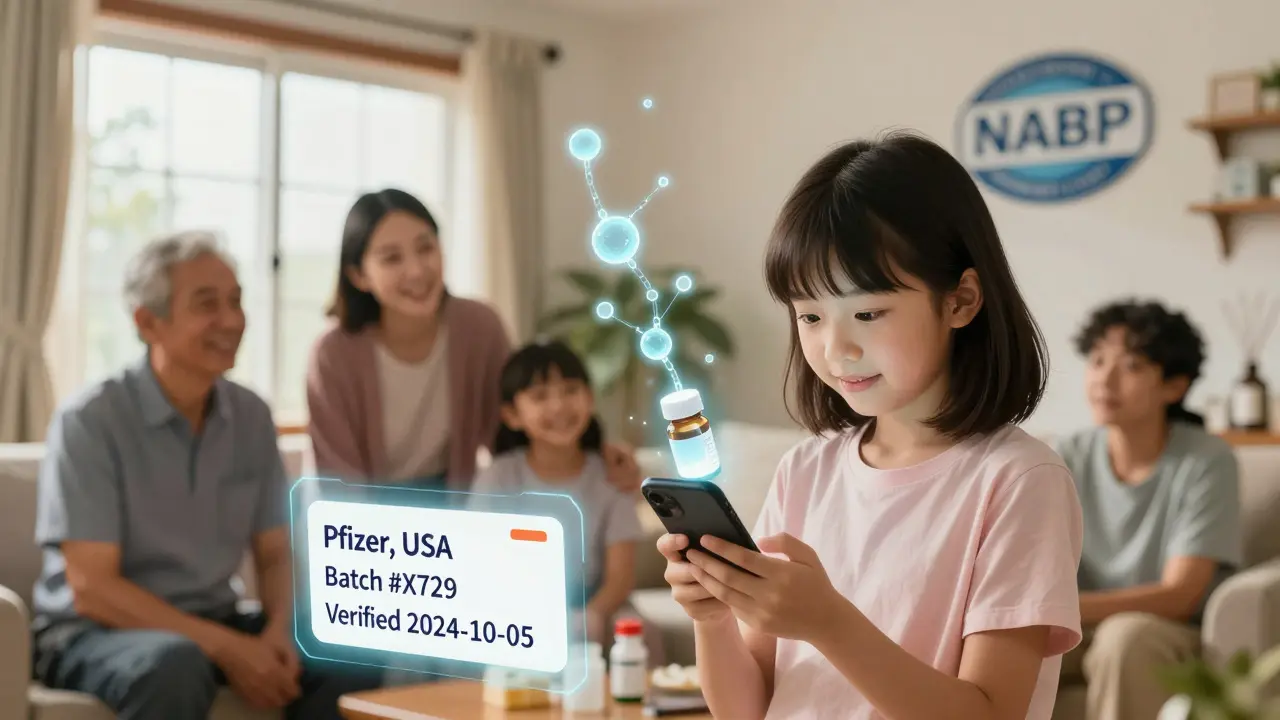
- Is the pharmacy registered with the National Association of Boards of Pharmacy (NABP)?
Real online pharmacies will show you the verification process. Fake ones won’t even mention it.
By 2030, experts predict 95% of prescription drugs in developed countries will use blockchain. That means fewer fake pills. Fewer deaths. More trust.
It’s not perfect. But it’s the best system we’ve ever had.
Can blockchain really stop all fake drugs?
Blockchain stops fake drugs by verifying the chain of custody-not the drug’s chemical makeup. It can’t detect if a pill contains the wrong dosage unless paired with lab testing. But it prevents counterfeit packaging from entering the supply chain. The FDA’s pilot showed a 99.8% accuracy rate in catching fake serial numbers. So while it’s not 100% foolproof, it’s the most effective tool we have today.
Do I need to scan my medicine if I buy it from a local pharmacy?
Not yet. Most local pharmacies in the U.S. are still transitioning. But by 2026, all prescription drugs sold in the U.S. must have blockchain-verified tracking. If you’re buying a new medication after that date, your pharmacist may ask you to scan the QR code. It’s not for you to do-it’s for them to verify. But if you’re curious, you can ask them to show you the verification process.
Are generic drugs less safe than brand-name drugs?
No-when they’re real. Generic drugs contain the same active ingredients as brand-name ones. The problem isn’t generics themselves. It’s counterfeit generics sold online. Blockchain fixes that by proving every generic package came from a licensed manufacturer. In India, blockchain cut fake generics by 94% in just two years.
Why aren’t all online pharmacies using blockchain yet?
Cost and complexity. Setting up blockchain requires new hardware, software, staff training, and integration with old systems. For small online pharmacies, the investment can be $50,000 or more. Many are waiting for regulations to force change. The FDA’s 2026 deadline will push them. Right now, only 8% of individual pharmacies use blockchain systems-most are still using barcodes or manual logs.
What should I do if I suspect a drug I bought online is fake?
Stop taking it. Contact the pharmacy and ask for verification details. If they can’t provide a QR code scan or blockchain verification record, report it. In the U.S., file a report with the FDA’s MedWatch program. In Australia, contact the TGA. Never ignore a suspicious pill. Fake drugs can cause organ damage, allergic reactions, or even death. Blockchain makes reporting easier-because every package has a digital trail.
Aisling Maguire
March 2, 2026 AT 10:17Sneha Mahapatra
March 4, 2026 AT 05:25bill cook
March 5, 2026 AT 19:54Byron Duvall
March 7, 2026 AT 13:17Katherine Farmer
March 9, 2026 AT 09:13Full Scale Webmaster
March 10, 2026 AT 23:12Brandie Bradshaw
March 11, 2026 AT 13:42Angel Wolfe
March 12, 2026 AT 22:39Sophia Rafiq
March 14, 2026 AT 07:55Martin Halpin
March 15, 2026 AT 18:43Eimear Gilroy
March 17, 2026 AT 09:12Ajay Krishna
March 18, 2026 AT 20:17Charity Hanson
March 19, 2026 AT 07:28Noah Cline
March 20, 2026 AT 11:49