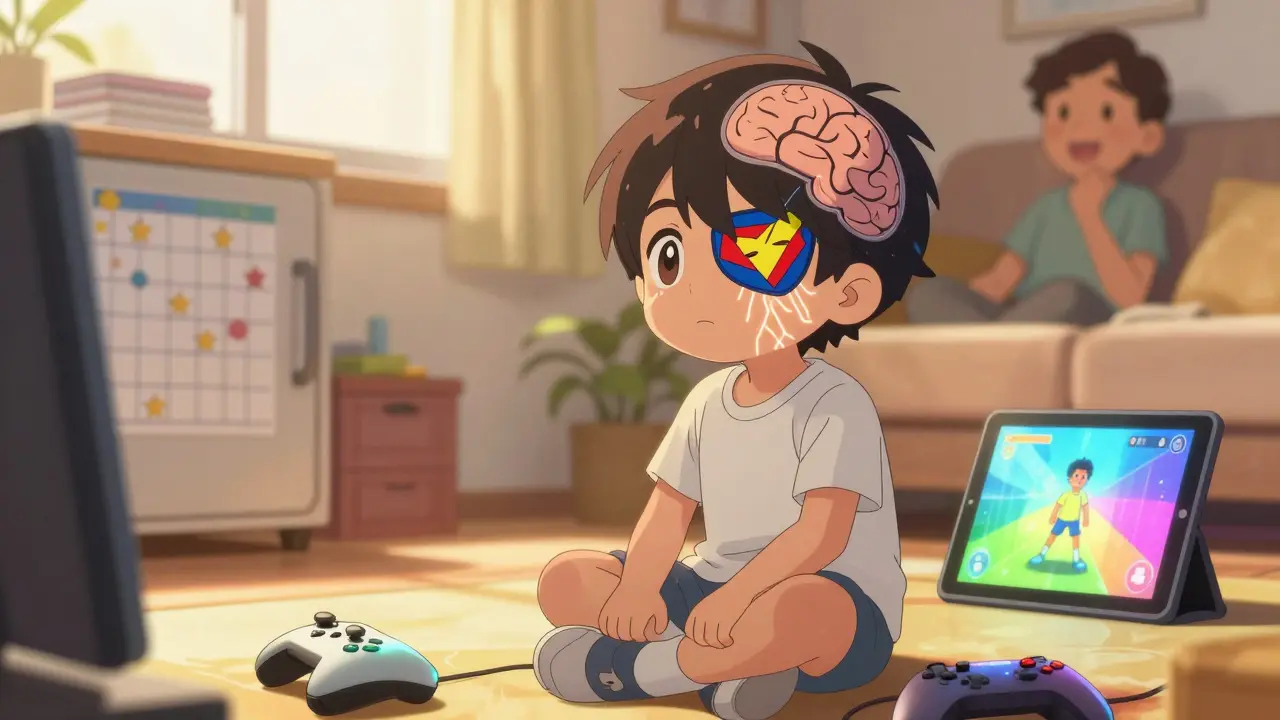
By age 3, most kids can tell you what they see on a TV screen or point to a picture in a book. But for about 1 in 30 children, one eye isn’t working right - not because of a broken lens or a cloudy cornea, but because the brain has learned to ignore it. This condition is called amblyopia, often nicknamed "lazy eye." It’s not something you can see just by looking. No crossed eyes, no cloudy pupil. Just a quiet, unnoticed loss of vision that, if left untreated, can last a lifetime.
What Exactly Is Amblyopia?
Amblyopia isn’t a problem with the eye itself. It’s a wiring issue in the brain. During the first few years of life, the brain learns to process images from both eyes. If one eye sends a blurry, misaligned, or blocked signal - say, because of a strong glasses prescription, a turned eye, or a cataract - the brain starts to favor the clearer eye. Over time, it shuts down the weaker one. The eye is fine. The connection isn’t. This happens during what doctors call the "critical period" of vision development - from birth to about age 7. After that, the brain becomes less flexible. That’s why early detection matters so much. The National Center for Biotechnology Information reports that amblyopia affects 2% to 4% of all children. It’s the number one cause of vision loss in kids, and yet, many parents never notice until it’s too late. There are three main types:- Strabismic amblyopia - about half of cases. One eye turns inward, outward, up, or down. The brain ignores the misaligned eye to avoid double vision.
- Anisometropic amblyopia - about 30% of cases. One eye is much more nearsighted, farsighted, or astigmatic than the other. The brain relies on the clearer image.
- Deprivation amblyopia - 10-15% of cases. Something physically blocks light from entering the eye, like a cataract, droopy eyelid, or scar on the cornea.
Bilateral amblyopia can happen too - when both eyes have strong, uncorrected prescriptions. Kids with this type often don’t seem to have vision problems until they’re asked to read a chart or catch a ball.
Why Early Detection Is Non-Negotiable
Most kids with amblyopia don’t complain. They adapt. They use their good eye. They tilt their head. They squint. They memorize shapes. Parents might think their child is just being stubborn or distracted. But the real issue is hidden. Screening is key. The American Academy of Pediatrics recommends a full eye exam by age 3. That’s before school starts. Before the child even knows they’re supposed to see clearly. Pediatricians often use simple tools like photo-screeners or vision charts with pictures instead of letters. If a child fails, they’re referred to a pediatric ophthalmologist. The earlier you catch it, the better the outcome. Data from Colorado Eye Clinic shows that children treated before age 5 recover 85-90% of their vision. Between ages 5 and 7, that drops to 50-60%. After age 8, gains are slow and often incomplete. That’s not a suggestion - it’s a biological deadline.Patching Therapy: The Gold Standard
For decades, the go-to treatment has been patching. Cover the good eye. Force the brain to use the lazy one. It sounds simple. It’s not. The classic method? A soft, adhesive patch worn over the stronger eye for 2 to 6 hours a day. But here’s the twist: you don’t need to patch all day. The landmark Amblyopia Treatment Study found that for moderate cases (vision between 20/40 and 20/100), just 2 hours of patching daily works just as well as 6 hours. That’s huge. It means less stress for kids, less resistance from parents, and better compliance. The goal isn’t just to improve vision on a chart. It’s to rebuild the connection between the eye and the brain. Every hour the patch is on, the brain is relearning how to see. It’s like physical therapy - but for the visual system.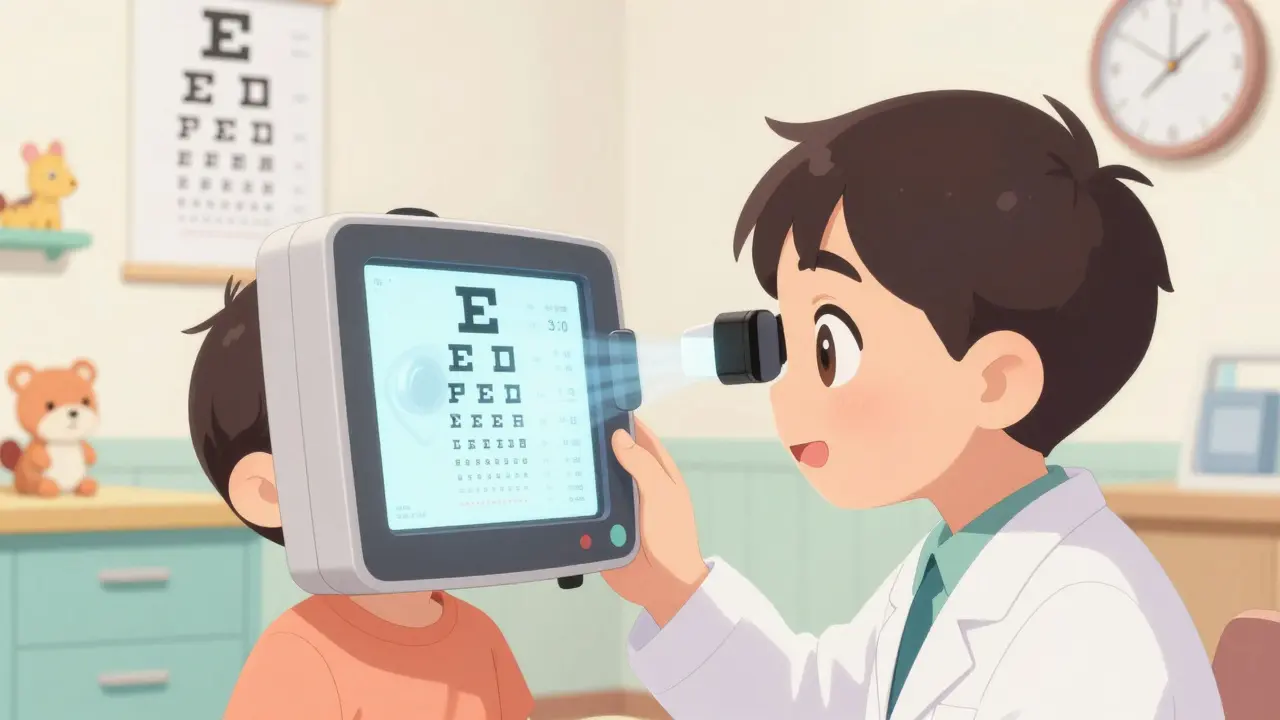
What If My Child Won’t Wear the Patch?
Let’s be honest. Kids hate it. They feel different. They get teased. The patch itches. They pull it off. Studies show only 40-60% of kids stick with the full treatment plan. That’s where creativity comes in. Successful families don’t just slap on a patch and hope for the best. They build routines around it.- Patching parties - schedule patch time during favorite TV shows or video games. Make it a ritual.
- Reward systems - stickers, stars, small prizes for each day completed. A chart on the fridge works wonders.
- Peer support - connect with other families. Kids are more likely to wear it if they know someone else does too.
- Digital tools - apps like "LazyEye Tracker" help parents log hours, set reminders, and even earn digital badges.
One parent in Adelaide told me her son refused for weeks - until she started letting him wear his superhero patch during his favorite cartoon. He didn’t just wear it. He asked for it.
Alternatives to Patching
Patching isn’t the only option. For kids who can’t tolerate it, doctors have other tools.- Atropine drops - one drop in the good eye every day blurs near vision. The child then uses the weaker eye to read or play. Studies show it works just as well as patching for moderate amblyopia. Plus, no one sees a patch. It’s discreet. Many families prefer this.
- Bangerter filters - these are translucent stickers you put on glasses lenses. They blur vision slightly without looking like a patch. Used mostly for older kids who find patches embarrassing.
- Digital vision therapy - platforms like AmblyoPlay turn vision exercises into games. Kids play for 15-30 minutes a day on a tablet, doing tasks that force both eyes to work together. One 2023 study found 75% compliance with these digital tools - far higher than patching alone.
For kids with strabismus (eye turn), surgery might be needed first to align the eyes. But even after surgery, patching or drops are still required. The brain still needs to relearn how to use both eyes together.
How Long Does Treatment Take?
This isn’t a quick fix. Most kids need treatment for 6 to 12 months. Some need it longer. Progress is measured every 4 to 8 weeks with vision tests. If the weaker eye improves, the patch time might be reduced. If not, the treatment plan changes. The American Academy of Ophthalmology says 97% of kids show some improvement with proper treatment. But only 65-75% reach 20/20 vision. Why? Because sometimes the brain doesn’t fully rewire. That’s why vision therapy - exercises that train eye coordination, tracking, and depth perception - is often added in. When combined with patching, kids show 15-20% better improvement in 3D vision.
What About Older Kids and Adults?
For years, doctors believed if you missed the critical period, you were out of luck. That’s changing. Recent studies show that even teenagers and adults with amblyopia can gain some vision with intensive, structured therapy. Transcranial random noise stimulation (tRNS) - a mild electrical current applied to the scalp - has shown promise in boosting brain plasticity when combined with patching. In one 2023 trial, patients using tRNS improved vision 40% more than those using patching alone. But here’s the hard truth: outcomes in adults are still far worse than in kids. The brain’s ability to rewire slows down dramatically after age 10. That’s why screening at age 3 isn’t just helpful - it’s lifesaving for vision.What Parents Need to Know
If your child is diagnosed with amblyopia, here’s what you need to do:- Don’t delay. Start treatment as soon as possible.
- Understand the goal: it’s not about the patch - it’s about rewiring the brain.
- Work with your eye doctor to find the right treatment - patching, drops, or digital therapy.
- Build a routine that works for your child’s personality and schedule.
- Track progress. Keep a log. Celebrate small wins.
- Ask about vision therapy. It’s not optional - it’s the missing piece for full recovery.
Most importantly: don’t give up. Even if your child resists, even if progress feels slow, the brain is still learning. Every hour the patch is on, every drop of atropine, every game played on a tablet - it’s all building a new path to sight.
Final Thought: It’s Not Just About Seeing Clearly
Amblyopia isn’t just about reading the eye chart. It’s about depth perception, hand-eye coordination, sports, safety, learning, and confidence. A child who can’t see properly in one eye might struggle to catch a ball, judge stairs, or read from a whiteboard. They might avoid activities that require 3D vision - like riding a bike or climbing playground equipment. Treating amblyopia isn’t just fixing vision. It’s giving a child back their world.Can amblyopia fix itself without treatment?
No. Amblyopia does not resolve on its own. The brain continues to ignore the weaker eye, and vision loss becomes permanent if untreated. Early intervention is critical - the condition will not improve with time alone.
Is patching painful or harmful to the good eye?
No, patching is not painful. It doesn’t harm the good eye. The goal is to temporarily reduce its input so the brain uses the weaker eye. Vision in the good eye returns to normal once patching stops. Some children may experience temporary blurriness or discomfort, but this fades quickly.
How often should my child have follow-up appointments?
Follow-up visits are typically every 4 to 8 weeks during active treatment. These appointments check visual acuity, monitor progress, and adjust patching time or treatment type. Skipping visits can delay recovery or lead to under-treatment.
Can my child wear glasses instead of a patch?
Glasses alone can treat amblyopia only if the cause is a significant refractive error (like high farsightedness) and both eyes have similar prescriptions. In most cases - especially with strabismus or anisometropia - glasses are just the first step. Patching or atropine drops are still needed to train the brain.
Are digital vision therapy apps effective?
Yes. Apps like AmblyoPlay, FDA-cleared in 2021, use gamified exercises to stimulate both eyes together. Real-world data from European clinics shows 75% compliance with these apps - much higher than traditional patching. They’re especially helpful for older children who resist patches and can be used alongside or instead of patching in mild to moderate cases.
What’s the chance my child’s vision will return to normal?
About 65-75% of children treated early achieve 20/20 vision. Nearly all (97%) show some improvement. Full recovery depends on age at treatment, severity, and consistency. Kids treated before age 5 have the best outcomes - up to 90% vision recovery.
Can amblyopia come back after treatment?
Yes, in about 25% of cases, vision can regress after treatment ends - especially if patching was stopped too soon or follow-up care was missed. That’s why doctors recommend gradual tapering of treatment and periodic check-ups, even after vision looks normal.
Is there a risk of treating amblyopia too late?
Yes. Treatment after age 8 yields significantly less improvement. While some gains are still possible in teens and adults, the brain’s plasticity declines sharply after age 7. Delaying treatment increases the risk of permanent vision loss in the affected eye.
Every child deserves to see the world clearly - not just the bright parts, but the subtle ones too: the curve of a smile, the depth of a shadow, the motion of a bird in flight. Amblyopia doesn’t have to steal that. With early detection and consistent care, most children can see it all.
Jackie Be
December 20, 2025 AT 14:51OMG this is so important my cousin’s kid got diagnosed at 4 and now she sees perfect like a hawk 🙌 patching felt like torture at first but we turned it into a superhero mission and now she asks for her patch before cartoons
Meina Taiwo
December 21, 2025 AT 17:20Correct diagnosis before age 3 is critical. Many pediatricians skip screening. Parents must insist on vision testing. No excuses.
Ben Warren
December 22, 2025 AT 12:47It is regrettable that the medical establishment continues to rely on antiquated patching protocols when modern neuroplasticity-based interventions, such as perceptual learning paradigms and binocular dichoptic training, have demonstrated superior efficacy in peer-reviewed clinical trials. The continued promotion of occlusion therapy as a gold standard reflects a systemic failure to integrate contemporary neuroscience into pediatric ophthalmology practice.
Swapneel Mehta
December 24, 2025 AT 04:50I’m a teacher and I’ve seen kids struggle with reading because of this. No one knew why. If more parents knew how simple the fix could be, so many kids would be helped. Just get them checked early.
Jason Silva
December 26, 2025 AT 03:58patching is a scam designed by Big Optometry to sell more glasses and apps 😂 just wait till they start selling brain-chip implants next lol 🤖👁️
Hannah Taylor
December 27, 2025 AT 04:19they say its brain wiring but what if its the vaccines? i read a forum where moms said their kids got lazy eye right after the 2 year shots… coincidence? i think not
Adrian Thompson
December 27, 2025 AT 22:03They’re hiding the truth. Patching? Atropine? Digital games? All distractions. The real solution is government-mandated blue light filters in all children’s screens. The CDC knows. They just won’t tell you. Your kid’s lazy eye? It’s from TikTok. Fight the algorithm.
Stacey Smith
December 28, 2025 AT 22:19Why are we letting foreign apps like AmblyoPlay dominate treatment? This is American medicine. We need FDA-approved US-made patches. Buy American. Protect our kids’ vision.
Peggy Adams
December 29, 2025 AT 16:46i dont even know why we bother. kids these days dont even care about seeing good. just let em watch screens and be happy. patching is just another way to control them.
Jerry Peterson
December 30, 2025 AT 20:14As someone raised in a culture where eye health is monitored from infancy, I’ve seen how early detection saves futures. In Nigeria, community health workers do mobile screenings. We don’t wait for symptoms. We act. This post is spot on - early is everything.
Teya Derksen Friesen
January 1, 2026 AT 04:15While the efficacy of patching therapy is well-documented, the psychological burden on children must not be overlooked. The introduction of digital alternatives, while commendable, must be implemented with rigorous longitudinal outcome tracking and parental psychological support frameworks to ensure holistic care.
mukesh matav
January 1, 2026 AT 12:28My son had amblyopia. We used drops instead of patch. He didn’t even notice. Now he’s 10, sees 20/20. No drama. Just science. Thank you for sharing this.